


Communities
Local knowledge, real insights. Pick a city below to read its guide and explore the neighborhoods within — then jump onto the live map.
Explore by City
Discover communities across Central Texas.
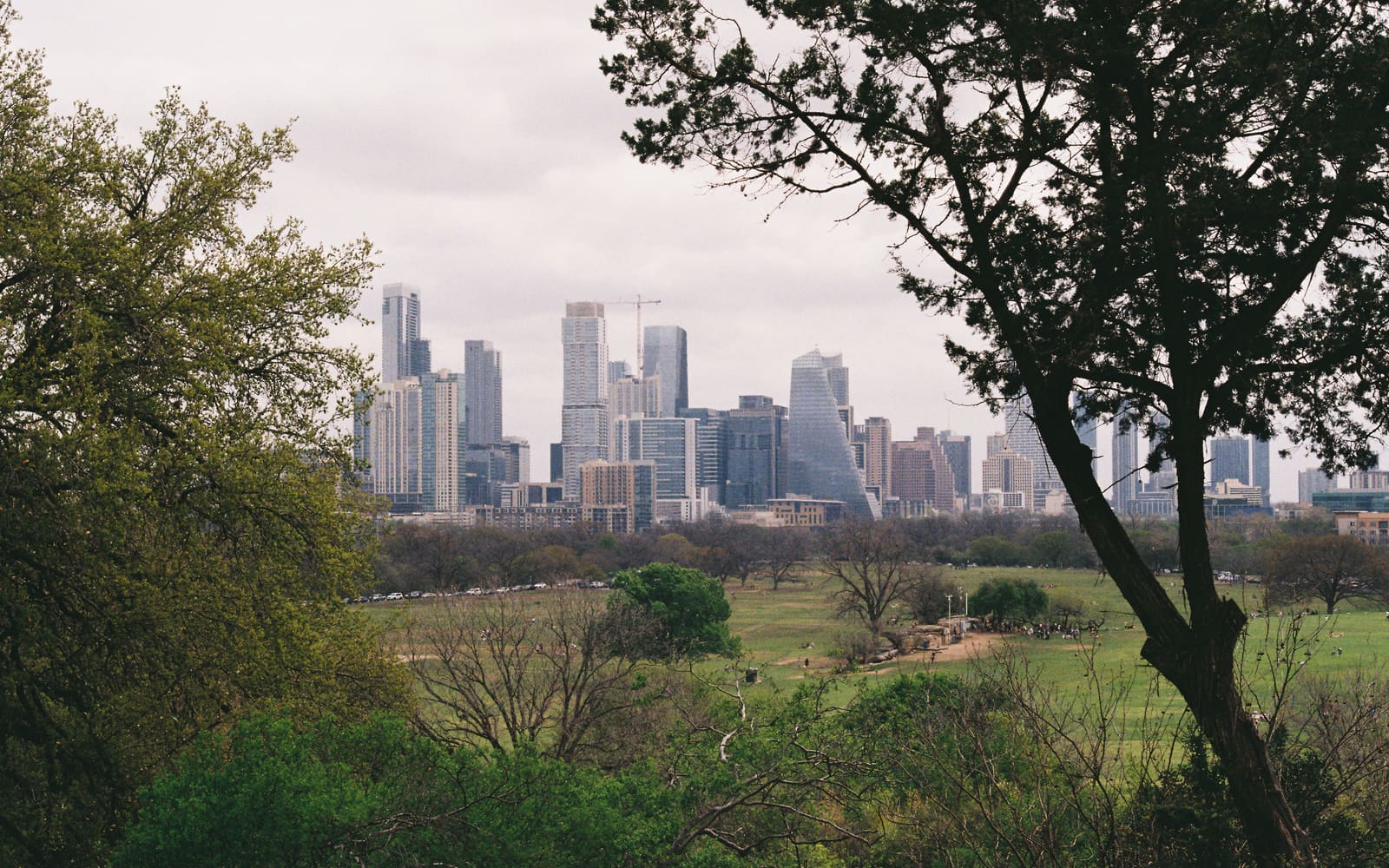
Austin
The capital that turned a slogan into a skyline
Overview
Austin is the capital of Texas, the seat of Travis County, and — depending on which census memo you read — somewhere around the one-million-resident mark. The city officially crossed that milestone recently, which makes our anchor figure of ~985K (verify) a touch conservative; the broader five-county metro is past 2.6 million (verify) and ranks roughly 25th in the country. What that growth has done to the place is the whole story: Austin spent decades as a laid-back college-and-government town, then the tech industry, the musicians, and the rest of America discovered it more or less simultaneously.
The result is a city of real contradictions, and that’s not a marketing line — it’s the practical reality a buyer has to navigate. You have a serious technology economy (Tesla’s Gigafactory, Dell, Apple, Oracle, Samsung, plus a UT-fed startup pipeline) layered on top of a stable state-government and university base, which is why the local job market holds up better than most through downturns. You also have a housing market that overshot during the pandemic boom and has been giving some of that back. For a buyer with Central Texas patience, that combination — strong fundamentals, softening prices — is more opportunity than warning.
A few structural facts shape everything below. Texas has no state income tax, which is a genuine draw, but property taxes are correspondingly high, and Austin’s are not gentle. The terrain matters too: the Balcones Escarpment splits the city, so the hilly, limestone, spring-fed west side feels and prices very differently from the flatter, more affordable east. And the city is genuinely outdoorsy — Lady Bird Lake, the Greenbelt, and Barton Springs are not amenities people tolerate; they’re why a lot of folks stay.
Where to Live (notable districts/neighborhoods within Austin)
Austin is a patchwork, so think in districts rather than a single market. Central / Downtown & Rainey-East Sixth is high-rise condo and walkable nightlife — best for buyers who want zero yard and maximum proximity. Tarrytown and Pemberton Heights (78703), just west of downtown, are the established-money neighborhoods: tree-canopied streets, stately older homes, Eanes-adjacent prestige, and prices to match. Zilker (78704) is the postcard version of South Austin — walkable, near Barton Springs and the Hike-and-Bike Trail, and beloved by professionals who will pay a premium to bike to the lake.
East of I-35, East Austin (78702) is the city’s fastest-changing quarter: historically working-class and Hispanic, now a dense run of cafes, bars, galleries, and infill builds. It’s where younger buyers chase appreciation and where the gentrification debate is loudest and most honest. North-central, Mueller is a master-planned redevelopment on the old airport site — walkable, family-oriented, with parks, a farmers market, and newer construction at a premium for the lifestyle. Hyde Park and North Loop offer bungalow charm near UT.
For more space and schools, look to the edges. Circle C Ranch and the 78749 corridor in southwest Austin pull families with pools, greenbelt access, and strong schools. The Lake Travis / Bee Cave / Lakeway side (technically beyond the city line but firmly in the Austin orbit) trades commute time for hill-country views and top-rated districts. North, Northwest Hills and the Domain area mix established neighborhoods with the metro’s “second downtown” of offices, retail, and apartments.
Schools
Austin’s school picture is genuinely uneven, and where you buy determines what you get. Austin ISD is the big district — roughly 75,000+ students across 120+ schools (verify) — and it carries a ~6/10 GreatSchools composite (verify), with a wide spread: some magnet and west-side campuses are excellent, while others lag. Buyers who care about schools in Austin shop by specific attendance zone, not by the district name, because the variance inside AISD is large.
The headliners sit at the city’s edges. Eanes ISD, covering Westlake and west Austin, holds an A rating from the Texas Education Agency for both the 2023–24 and 2024–25 years and ranks at or near the top of Texas on Niche, with a graduation rate around 98% (verify). It is, predictably, the most expensive real estate attached to any local district. Lake Travis ISD is the other premium option — also TEA-rated A, also ~98% graduation (verify), drawing families to the lake’s southwest shore. Both districts earn the highest financial-integrity ratings the state issues, which matters for long-run stability.
The practical takeaway: a family prioritizing the strongest public schools will gravitate to Eanes or Lake Travis (and the price step that comes with them), while buyers inside AISD should verify the exact elementary/middle/high zone and the current campus ratings before committing — and confirm everything against the TEA and district sites, since boundaries and ratings move.
Real Estate Market (price trends, who it suits, value angle)
Austin’s median sale price sits in the rough neighborhood of $540K–$568K (verify) depending on source and month, which anchors our ~$562K figure well. The more important fact is the trend: after a furious pandemic run-up, prices have flattened and in spots declined year-over-year (multiple sources put the city down low-single-digits to mid-single-digits over the past year — verify). Austin was, by some measures, among the larger price-correction markets in the country coming out of the boom. For sellers that stings; for buyers it’s the most negotiating leverage the city has offered in years.
Who does Austin suit? Buyers who believe in the long-term fundamentals — a diversified tech-plus-government-plus-university economy, continued in-migration, no state income tax — and who can stomach high property taxes and a still-elevated price floor. Entry-level single-family largely starts in the mid-$300Ks in the outer south and east, central and west-side homes run from the high-$500Ks well into seven figures, and the Eanes/lake luxury tier reaches $5M+. Condos downtown give a lower entry point with HOA and tax trade-offs.
The value angle right now is timing and selection. A softening market with more inventory means buyers can be choosy and write contingencies that were unthinkable in 2021. The smart play is durable-location buying — proximity to water, the Greenbelt, employment cores, or a strong school zone — because those are the parcels that hold value when the cycle turns again. Run the property-tax math early; in Austin it’s a bigger swing on monthly cost than the interest rate often is.
Amenities & Parks
The crown jewel is Zilker Metropolitan Park — 350+ acres on Lady Bird Lake — and the spring-fed Barton Springs Pool inside it, which holds a steady ~68°F year-round and is as close to a civic religion as Austin has. Zilker also hosts the Austin City Limits festival, Blues on the Green, and the ABC Kite Festival, and it anchors the Ann and Roy Butler Hike-and-Bike Trail, the ~10-mile loop around Lady Bird Lake that functions as the city’s living room. The Barton Creek Greenbelt runs miles of trail, swimming holes, and limestone climbing right through southwest Austin.
Beyond the marquee spots, the park system is deep: Lady Bird Lake itself for paddleboarding and kayaking, McKinney Falls State Park to the southeast, Mayfield Park’s peacocks, the Zilker Botanical Garden, and a long list of neighborhood greenbelts (Shoal Creek, Bull Creek). It’s a city where “what did you do this weekend” frequently has a water answer.
Everyday amenities track the districts: the Domain in the north functions as a second urban center for upscale retail and dining; South Congress (SoCo) and South Lamar carry the boutique-and-restaurant energy; downtown and the Seaholm/2nd Street district cover the high-rise-grocery, gym, and nightlife needs. H-E-B, the dominant Texas grocer (and one of the metro’s largest employers), is everywhere and beloved.
Dining & Entertainment
Austin earns its “Live Music Capital of the World” title the hard way — hundreds of venues, the long shadow of the Austin City Limits TV show and festival, and SXSW every spring turning the whole city into a stage and trade floor. Sixth Street, the Red River district, Rainey Street’s bungalow bars, and South Congress give very different flavors of nightlife, from rowdy to refined.
The food is the other reason people move here and never leave. Austin is a genuine barbecue pilgrimage — Franklin Barbecue and a deep bench of smoked-brisket temples — and a Tex-Mex and breakfast-taco stronghold where the argument over the best migas is sincere. Layered on top is a serious fine-dining scene (the Uchi sushi empire began here) and an enormous, ever-mutating food-truck culture that lets new chefs test ideas cheaply. Coffee, craft beer, and natural-wine bars round it out.
Entertainment beyond music and food is healthy: the city is a college-sports town (UT Longhorns football is a regional event), Formula 1 races at Circuit of the Americas each fall, and the Moody Center and a growing roster of pro and minor-league teams keep the calendar full. The honest caveat: popularity means crowds and reservations — Franklin’s line and an ACL weekend are both real commitments.
Location & Commute (I-35, MoPac, toll roads, airport, transit, drive times)
Austin’s road geometry is simple to describe and hard to live with. I-35 runs north–south straight through the middle and is the metro’s chronic chokepoint — the dividing line between east and west and the single biggest variable in any commute estimate. MoPac (Loop 1) parallels it to the west with express toll lanes; US-183 loops the north and east, with the recently opened 183 North express lanes (a $612M project — verify) extending the toll network toward Cedar Park. SH-130 and SH-45 on the eastern edge give a faster toll bypass around I-35 and a quick shot to the airport.
Cross-town drive times swing widely with traffic: a downtown-to-Domain or downtown-to-Westlake hop can be 15–20 minutes off-peak and 35–40 at rush hour, and anything that requires crossing I-35 at the wrong time should be padded generously. There is no single “commute to downtown” figure here because Austin is the downtown — the relevant question is which side of I-35 you live on and whether your daily drive fights it.
Transit is improving but not yet a car-replacement for most. CapMetro runs bus, MetroRapid, and a single commuter rail line, and the multi-year Project Connect program — including a planned light-rail line and a large electric-bus buildout — is under way (verify scope and timeline; it has been politically and financially contested). Austin-Bergstrom International (ABIA) sits southeast of downtown, is in active expansion, and is reachable in roughly 15–25 minutes from the core via SH-71/SH-130 outside peak.
The Honest Take (balanced pros / cons buyer’s guide — real trade-offs)
The case for Austin is strong and not subtle. The economy is diversified and resilient — tech, state government, and a flagship university rarely all stumble at once — so jobs and demand have a floor under them. There’s no state income tax, the outdoor lifestyle is real and free, the culture and food are nationally significant, and after the post-boom cooldown, buyers finally have leverage and inventory they didn’t have a few years ago. Long term, the in-migration thesis hasn’t broken.
The trade-offs are equally real. Property taxes are high — high enough that they, not the list price, often decide affordability — and the price floor is still elevated despite the correction. Traffic is genuinely bad and I-35 is a daily tax on your time. Summers are long and hot, the city has weathered grid-stress events, and water/drought is a Central Texas fact of life. Growth has a cost too: longtime neighborhoods, especially east of I-35, have gentrified fast, and “Austin used to be weirder/cheaper” is a sincere local lament. School quality inside AISD is uneven enough that you cannot buy on the district name alone.
Net: Austin rewards buyers who do their homework on the specific zone, run the tax math up front, and value lifestyle and economic resilience over a low cost of entry. It punishes buyers who assume the pandemic-era appreciation is guaranteed to repeat. Go in clear-eyed and it’s one of the best long-horizon bets in Texas.
Daily Life
Day to day, Austin life is organized around water, weather, and traffic. People structure mornings and weekends around the lake loop, Barton Springs, or a greenbelt trail; the long, hot summer pushes activity to early and late hours and indoor time at midday. H-E-B handles groceries for most of the city, the food-truck and taco economy makes casual eating cheap and good, and a strong coffee-shop culture doubles as the remote-work office for a heavily tech-employed population.
It’s a young, educated, transit-curious-but-car-dependent city. Most households still need a vehicle, and where you live relative to I-35 quietly governs your quality of life — which side of the highway your job, your kids’ school, and your favorite restaurants sit on. Politically and culturally Austin leans distinctly to its own beat within Texas, which residents tend to like and which gives the place its “keep Austin weird” self-image even as the cost of living has risen toward big-coastal-city territory.
FAQ
Is Austin a good place to buy right now? For a long-horizon buyer, yes — the post-boom cooldown has handed buyers more inventory and negotiating room than they’ve had in years, against an economy that still has strong fundamentals. Just price in high property taxes and don’t assume 2021-style appreciation repeats.
What’s the median home price? Roughly $562K (verify), within a wider sources spread of about $540K–$568K (verify). Entry-level outer-edge single-family starts in the mid-$300Ks; west-side and lake luxury runs to $5M+.
Which school district is best? Eanes ISD (Westlake) and Lake Travis ISD are the top-rated, both TEA-A districts (verify), and command premium prices. Austin ISD is far larger and uneven — buy by the specific attendance zone, not the district name.
Are property taxes really that high? Yes — Texas trades no state income tax for relatively high property taxes, and Austin’s are notable. They can move your monthly payment more than the interest rate does, so run the numbers before you fall for a house.
How bad is the traffic? Real. I-35 through the center is the chronic chokepoint, and your commute hinges on whether you have to cross it at peak. MoPac, 183, and toll roads (SH-130/SH-45) offer relief for a price.
Who are the major employers? Tesla’s Gigafactory, H-E-B, Dell, the University of Texas, the State of Texas and City of Austin, plus Apple, Oracle, and Samsung Austin Semiconductor — a diversified base of tech, government, and education.
Do I need a car? For most of the metro, yes. CapMetro and the Project Connect transit buildout are improving things (verify timeline), but Austin remains car-dependent, and proximity to your daily destinations relative to I-35 matters more than transit access for now.
Circle C Ranch
SW Austin's premier family community — Hill Country living, no toll road downtown.
Overview
Circle C Ranch is SW Austin’s premier family community — 8/10-rated AISD schools, Hill Country terrain, a 15-mile greenbelt trail system, and a direct shot downtown with no toll road required.
Located in Austin 78739 in Travis County, it’s a master-planned community spanning 3 major sections, built from the late 1980s through the 2000s, with 4,500+ homes at build-out.
At a glance:
- Kiker Elementary: 8/10
- Downtown Austin: 15 min
- Homes: 4,500+ across 3 sections
- Slaughter Creek Trail: 15 mi
- Community pools: 3
- Median sale price: $750K
Schools
Austin ISD · Kiker-Gorzycki-Bowie pipeline · Top 15% Texas elementary.
The Kiker-Gorzycki-Bowie school pipeline is arguably the most well-known AISD sequence in southwest Austin and drives sustained demand from family buyers. Kiker Elementary’s 8/10 GreatSchools rating and consistent ranking in the top 15% of all Texas elementary schools makes its boundary one of the most searched data points buyers ask me about in Circle C. Families drive these streets before they ever call an agent.
— Sam Sheikh, SpecTower Realty · SW Austin
Kiker Elementary — 8/10
Elementary (Pre-K – Grade 5) · ~650 students · 4001 Slaughter Ln, Austin 78749
Tags: Top 15% Texas · G&T Program · PLTW STEM · Strong Math
One of AISD’s strongest elementary schools — top 15% of all Texas elementary schools. The Gifted & Talented program and PLTW STEM curriculum drive consistent performance. Being in this boundary adds measurable premium to home values.
Private alternative: St. Michael’s Catholic Academy — Pre-K–12 · 3000 Barton Creek Blvd · Adjacent to community.
Gorzycki Middle School — 8/10
Middle School (Grades 6–8) · ~1,200 students · 12207 Menchaca Rd, Austin 78748
Tags: Top 10% Texas · PLTW · IB MYP Prep · Strong STAAR
One of AISD’s strongest middle schools — top 10% in state. PLTW curriculum and IB prep keep Circle C students on a strong college-readiness track through high school.
James Bowie High School — 7/10
High School (Grades 9–12) · ~2,800 students · 4103 W Slaughter Ln, Austin 78749
Tags: AP Academy · 92% Grad Rate · College Prep
Bowie High rounds out the Circle C school pipeline with a strong AP catalog and 92% graduation rate. The school serves SW Austin’s established family community with consistent academic results.
Note: School zones are assigned by Austin ISD and can change. Verify your specific address at austinisd.org before submitting any offer. Do not rely on ZIP code alone.
Real Estate Market
SW Austin · Established resale market · 2024–2025.
| Tier | Price Range | Notes |
|---|---|---|
| Entry-Level | $495K – $600K | Pre-2000 · 1,500–2,000 sq ft · Great first-home value in Circle C |
| Mid-Range (Most Active) | $600K – $850K | 2,200–3,200 sq ft · Updated kitchens · Open layouts · Kiker zone |
| Upper Range | $850K – $1.2M | Larger lots · 3,500+ sq ft · Trail/greenbelt adjacency |
| Luxury | $1.2M – $1.7M | Custom builds · 4,000+ sq ft · Estate lots |
Market stats:
- Median Price: $750K
- Days on Market: 25–40d
- Sale-to-List: 98%
- Price Reduced: ~45%
What commands a premium: Kiker Elementary zone · updated kitchen + open layout · trail/greenbelt adjacency · 3-car garage · larger lot · 2010+ build.
What may discount value: Power line easements · backing Slaughter Ln or Mopac · pre-2000 original kitchen/baths · flood-adjacent lots near Slaughter Creek corridor.
Amenities & Parks
35+ years of amenity infrastructure built into the Hill Country terrain.
Amenities
- 3 Community Pools — Main rec center pool + 2 satellite pools · Kiddie splash areas · Swim lessons · Season programming
- Slaughter Creek Trail — 15-mile trail system · Paved + natural surface · Connects to Barton Creek Greenbelt · Right on community border
- Lady Bird Wildflower Center — 279 acres · 5-min drive · National wildflower research center · Seasonal displays · Family hikes · Member events
- Circle C Recreation Center — City of Austin facility · Indoor pool, gym, group fitness classes · Right within the community boundary
- Tennis & Sport Courts — Courts adjacent to rec center · League play + open court time · Basketball · Various fitness options
- Roy Kizer Golf Course — City of Austin 18-hole municipal · 15 min drive · $30–$50/round · Affordable daily-fee golf near SW Austin
Parks & Outdoors
Greenbelt, trails, and Hill Country terrain within minutes.
- Slaughter Creek Trail (borders community) — 15 miles paved · Running, cycling · Connects to Barton Creek Greenbelt system
- Circle C Metro Park (in community) — Baseball fields · Playgrounds · Open green space · Community events venue
- Lady Bird Johnson Wildflower Center (5 min) — 279 acres · Native plant trails · Spring wildflower season draws thousands · Family-friendly
- Barton Creek Greenbelt (10 min) — 12+ miles hike/bike/swim · Limestone canyon · Natural swimming holes · Austin’s most beloved outdoor space
- Violet Crown Trail (10 min) — Multi-use corridor connecting SW Austin to Zilker Park · Paved sections + natural surface
Dining & Entertainment
Community Events
35+ years of neighborhood identity with a packed social calendar.
- 4th of July Celebration (Annual Tradition) — Annual community celebration at Circle C Metro Park. One of SW Austin’s most anticipated neighborhood events — fireworks, food, and families gathering on the green space.
- Wildflower Season (Spring) — March–May at Lady Bird Johnson Wildflower Center — spring bloom draws the entire SW Austin community. Families with strollers, dog walkers, photographers. A Circle C rite of spring.
- Tennis & Sports Leagues (Active) — Year-round league play at rec center courts · Pickleball groups · Swim teams · Adult fitness programs · Strong Nextdoor sports community
- Alamo Drafthouse Slaughter (Entertainment) — 5135 W Slaughter Ln · 10 min · Dine-in cinema · The community’s go-to movie destination. Themed events and screenings throughout the year.
Dining & Social Scene
Village at Circle C and Escarpment Village within minutes.
In the neighborhood:
- Tom’s Tabooley — Mediterranean · Village at Circle C · 3900 W Slaughter Ln · Neighborhood lunch/dinner staple · Fresh Mediterranean with local following
- Salt & Time Butcher Shop — Craft Butchery · Village at Circle C · Whole-animal butchery + deli sandwiches · Austin institution expanded to Circle C
- The Dock at Gaines Ranch — Casual Bar & Grill · 4701 Gaines Ranch Loop · Neighborhood watering hole · Casual food, bar scene, outdoor seating
5–10 minutes away:
- Rudy’s Country Store & Bar-B-Q — Texas BBQ · Slaughter/290 · Classic Texas BBQ institution · Perpetually packed on weekends · Brisket worth the wait
- First Watch — Daytime Café · Escarpment Village · Breakfast and brunch · Weekend staple for Circle C families · Open 7am–2:30pm
- Torchy’s Tacos — Austin Institution · Multiple SW Austin locations · Iconic Austin tacos · 5–10 min from Circle C
Location & Commute
SW Austin · Mopac (SH-1) corridor · No toll road required.
- Downtown Austin — 15–20 min · Mopac SH-1 → 1st St · No toll road required — a Circle C advantage
- South Congress (SoCo) — 10–15 min · Mopac → Oltorf exit · Austin’s iconic lifestyle street
- The Domain — 20–25 min · Mopac north → 183 · Oracle, Indeed, Meta, Amazon
- Barton Creek Greenbelt — 5–8 min · Barton Springs Rd · Austin’s most beloved outdoor space
- Austin Airport — 20–25 min · I-35 south → TX-71
The Honest Take
What commands a premium: Kiker Elementary zone · updated kitchen + open layout · trail/greenbelt adjacency · 3-car garage · larger lot · 2010+ build.
What may discount value: Power line easements · backing Slaughter Ln or Mopac · pre-2000 original kitchen/baths · flood-adjacent lots near Slaughter Creek corridor.
Circle C is largely a resale market with very limited new construction — most homes were built between the late 1980s and 2000s. Property taxes run a Travis County effective rate of approximately 2.0% for 78739 (roughly $15,000/year on a $750K home), and roughly 45% of listings see a price reduction before selling.
Daily Life
SW Austin’s best — HEB, trails, and Hill Country living.
Grocery & Shopping:
- HEB Brodie Ln at Slaughter — 5 min · Primary grocery · Full service + pharmacy · Circle C staple
- Escarpment Village — 5 min · HEB, Target, Starbucks, Academy · All daily errands in one stop
- Barton Creek Square Mall — 3 miles · Full retail destination · Dillard’s, Apple Store, dining
Medical:
- St. David’s South Austin Medical — 15 min · Level III trauma center · Primary hospital for Circle C
- Ascension Seton Southwest — 7900 FM 1826 · 10 min · Urgent care + ER
Fitness & Recreation:
- Circle C Recreation Center — City of Austin · Indoor pool, gym, classes · In community
- Orangetheory Fitness — Slaughter Lane corridor · Popular group fitness
- Slaughter Creek Trail — 15 miles · Runs along community border · Daily use by residents
Outdoors:
- Lady Bird Johnson Wildflower Center — 5 min · 279 acres · Seasonal displays · Trails · Member events
- Barton Creek Greenbelt — 10 min · 12+ miles hike/swim/bike · Austin’s outdoor crown jewel
FAQ
Sam’s straight answers to Circle C Ranch’s most common buyer questions.
Is Circle C Ranch a good place to live?
Circle C Ranch is consistently ranked among Austin’s top family neighborhoods. Strong AISD schools, Hill Country terrain, no toll roads to downtown, and the Slaughter Creek trail system make it exceptional for families and professionals alike.
What school district is Circle C Ranch in?
Austin ISD. The primary pipeline is Kiker Elementary (8/10), Gorzycki Middle (8/10), and Bowie High (7/10). This is one of AISD’s strongest sequences and a major driver of Circle C’s resale demand.
How much do homes cost in Circle C Ranch?
Prices range from approximately $495K (smaller older homes) to $1.7M+ (luxury/custom). Median is approximately $750K as of 2024–2025.
Does Circle C Ranch have an HOA?
Yes. The master HOA covers common areas, trails, and community character. Fees are approximately $400–$600/year. Some sections have additional sub-HOA fees for pools and amenities.
How far is Circle C from downtown Austin?
Approximately 15–20 minutes via Mopac (SH-1) southbound. No toll road required — a significant differentiator vs. 183A-dependent NW Austin communities.
Are there new construction homes in Circle C Ranch?
Very limited. Circle C is largely a resale market. Nearby communities like Lantana and Legend Oaks have some new construction activity.
What is the property tax rate?
Travis County effective rate for 78739 is approximately 2.0%. On a $750K home, that’s approximately $15,000/year. Verify with Travis County Appraisal District at traviscad.org.
Does Circle C Ranch flood?
Most interior homes are not in a flood zone. The Slaughter Creek corridor has some flood-prone sections. Verify any specific property on FEMA’s flood map (msc.fema.gov) or Travis County’s flood data.
Easton Park
SE Austin's fastest-growing master-planned community
Overview
Easton Park is a 3,500-acre master-planned community developed by Brookfield Residential in SE Austin (78725), featuring new construction homes at some of the most attainable price points in the Austin metro. Development began around 2015 and is actively ongoing across multiple phases.
At build-out the community is planned for 6,000+ homes. The median price sits around $380K, with entry new construction starting near $280K. Its defining advantages are location: 5 minutes to the Tesla Gigafactory and 10 minutes to Austin-Bergstrom International Airport, paired with resort-style amenities anchored by “The Porch” amenity center.
At a glance:
- Tesla Gigafactory: 5 min
- Austin Airport: 10 min
- Homes at build-out: 6,000+
- Resort pool: “The Porch”
- Entry new construction: $280K
- Builder incentives: ~65%
Schools
Easton Park is served by Del Valle ISD, a growing district investing in new campuses as the community expands.
Sam Sheikh’s take: “I’ll be straightforward with buyers about Easton Park: the Del Valle ISD schools are a trade-off for the price and location advantages here. That said, the district is actively investing in new campuses as the community grows. For buyers where Tesla employment, airport access, or attainable new construction pricing are the priorities — and especially for households without school-age children — Easton Park offers genuine value that’s hard to find anywhere else in Austin.”
Elementary (Pre-K – Grade 5) — Widen Elementary SE Austin area · Del Valle ISD · New Campus. Widen Elementary serves the Easton Park area within Del Valle ISD. The district has been actively building new campuses to serve the rapidly growing SE Austin population as Tesla and other employers bring families to the area. Chips: DVISD · New Campus · Growing Community · Low Student-Teacher Ratio.
Middle School (Grades 6–8) — Del Valle Middle School Del Valle ISD · Growing Campus. Del Valle Middle serves Easton Park students with a growing campus. The district is investing in staffing and resources as enrollment grows with the community’s rapid expansion. Chips: DVISD · Growing Campus · Community Investment.
High School (Grades 9–12) — Del Valle High School Del Valle ISD · CTE Programs. Del Valle High serves Easton Park with CTE career programs and a growing campus. As SE Austin develops and Tesla brings higher-income families, DVISD is receiving significant investment in new facilities and staffing. Chips: DVISD · CTE Programs · Growing Campus.
Note: Del Valle ISD school ratings are a key trade-off for Easton Park’s price advantage. Buyers with school-age children should carefully research current DVISD campus assignments and quality at dvisd.net. Many Easton Park buyers are Tesla employees, airport workers, first-time buyers, or households without school-age children for whom price and location matter most.
Real Estate Market
SE Austin · New construction buyer’s market · 2024–2025.
Price bands:
- Townhomes & Small SF — $280K–$340K: Smallest floor plans · highest density sections · lowest entry into Austin metro new construction.
- Mid-Range New Construction — $340K–$430K (Most Active): New 3–4 BR SF · builder incentives common · most popular price band.
- Upper New Construction — $430K–$520K: Larger plans · premium lots · more upgrades included.
- Premium Lots — $520K–$600K+: Best lots · largest plans · fully upgraded · near The Porch amenity center.
Market stats:
- Median Price: $380K
- Days on Market: 60–120d
- Sale-to-List: 97%
- Builder Incentives: ~65%
What commands a premium: New construction quality · Tesla/airport proximity · builder warranty · energy efficiency · premium lot near amenities · attainable pricing in Austin.
What may discount value: Del Valle ISD school ratings · MUD tax districts (2.4–2.6%) · higher DOM on resale · SE Austin stigma vs. NW/SW · ongoing construction for years.
Amenities & Parks
Resort infrastructure is built into 3,500 acres of SE Austin master-plan.
- “The Porch” Amenity Center: Resort-style pool complex · pavilion · fitness facility · event lawn. The community’s signature gathering spot and daily activity hub.
- Multiple Dog Parks: Off-leash areas throughout community phases · fenced dog parks with water stations. Easton Park is noticeably pet-friendly.
- Trail Network: 10+ miles planned hike & bike trails connecting all phases · connects to broader SE Austin trail network and greenways.
- Pocket Parks: Each community phase includes multiple neighborhood parks with playgrounds and open green space within walking distance.
- New Construction Choice: Multiple builders and floor plans still available · Brookfield Residential + other builders · builder warranties + energy efficiency standards.
- Tesla Gigafactory Proximity: 5–8 minutes to Gigafactory Texas in Del Valle · one of the largest manufacturing employers in Central Texas · major draw for Tesla workers.
Parks & outdoors (SE Austin recreation within 15 minutes):
- Easton Park Trail Network (in community): 10+ miles planned · hike/bike · connects all phases · future greenway connections.
- McKinney Falls State Park (15 min): Natural swimming holes · waterfall · camping · hiking · underrated Austin gem near SE corridor.
- Hornsby Bend (15 min): Nature preserve · bird watching · Colorado River views · popular with nature enthusiasts.
- Walter E. Long Lake (nearby): Boating · fishing · swimming · SE Austin’s largest recreational lake.
Dining & Entertainment
A growing community building its identity — The Porch is the gathering hub.
Community events & entertainment:
- The Porch Pool Season (Year-Round): Easton Park’s resort amenity center is the social hub. Pool season events, community gatherings, and pavilion use make The Porch the neighborhood’s living room.
- Dog Park Meetups (Daily): Easton Park’s dog-friendly culture means the off-leash parks are busy gathering spots for neighbors, especially evenings and weekends.
- McKinney Falls Day Trips (Outdoors): 15 minutes away — McKinney Falls State Park is the community’s go-to outdoor escape. Swimming holes, hiking, and waterfalls that most Austinites don’t know about.
- South Congress (SoCo) (20 min away): 20 min drive to Austin’s most iconic lifestyle street. Torchy’s, Güero’s, Home Slice Pizza, Jo’s Coffee — the full Austin cultural experience within a reasonable drive.
Dining & daily services (limited local options — the SE Austin corridor is still developing):
Nearby (10–15 min):
- Walmart SE Austin (Grocery · 10 min): Nearest quick grocery option for Easton Park residents · full supercenter.
- Riverside Drive Corridor (Local Eateries): Various local SE Austin restaurants · 10–15 min drive · taco trucks, local spots.
15–20 minutes away:
- South Congress (SoCo): Torchy’s Tacos, Güero’s Taco Bar, Home Slice Pizza, Jo’s Coffee · Austin dining at its best.
- HEB Ben White at Lamar (Primary Grocery · 15 min): The primary full-service HEB for Easton Park families · full pharmacy + bakery.
- Rudy’s BBQ (Texas BBQ · I-35/Ben White): Classic Texas BBQ institution · worth the drive for weekend brisket.
Location & Commute
SE Austin · TX-130 corridor · Tesla and Airport access advantage.
- Tesla Gigafactory — 5–8 min: Kellam Rd → TX-130 · SE Austin’s dominant employer.
- Austin Airport (AUS) — 10–12 min: TX-130 → Airport Blvd · best airport access of any Austin residential area.
- Downtown Austin — 20–30 min: TX-130 → I-35 north · or Airport Blvd → US-183.
- South Congress — 15–20 min: I-35 south → Slaughter/Oltorf.
- Round Rock — 20–25 min: SH-130 north · Dell, Amazon employers.
- The Domain — 45–55 min: TX-130 → US-183 north · Oracle, Indeed, Meta.
Daily Life
SE Austin is still developing — plan for drives to major amenities.
Grocery:
- HEB Slaughter at I-35: 15 min · primary full-service grocery · full pharmacy, bakery, deli.
- Walmart SE Austin: 10 min · quick option for everyday items.
- ALDI SE area: Budget-friendly grocery option within SE Austin.
Medical:
- St. David’s South Austin Medical: 901 W Ben White Blvd · 20 min · Level III trauma center.
- Austin Regional Clinic SE: SE Austin urgent care locations · 10–15 min.
Recreation:
- The Porch Amenity Center: In community · resort pool, fitness, events · daily use by residents.
- McKinney Falls State Park: 15 min · natural swimming holes, waterfall, hiking · underrated gem.
Employment:
- Tesla Gigafactory Texas: 5–8 min · one of Central Texas’s largest employers · major draw for Easton Park buyers.
- Austin-Bergstrom Airport: 10 min · best airport access in Austin · for flight-crew, travelers, and airport employees.
The Honest Take
Sam knows the SE Austin market — builder incentive timing, MUD tax zone differences by phase, and how Easton Park compares to other Austin options for Tesla and airport corridor buyers.
For buyers prioritizing price point, new construction, Tesla proximity, or airport access, Easton Park offers genuine value that’s hard to find elsewhere in Austin. The trade-offs are real and worth weighing honestly: Del Valle ISD school ratings, MUD tax districts pushing effective rates to roughly 2.4–2.6%, higher days-on-market on resale, and years of ongoing construction. For the right buyer profile — especially Tesla employees, airport workers, first-time buyers, and households without school-age children — the price-to-value equation is compelling.
Full price range runs $280K–$600K. The community is in active build, planned for 6,000+ homes at build-out, with homes built from 2015 to the present.
FAQ
What is Easton Park? Easton Park is a 3,500-acre master-planned community developed by Brookfield Residential in SE Austin (78725), featuring new construction homes at some of the most attainable price points in the Austin metro. Development began around 2015 and is actively ongoing.
Why are Easton Park prices lower than other Austin areas? SE Austin land values are historically lower than NW or SW Austin. Del Valle ISD school ratings affect demand. Builder competition and active new construction create a buyer-friendly market with incentives and rate buydowns commonly available.
How far is Easton Park from Tesla? 5–8 minutes to Tesla’s Gigafactory Texas in Del Valle. This proximity is a major draw for Tesla employees and a primary reason many buyers choose Easton Park over other Austin communities.
How far is Easton Park from Austin Airport? 10–12 minutes to Austin-Bergstrom International Airport (AUS) via TX-130. Easton Park has the best airport access of virtually any Austin residential neighborhood — a significant advantage for frequent flyers.
What are the property taxes in Easton Park? Multiple MUD districts overlay Easton Park, pushing effective rates to approximately 2.4–2.6%. This is higher than much of Austin proper. Always verify the specific lot’s MUD designation before purchasing — it varies by phase.
What schools serve Easton Park? Del Valle ISD. DVISD ratings are currently lower than AISD or Round Rock ISD — this is the key trade-off for Easton Park’s pricing. New school campuses are being built. Buyers with school-age children should research DVISD carefully at dvisd.net.
Is it still being built? Yes — Easton Park is actively building across multiple phases with multiple builders. New construction inventory is consistently available, often with builder incentives. Expect construction activity and new phases opening through the late 2020s.
Is Easton Park a good investment? For buyers prioritizing price point, new construction, Tesla proximity, or airport access, Easton Park offers genuine value. Long-term appreciation may be strong as SE Austin develops. It carries more risk than established Austin neighborhoods due to school district ratings and market depth — but for the right buyer profile, the price-to-value equation is compelling.
Mueller
Austin's airport turned into its most walkable neighborhood
Overview
Mueller is a 700-acre mixed-income urban master-planned community built on the site of the former Robert Mueller Municipal Airport, which closed in 1999. Development began in 2007 under Catellus Development Corporation, and it’s now one of Austin’s most celebrated urban neighborhoods — roughly 3 miles northeast of downtown, in Austin 78723, Travis County.
What makes Mueller distinct is that the whole lifestyle was designed from the ground up rather than accreted over time. The Mueller Farmers Market on Sunday mornings, Dell Children’s Medical Center within walking distance, the town center, 140+ acres of parks — these were planned in, not retrofitted. It’s the rare Central Austin neighborhood that offers genuine urban walkability without sacrificing a livable community feel.
By the numbers: a median price around $650K, 2,800+ homes and condos, a Walk Score of 80+, and 5 minutes to downtown. The community is mixed-use, with construction running from 2007 to the present.
Schools
Mueller is served by Austin ISD, and the standout is the McCallum Fine Arts Magnet, a genuine draw for creatively-oriented families from across the city.
Elementary (Pre-K – Grade 5): Blanton Elementary (7/10), 5408 Westminster Dr, Austin 78723. Blanton serves Mueller and east Austin with a dual-language program and strong community partnerships; it’s an AISD Focus School. Austin ISD’s urban renewal investment has improved resources and programs here in recent years. Private alternative: Redeemer Lutheran School (K–8, Central Austin, small class sizes).
Middle School (Grades 6–8): Webb Middle School (6/10), Austin ISD, with elective programs and 70%+ STAAR results. Webb serves Mueller and the surrounding east Austin area, and AISD is actively investing in improving campus resources as Mueller’s population of professional families grows.
High School (Grades 9–12): McCallum High — Fine Arts Magnet (6/10), ~1,800 students, IB Career Programme, 88% graduation rate. McCallum is AISD’s premier Fine Arts Magnet, drawing creative students from across the city for theater, visual arts, music, and dance. The IB Career Programme adds academic rigor. For families valuing arts education alongside academics, McCallum is a genuine draw that few districts can match.
A note on boundaries: Austin ISD school boundaries can change, and some streets may have magnet school or transfer options. Verify your specific Mueller address at austinisd.org before submitting any offer.
Real Estate Market
Central Austin, mixed-use community, 2024–2025. The market breaks into roughly four tiers:
- Condos & Townhomes — $420K – $530K: Modern construction, HOA-covered maintenance; the lowest entry into Mueller.
- Mid-Range Townhomes & Single-Family — $530K – $750K (Most Active): Single-family townhomes plus SF, updated, in walkable sections near the town center.
- Upper Range — $750K – $950K: Larger single-family with premium finishes and park or lake adjacency.
- Luxury — $950K – $1.2M+: Custom single-family with Mueller Lake or town center adjacency; rare inventory.
Market stats: median price $650K, 20–35 days on market, 99% sale-to-list ratio, ~30% of listings price-reduced.
What commands a premium: Mueller Lake Park adjacency, town center walkability, larger SF homes, 2015+ construction, and proximity to Dell Children’s Medical Center.
What may discount value: Smaller lot sizes versus suburban alternatives, AISD school ratings, street parking limitations, and construction noise in active phases.
Amenities & Parks
Mueller is built on 140+ acres of parks on the former airport site — an urban lifestyle built from the ground up.
- Mueller Lake Park — 30-acre signature park with an amphitheater, fishing, and a playground. The community’s central gathering hub and neighborhood landmark.
- Mueller Farmers Market — Sundays 10am–2pm year-round; one of Austin’s top farmers markets, with produce, food vendors, and artisans across an outdoor and indoor pavilion.
- Alamo Drafthouse Mueller — A neighborhood dine-in cinema in the Mueller Town Center, a community entertainment anchor within walking distance for most residents.
- Dell Children’s Medical — A world-class pediatric hospital walkable from most Mueller addresses; a major quality-of-life amenity for families and medical workers.
- Mueller Town Center — A mixed-use commercial corridor with restaurants, coffee, shops, and professional services, designed for walkability with wide pedestrian paths.
- Hike & Bike Network — An extensive internal trail system plus connections to Airport Blvd and the Austin trail network; cyclists can reach downtown in 15–20 minutes.
Parks and outdoors within 15 minutes:
- Mueller Lake Park (in community) — 30 acres, central greenway, amphitheater, fishing, playground, community events hub.
- Bartholomew District Park (5 min) — 82 acres with a pool, sports fields, and trails; East Austin’s largest park.
- Govalle Neighborhood Park (5 min) — East Austin park with hike/bike, a playground, and disc golf.
- Austin Nature & Science Center (10 min) — Zilker-area nature center with family programming and wildlife exhibits, connected to the Barton Creek Greenbelt.
Dining & Entertainment
Urban neighborhood energy with a true community identity.
Community events:
- Mueller Farmers Market — Every Sunday 10am–2pm year-round. One of Austin’s premier farmers markets, with local produce, artisan goods, prepared foods, and live music. A neighborhood institution since Mueller opened.
- Mueller Lake Park Concerts — The amphitheater hosts seasonal outdoor concerts and community events, a gathering point for neighbors year-round.
- Alamo Drafthouse Events — Themed screenings, Q&As, and special events at the Mueller location. The Alamo is deeply woven into Austin’s film culture and a natural anchor for the neighborhood.
- Thinkery Children’s Museum — Interactive children’s museum at 1830 Simond Ave, with exhibitions designed for hands-on learning across STEM, arts, and creativity. A beloved Mueller family destination.
In Mueller Town Center:
- Tiny Boxwood’s Mueller — Casual American with a lush garden patio; a brunch and lunch neighborhood staple.
- Flower Child — Healthy fast casual: clean-eating bowls, salads, and wraps, popular with the health-conscious Mueller crowd.
- Summer Moon Coffee — Austin’s beloved wood-roasted coffee brand; a morning neighborhood staple.
- La Madeleine — French bakery and café, great for a casual lunch or pastry and coffee.
5–10 minutes away:
- East 6th Street Scene — Emmer & Rye, Launderette, Suerte, Lenoir; Austin’s premier restaurant row, a 10-minute drive from Mueller.
- Franklin Barbecue — 900 E 11th St; James Beard-winning brisket, worth the line for the full Austin experience.
- Foreign & Domestic — Duval St; a beloved neighborhood restaurant, farm-to-table-adjacent with a cozy bar scene.
Location & Commute
Central Austin, Airport Blvd corridor, no highway required.
- Downtown Austin — 5–10 min via Airport Blvd → 6th St. No highway required; bikeable in 15 min.
- Dell Children’s Medical — Walkable, at 4900 Mueller Blvd, in the community; a huge quality-of-life advantage.
- Dell Medical School — 5 min via Red River/MLK, adjacent to the UT Austin campus.
- The Domain — 15–20 min via US-183 north (Oracle, Indeed, Meta, Amazon).
- Austin Airport — 15–20 min via Airport Blvd → US-183 → TX-71.
- East 6th Dining — 10–15 min via Airport Blvd south; Austin’s hottest restaurant corridor.
The Honest Take
From Sam Sheikh, SpecTower Realty (Central Austin): Mueller is the rare Central Austin neighborhood that offers urban walkability without sacrificing a livable community feel. The McCallum Fine Arts Magnet is a genuine draw for creatively-oriented families from across the city. But the real story here is lifestyle: the farmers market Sunday mornings, Dell Children’s proximity, the town center — Mueller has built something remarkable on what was an abandoned airport site.
Sam knows Mueller’s nuances — town center blocks versus outer sections, school zone details, affordable housing implications, and what’s coming in the remaining development phases.
Daily Life
Walkable essentials, Central Austin’s best, and everything in between.
Coffee & Breakfast:
- Summer Moon Coffee — Mueller Town Center; wood-roasted Austin institution and morning hub.
- La Madeleine — Mueller Town Center; French bakery café for pastry and coffee.
Grocery & Market:
- HEB N. Lamar — Major HEB location, 10 min west; full service plus pharmacy.
- Sprouts Farmers Market — Near the Mueller area; natural and organic options.
- Mueller Farmers Market — Sundays 10am–2pm; fresh produce and local food vendors.
Medical:
- Dell Children’s Medical Center — 4900 Mueller Blvd; walkable, world-class pediatric hospital.
- St. David’s Medical Center — 919 E 32nd St, 5 min; Level I Trauma.
- UT Health Austin — 1501 Red River St, 8 min; academic medical.
Dining Highlights:
- Tiny Boxwood’s — Mueller Town Center; American casual brunch staple.
- Flower Child — Mueller Town Center; healthy fast casual.
- Alamo Drafthouse Mueller — 1911 Aldrich St; cinema plus dining experience.
Entertainment:
- Thinkery Children’s Museum — 1830 Simond Ave; interactive family programming.
- Mueller Lake Park — 30 acres; amphitheater, fishing, dog-friendly.
Car-Free Possibilities:
- CapMetro Bus Routes — Multiple routes through Mueller; downtown in 20 min.
- Bike to Downtown — Airport Blvd lane; 15–20 min to 6th St, a genuine option.
FAQ
What is Mueller?
Mueller is a 700-acre mixed-income urban master-planned community built on the site of the former Robert Mueller Municipal Airport, which closed in 1999. Development began in 2007 under Catellus Development Corporation. It’s now one of Austin’s most celebrated urban neighborhoods, roughly 3 miles northeast of downtown.
Is Mueller walkable?
Yes — Walk Score 80+. The Mueller Farmers Market, Alamo Drafthouse, Dell Children’s Medical Center, Mueller Lake Park, and dozens of restaurants are all walkable from most addresses. Mueller is one of the few Austin neighborhoods where car-free living is genuinely viable for many daily tasks.
What schools serve Mueller?
Austin ISD: Blanton Elementary (7/10), Webb Middle (6/10), McCallum High (6/10, Fine Arts Magnet). McCallum’s Fine Arts Magnet program draws creative families from across the city — a genuine differentiator for artistically-oriented households.
Does Mueller have affordable housing?
Yes — 25% of Mueller homes are designated affordable per the original redevelopment agreement, managed through Foundation Communities and other nonprofits. This mixed-income model is a defining and intentional feature of the Mueller community.
How far is Mueller from downtown Austin?
5–10 minutes via Airport Blvd. No highway required. Bikeable in 15–20 minutes via the Airport Blvd lane. This is one of the best downtown access ratios of any residential Austin neighborhood.
What type of homes are in Mueller?
Single-family homes, townhomes, condos, and apartments. All architecture is new (2007–present) with mixed styles reflecting the master-plan’s design guidelines. Housing is intentionally diverse — both by type and by price point.
What is the Mueller Farmers Market?
One of Austin’s premier farmers markets, held every Sunday 10am–2pm year-round at the Mueller Town Center pavilion. Local produce, food vendors, artisans, and prepared foods. Free admission. A genuine community institution that drives Sunday foot traffic throughout the neighborhood.
What is the property tax rate?
Travis County / Austin ISD effective rate approximately 2.0% for 78723. On a $650,000 home that’s approximately $13,000/year. Verify at traviscad.org for your specific property.
Steiner Ranch
Lake Austin access, 35 miles of Hill Country trails, and a Pete Dye golf course in your backyard
Overview
Steiner Ranch is a master-planned community in NW Austin (78732, Travis County), laid out across 4 sections on the RM 620 corridor between Lake Austin and Cedar Park. With 4,300+ homes built from the mid-1990s through 2015, it pairs a lake-and-hills lifestyle with one of the strongest school pipelines in NW Austin.
What sets it apart is a combination no other Austin community at this scale can match: direct Lake Austin access as a community amenity, 35 miles of internal Hill Country trails, and a Pete Dye championship golf course adjacent to the neighborhood. Dramatic limestone ridges and significant elevation changes give many homes panoramic Hill Country views — the terrain itself is a lifestyle asset.
Median sale price is around $900K, with three amenity centers serving the community. The primary trade-off for the lifestyle premium is the commute: there is no toll road access to downtown.
At a glance:
- 8/10 Vandegrift IB High School (Leander ISD)
- Lake Austin community access
- 35 miles of Hill Country trails
- 3 amenity centers
- 4,300+ homes across 4 sections
- $900K median sale price
Schools
Steiner Ranch is zoned to Leander ISD — not Austin ISD or Round Rock ISD, which surprises some buyers. The school pipeline is among the strongest in NW Austin, and all three tiers rate 8/10. Vandegrift High’s IB World School designation is a top driver of demand: families comparing LISD vs. RRISD frequently cite Vandegrift’s IB Diploma Programme as the deciding factor for choosing Steiner Ranch.
Elementary — Laura Bush Elementary (8/10), Pre-K – Grade 5 3800 S Quinlan Park Rd, Austin 78732 · Leander ISD. One of Leander ISD’s strongest elementary schools — top 12% in Texas, with a STEM focus, 90%+ STAAR performance, and strong parent engagement. Being in this boundary adds measurable value. Private alternative: River Ridge Academy (K–8, nearby, small class sizes).
Middle — Canyon Ridge Middle School (8/10), Grades 6–8 ~1,100 students · Leander ISD. One of Leander ISD’s strongest middle schools. Project Lead The Way (PLTW) and Pre-AP offerings keep students on a rigorous track toward Vandegrift High’s IB programme. Strong STAAR results.
High — Vandegrift High — IB World School (8/10), Grades 9–12 ~3,200 students · Leander ISD · IB Diploma Programme. One of the strongest public high schools in Central Texas. The full IB Diploma Programme and AP Academy offer genuine academic rigor, with a 93% graduation rate and multiple College Success Awards.
Steiner Ranch is Leander ISD — verify your specific address at leanderisd.org before submitting any offer.
Real Estate Market
NW Austin premium lifestyle community (2024–2025 data). Median price is around $900K. Homes span the mid-1990s through 2015 across 4 sections, with a full range from entry-level to luxury custom estates.
Price tiers:
- Entry — $650K–$750K: 1,800–2,500 sq ft. Great entry into the Steiner lifestyle with LISD school access.
- Mid-Range (most active) — $750K–$1.1M: 2,500–3,800 sq ft. Updated kitchens; Hill Country views possible.
- Upper Range — $1.1M–$1.6M: Larger lots, premium finishes, trail or lake adjacency.
- Luxury Estate — $1.6M–$2.5M+: Custom builds, 4,500+ sq ft, hilltop estate lots with panoramic views.
Market stats:
- $900K median price
- 40–65 days on market
- 97% sale-to-list ratio
- ~55% of listings price-reduced
What commands a premium: lake adjacency lot, Hill Country views, trail adjacency, Vandegrift HS zone, 2010+ build, updated primary suite.
What may discount value: homes backing RM 620, pre-2000 original kitchen/baths, higher MUD tax zones, longer commute trade-off.
Amenities & Parks
Lake + trails + golf — a combination no other Austin community can match.
- Lake Austin Community Access — Private community amenity area with boat dock, swimming area, kayaking, and lake club facilities. Very few Austin neighborhoods have direct lake access; this is rare and irreplaceable.
- 35-Mile Trail Network — Hill Country terrain with limestone ridges, creek crossings, and wooded sections. Connects to Lake Austin Preserve and Balcones Canyonlands. Some of Central Texas’s most dramatic residential trail access.
- 3 Amenity Centers — Towne Square rec center, fitness facilities, multiple pools (including a resort-style main pool with Hill Country views), sport courts, and community events space.
- UT Golf Club (adjacent) — 18-hole Pete Dye championship course adjacent to the community. Semi-private memberships available; non-members may play select days. One of Austin’s most scenic courses.
- Community Pools — Multiple pools across the 4 sections, a resort-style main pool with Hill Country views, separate kiddie areas, and seasonal swim programs.
- Hill Country Views — Dramatic limestone ridges with significant elevation changes; many homes have panoramic Hill Country views unavailable in flat suburban alternatives.
Parks & outdoors:
- 35-Mile Internal Trail Network (in community) — Hill Country terrain, limestone ridges, creek crossings; connects to Lake Austin Preserve and Balcones Canyonlands.
- Lake Austin Preserve (borders community) — Protected Hill Country terrain, bird watching, native habitat; Balcones Canyonlands wildlife refuge adjacent.
- UT Golf Club Course (adjacent) — 18-hole Pete Dye design, scenic Hill Country views.
- Comanche Trail Park (5 min) — Canyon views, hiking, nature trails, limestone outcrops and cedar forest.
- Lake Travis Recreation Area (15 min) — Boating, swimming, state parks, Lake Travis water access.
Dining & Entertainment
Lake days, trail life, and golf — Steiner Ranch’s signature lifestyle.
- Lake Austin Lake Days (community signature) — The lake club amenity is Steiner Ranch’s defining experience. Residents boat, kayak, swim, and gather at the lake dock; weekend lake days are the community’s signature social event. No other Austin residential neighborhood at this scale has equivalent lake access.
- UT Golf Club Events — Golf tournaments, charity scrambles, and social events at the Pete Dye 18-hole course adjacent to the community, plus post-round gatherings at the clubhouse.
- Trail Culture (daily lifestyle) — 35 miles of internal trails make trail running, hiking, and cycling central to Steiner Ranch life. Morning runs with Hill Country views and canyon terrain are a daily reality, not a special trip.
- Steiner Ranch Steakhouse (in community) — 4800 N Quinlan Park Rd. Upscale Texas steakhouse with Hill Country views; the community’s signature date-night destination.
Dining — in the neighborhood:
- Steiner Ranch Steakhouse — 4800 N Quinlan Park Rd. Upscale Texas steakhouse with Hill Country panoramic views; date-night destination for the community.
- Portofino Italian Café — 3 Lakeway Regional Medical Pl. Italian comfort food; local neighborhood dining staple.
Dining — 10 minutes away (RM 620 / Four Points):
- Ski Shores Café — Patio dining on Lake Austin; iconic Austin institution; post-lake meals with views of the water.
- Mozart’s Coffee Roasters — Famous Austin coffee experience on Lake Austin; legendary holiday lights season; live music on weekends.
- Hill Country Galleria (Bee Cave, 15 min) — Whole Foods, Alamo Drafthouse, Kendra Scott, Dillard’s; Bee Cave’s upscale retail and dining destination.
Location & Commute
NW Austin, RM 620 corridor. The commute is the primary trade-off for the lifestyle premium.
- Downtown Austin — 35–45 min: RM 620 → 2222 → Mopac. AM peak adds 10+ min. No toll road available.
- The Domain — 25–35 min: RM 620 → 183A → Research Blvd. Oracle, Indeed, Meta, Amazon.
- Cedar Park Retail — 15–20 min: RM 620 north. Shopping, medical, all major retailers.
- Four Points — 10–12 min: RM 620. HEB, restaurants, services.
- Lake Austin — in community: Community lake club; Steiner Ranch’s signature amenity.
- Lakeway Regional Medical — 8 min: 100 Medical Pkwy. Nearest hospital; full service.
Daily Life
NW Austin’s lake, hills, and Hill Country retail corridor.
Grocery:
- HEB Four Points — RM 620 at Anderson Mill, 10 min. Full service + pharmacy.
- Target / Randalls / CVS — RM 620 at Four Points. All daily conveniences within 10 min.
- Whole Foods Bee Cave — Hill Country Galleria, 15 min. Premium grocery option.
Medical:
- Lakeway Regional Medical — 100 Medical Pkwy, 8 min. Full-service hospital.
- St. David’s Medical Center — Bee Cave area, 15 min. Comprehensive care.
Signature lifestyle:
- Lake Austin Lake Club — In community. Boat dock, swimming, kayaking; the daily lifestyle asset no other Austin neighborhood has.
- 35-Mile Trail Network — In community. Hill Country terrain; morning runs with limestone ridge views.
- UT Golf Club — Adjacent. Pete Dye 18-hole, semi-private, member social events.
Shopping & entertainment:
- Hill Country Galleria — Bee Cave, 15 min. Whole Foods, Alamo Drafthouse, Dillard’s, Kendra Scott.
- Mozart’s Coffee Roasters — Lake Austin waterfront, 10 min. Austin institution; weekday escape.
The Honest Take
The lifestyle is the draw — and it’s genuinely rare. Direct Lake Austin access, 35 miles of Hill Country trails, an adjacent Pete Dye golf course, and an 8/10 Leander ISD pipeline anchored by Vandegrift’s IB Diploma Programme combine into something no other Austin community at this scale offers.
The trade-off is the commute. Downtown is 35–45 minutes via RM 620 → 2222 → Mopac with no toll road available, and AM peak adds 10+ minutes. That commute math is the single biggest consideration, and it works differently depending on your employer’s location — The Domain (25–35 min) is far more forgiving than downtown.
When buying here, the nuances matter: lake section vs. ridge section, school zone specifics, gated community details, and higher MUD tax zones. Homes backing RM 620 and pre-2000 original kitchens/baths can discount value, while lake adjacency, Hill Country views, and a Vandegrift zone command premiums.
FAQ
Is Steiner Ranch in Austin?
Yes — Austin 78732 addresses are within City of Austin limits and Travis County. It’s in NW Austin on the RM 620 corridor between Lake Austin and Cedar Park.
What school district is Steiner Ranch in?
Leander ISD — Laura Bush Elementary (8/10), Canyon Ridge Middle (8/10), Vandegrift High (8/10, IB World School). Vandegrift’s IB Diploma Programme is one of the strongest high school programs in Central Texas. Note: Steiner Ranch is LISD, not Austin ISD or Round Rock ISD — this surprises some buyers.
Is there really lake access in Steiner Ranch?
Yes — Steiner Ranch provides residents access to a Lake Austin amenity area with boat dock, swimming, and lake club facilities. Very few Austin residential neighborhoods have direct lake access as a community amenity. This is rare and irreplaceable.
How far is Steiner Ranch from downtown?
35–45 minutes via RM 620 → 2222 → Mopac. No toll road access available. The commute is the primary trade-off for the lifestyle premium. Budget 45 minutes during AM peak.
What are property taxes in Steiner Ranch?
Travis County base rate with LISD overlay, approximately 2.2–2.5% effective depending on MUD district applicability. Verify at traviscad.org for your specific property.
What are HOA fees?
Master HOA approximately $50–$100/month. Some gated sections carry additional sub-HOA fees for enhanced security and amenities.
What is the UT Golf Club?
A semi-private Pete Dye-designed 18-hole championship course adjacent to Steiner Ranch. Memberships are available; non-members may play select days. A significant lifestyle amenity for golf-loving residents — Pete Dye courses are among the most respected designs in the sport.
Is Steiner Ranch good for families?
Among Austin’s very best for families. Vandegrift High IB Programme, a strong elementary/middle pipeline, lake access, 35 miles of trails, and tight community culture make it a destination for Austin’s serious family buyers.
Travis Heights
Austin's beloved historic SoCo neighborhood — no HOA, 5 minutes to downtown
Overview
Travis Heights is Austin’s most beloved historic neighborhood — 1920s bungalows, Big Stacy Pool, SoCo walkability, five minutes to downtown, and no mandatory HOA. Sitting in Austin’s 78704 ZIP within Travis County, it is a historic, walkable district of 1920s–1950s Craftsman bungalows and Tudor cottages.
At a glance:
- Big Stacy — a historic City of Austin pool right in the neighborhood
- SoCo — South Congress is walkable from most homes
- 5 min to downtown — no highway required
- 1,200+ homes — built from the 1920s to the present
- $850K median sale price
- No HOA — rare for an Austin neighborhood of this size
The 78704 ZIP code is Austin’s most culturally coveted residential address.
Schools
Travis Heights is served by Austin ISD. Travis Heights Elementary rates 7/10, and the neighborhood lifestyle typically outweighs school ratings for buyers here.
Travis Heights is one of the few historic Austin neighborhoods where the lifestyle is so compelling that buyers often choose it despite knowing the schools are solid but not top-ranked. The 78704 ZIP code carries its own premium — and for good reason. When buyers want to be in Austin’s cultural heart, within walking distance of SoCo and Lady Bird Lake, with a Craftsman bungalow and no HOA — Travis Heights is the answer. — Sam Sheikh, SpecTower Realty · South Austin
Travis Heights Elementary (7/10) — Pre-K – Grade 5 2010 Alameda Dr, Austin 78704 · Austin ISD · ~550 students. Programs and character: Dual Language Program, 75%+ STAAR, community engaged, strong parent involvement. Travis Heights Elementary serves the community within Austin ISD. The Dual Language Program (English/Spanish) and an active parent community provide a strong foundation. The school’s location and community engagement make it a neighborhood institution — not just an assigned school.
Fulmore Middle School (6/10) — Grades 6–8 201 E Mary St, Austin 78704 · Austin ISD. Fine arts focus, community school, improving trajectory. Fulmore Middle serves the 78704 zone with a fine arts focus and improving academic trajectory. Buyers who prioritize middle school ratings often research magnet transfer options — AISD provides several programs from this zone.
Travis Early College HS or Bowie High (7/10) — Grades 9–12 Austin ISD · verify by specific address. Early College / Dual Enrollment, ACC Partnership, Career Pathways, Bowie 7/10. Travis Heights students may attend Travis Early College HS (dual enrollment with Austin Community College — earn college credits in high school) or Bowie High School (7/10, strong AP catalog) depending on specific address. Verify your assignment at austinisd.org.
High school assignments may include Travis Early College HS or Bowie HS. Verify at austinisd.org and ask about magnet transfer options. Private school alternatives are numerous in the 78704 zone.
Real Estate Market
South Austin · Historic 78704 · one of Austin’s strongest appreciation stories.
| Segment | Price range | Notes |
|---|---|---|
| Historic Bungalows | $540K – $700K | 900–1,400 sq ft · original Craftsman · great entry into 78704 |
| Renovated (Most Active) | $700K – $1.0M | 1,400–2,200 sq ft · updated kitchen + baths · open layouts |
| Upper Range | $1.0M – $1.5M | larger lots · 2,200–3,000 sq ft · full custom renovations |
| Luxury / Teardown | $1.5M – $2.0M+ | custom builds on premium lots · SoCo or lake proximity |
Market stats:
- $850K median price
- 20–40 days on market
- 99% sale-to-list
- ~25% price reduced
What commands a premium: walking distance to SoCo and Lady Bird Lake · renovated kitchen + baths · larger lot · unique architectural character · corner lot · quiet cul-de-sac location.
What to consider: original unupdated homes need significant investment · Blunn Creek flood zone for some lots · street parking only (no garages on most original bungalows) · pre-1960s plumbing/electrical.
Market pulse: roughly a 2.0% tax rate (2025 est.), 20–40 day average days on market (2024–25), and a 99% sale/list ratio.
Amenities & Parks
Big Stacy Pool, South Congress walkability, and Lady Bird Lake — impossible to replicate.
- Big Stacy Pool — historic City of Austin outdoor pool · 200 E Monroe St · spring-fed cool water · 1930s facility · free for Austin residents · one of Austin’s most beloved summer traditions, in your neighborhood. No suburban community can replicate this.
- South Congress (SoCo) — Walkable — Austin’s most iconic commercial street is within walking distance for most Travis Heights homes. Boutique shops, live music venues, iconic restaurants, and galleries create a daily lifestyle environment unlike any suburban alternative.
- Congress Avenue Bridge Bats — world’s largest urban bat colony — 1.5 million Mexican free-tail bats — Congress Ave Bridge · August–October · 10-minute walk. The bat emergence is an Austin cultural tradition, and Travis Heights residents walk to it.
- Blunn Creek Preserve — 25-acre natural preserve running through the eastern neighborhood edge · creek habitat · hike/bike trail · native landscape. A natural buffer and trail corridor in the heart of an urban neighborhood.
- No Mandatory HOA — Travis Heights is one of Austin’s largest neighborhoods without a mandatory HOA — rare at this scale. No dues, no architectural review committees, no rental restrictions from an HOA. This is a meaningful lifestyle and financial differentiator.
- Live Music Venues — Walkable — Continental Club, Saxon Pub, and other SoCo venues are within walking distance. Travis Heights residents walk to live music on weeknights — a quintessential Austin experience that cannot be replicated in a suburb.
Parks & Outdoors — Big Stacy Pool, Lady Bird Lake, Blunn Creek, and Barton Creek Greenbelt within reach:
- Big Stacy Park & Pool (in neighborhood) — historic spring-fed outdoor pool + park · 200 E Monroe St · City of Austin operated · one of Austin’s most beloved neighborhood amenities.
- Little Stacy Park (in neighborhood) — playgrounds · picnic pavilion · mature live oaks · community gathering hub · parallel park to Big Stacy.
- Blunn Creek Preserve (adjacent) — 25-acre natural preserve · creek habitat · hike/bike trail · native trees and wildlife corridor.
- Lady Bird Lake Hike & Bike Trail (5 min walk/bike) — world-class 10-mile trail · kayaking · paddleboarding · Austin’s most active outdoor corridor.
- Barton Creek Greenbelt (10 min) — 12+ miles limestone canyon · hike, bike, swim, climb · Austin’s essential outdoor escape.
Dining & Entertainment
SoCo culture, Big Stacy summers, live music, and Lady Bird Lake.
Community Life & Entertainment:
- Big Stacy Pool Summer Season (Community Signature) — the neighborhood’s living room from spring through fall. Residents walk to their local City of Austin pool — spring-fed, cold, and historic. Big Stacy has a genuine community culture of regulars, lap swimmers, and families. No other Austin neighborhood has a spring-fed public pool in it.
- South Congress Live Music Scene (Walkable) — Continental Club, Saxon Pub, and SoCo’s live music corridor are a walk from most Travis Heights homes. Weeknight shows, Sunday jazz, and impromptu busking create a music culture that is genuinely part of daily neighborhood life.
- Bat Bridge Evenings (Austin Tradition) — the Congress Avenue Bridge bat emergence (August–October) is a 10-minute walk. Watching 1.5 million bats emerge at dusk is one of Austin’s most unique experiences — Travis Heights residents do it casually on weeknight walks.
- ACL Music Festival (October · 10 min) — Austin City Limits Festival in Zilker Park (10 min, October, 2 weekends). One of the world’s top music festivals — Travis Heights residents walk or bike. October brings significant traffic, but residents largely treat it as a backyard event.
Dining & Social Scene — SoCo institutions, the South Lamar corridor, and neighborhood coffee culture.
Walkable from most homes (SoCo):
- Güero’s Taco Bar — Austin institution · patio margaritas · 1412 S Congress Ave · South Austin’s original taco institution · patio full of regulars every evening.
- Home Slice Pizza — NYC-style pizza · worth the wait · 1415 S Congress Ave · best pizza in Austin · long lines, worth every minute.
- Jo’s Coffee — iconic outdoor café · 1300 S Congress Ave · “I love you so much” mural · Austin outdoor coffee culture at its peak.
5–10 minutes (South Lamar):
- Uchi — James Beard · Japanese cuisine · S Lamar Blvd · James Beard award-winning sushi restaurant · Austin’s most acclaimed dining experience.
- Odd Duck — farm-to-table · acclaimed · S Lamar Blvd · Texas farm-to-table cuisine · one of Austin’s most consistently excellent restaurants.
- Alamo Drafthouse S Lamar — dine-in cinema · Austin’s iconic dine-in movie experience · local institution · 5 min from Travis Heights.
Location & Commute
South Austin’s best access to downtown — no highway required.
- Downtown Austin (5–8 min) — Congress Ave north · no highway required · one of Austin’s best downtown-access locations.
- South Lamar District (5–10 min) — immediate / walkable · Uchi, Whole Foods, Alamo Drafthouse, Torchy’s.
- Austin Airport (20–25 min) — I-35 → TX-71 · or rideshare for ~$20.
- The Domain (20–25 min) — Mopac north · Oracle, Indeed, Meta, Amazon.
- South Congress (SoCo) (walkable) — 0.5–1 mile for most homes · Austin’s most iconic lifestyle street.
- St. David’s South Austin Medical (7 min) — 901 W Ben White Blvd · Level III trauma center.
The Honest Take
Travis Heights is one of the few historic Austin neighborhoods where the lifestyle is so compelling that buyers often choose it despite knowing the schools are solid but not top-ranked. The 78704 ZIP code carries its own premium — and for good reason. When buyers want to be in Austin’s cultural heart, within walking distance of SoCo and Lady Bird Lake, with a Craftsman bungalow and no HOA, Travis Heights is the answer.
Be clear-eyed about the trade-offs: original unupdated homes need significant investment, some Blunn Creek-adjacent lots fall in a flood zone, most original bungalows have street parking only with no garages, and pre-1960s plumbing and electrical are common. Sam knows the Travis Heights market — the best blocks, flood zone specifics, bungalow renovation realities, and how the 78704 lifestyle compares to other Austin alternatives.
Daily Life
South Austin’s most walkable neighborhood — SoCo, South Lamar, and downtown all accessible without a highway.
Grocery:
- HEB Ben White at Lamar — 5 min · full service + pharmacy · primary grocery for Travis Heights.
- Whole Foods South Lamar — 5 min (walkable for some residents) · premium grocery + prepared foods.
- Central Market North Lamar — 15 min · Austin’s beloved specialty grocery.
Medical:
- St. David’s South Austin Medical — 901 W Ben White Blvd · 7 min · Level III trauma center.
- ARC South Lamar Urgent Care — walk-in urgent care · S Lamar · 5 min.
Neighborhood Lifestyle:
- Big Stacy Pool — in neighborhood · City of Austin spring-fed pool · neighborhood’s living room spring through fall.
- Lady Bird Lake Trail — 5-min walk/bike · 10-mile hike and bike trail · kayak and paddleboard rentals.
- SoCo Shops & Boutiques — walkable · unique Austin boutiques, vintage shops, art galleries · no chain stores.
Shopping & Entertainment:
- Barton Creek Square Mall — 15 min · full retail, Nordstrom, Apple Store.
- South Lamar Entertainment — 5 min · Alamo Drafthouse, Uchi, Uchiko, Torchy’s, Odd Duck.
FAQ
Sam’s straight answers to Travis Heights’ most common buyer questions.
What is Travis Heights known for? Historic 1920s–1950s Craftsman bungalows and Tudor cottages, Big Stacy Pool (City of Austin spring-fed outdoor pool in the neighborhood), walkable South Congress Avenue, Lady Bird Lake Hike & Bike Trail 5 minutes away, and no mandatory HOA. The 78704 ZIP code is Austin’s most culturally coveted residential address.
Is Travis Heights walkable? Walk Score 80+. South Congress shops, restaurants, and live music venues are walkable from most addresses. Lady Bird Lake trail is a 5-minute walk or bike ride. Downtown Austin is a 5-minute drive with no highway. This is exceptional walkability for a primarily single-family neighborhood.
What schools serve Travis Heights? Austin ISD: Travis Heights Elementary (7/10, Dual Language Program), Fulmore Middle (6/10, Fine Arts Focus), and Travis Early College HS or Bowie High (7/10) depending on specific address. Verify at austinisd.org and ask about magnet transfer options.
Why are prices high despite a 6/10 middle school? Location, walkability, architectural character, Lady Bird Lake proximity, SoCo lifestyle premium, and extremely limited supply. The 78704 ZIP has consistently outperformed the broader Austin market in appreciation. Most buyers in this market choose the lifestyle first — the irreplaceable character and location drive demand more than school ratings.
Is there an HOA? No formal master HOA — one of Austin’s largest residential neighborhoods without mandatory HOA dues. No monthly fees, no architectural review, no rental restrictions from an HOA. Some newer condo developments within the broader area may have HOAs, but the historic single-family neighborhood does not.
Property taxes? Travis County approximately 2.0% effective rate. On $850K, approximately $17,000/year. Verify at traviscad.org for your specific property.
Does Travis Heights flood? Some properties along Blunn Creek have flood zone designations — flood insurance requirements and development restrictions may apply. Never skip a flood zone check for any Blunn Creek-adjacent property. Verify your specific property at msc.fema.gov or ask Sam to pull the flood map.
Is it a good investment? One of Austin’s strongest long-term appreciation stories. The 78704 ZIP has consistently outperformed the broader Austin market. The outdoor lifestyle premium, architectural character, no-HOA status, limited supply, and proximity to downtown make this a strong long-term hold.
Zilker / Barton Hills
Austin's outdoor identity neighborhood — Barton Springs in your backyard
Overview
Zilker and Barton Hills are Austin’s premier outdoor lifestyle neighborhoods — Barton Springs Pool in your backyard, the Barton Creek Greenbelt trailhead walkable, 351-acre Zilker Park adjacent, and downtown eight minutes away. Sitting in Austin’s 78704 and 78746 ZIP codes in Travis County, these are historic neighborhoods with no master HOA.
The case is simple: Barton Hills and Zilker command Austin’s highest price-per-square-foot outside of downtown for one reason — you cannot recreate what’s here. Barton Springs Pool, the Greenbelt, and Zilker Park are the outdoor infrastructure that defines Austin’s identity, and here it’s in your backyard. The school pipeline at Barton Hills Elementary and Austin High is solid, but the honest truth is that most buyers in this market are choosing the lifestyle first, with schools secondary to that decision.
The neighborhood holds roughly 2,500+ homes combined, built from the 1940s to the present, with a median sale price around $1.1M.
Schools
Zilker and Barton Hills are served by Austin ISD, anchored by Barton Hills Elementary (8/10) and Austin High’s IB MYP programme. The two neighborhoods split between multiple AISD elementary zones — Barton Hills Elementary serves the core Barton Hills area, while Zilker Elementary serves portions to the north. Verify your specific address at austinisd.org.
Barton Hills Elementary (8/10, Pre-K – Grade 5) — 4201 Menchaca Rd, Austin 78704 · Austin ISD. One of AISD’s most coveted elementary assignments, consistently performing in the top 20% of Texas elementary schools, and an AISD Model School with strong STAAR results and a community-engaged culture. Its location adjacent to the Barton Creek Greenbelt creates a natural-world connection unique among Austin schools. Being in this boundary adds measurable resale value. Portions of northern Zilker may feed Zilker Elementary instead — verify at austinisd.org.
O’Henry Middle School (7/10, Grades 6–8) — 2610 W 10th St, Austin 78703 · Austin ISD. Serves the core Barton Hills/Zilker zone with strong academics and a long history in the Austin community. Located just north of downtown near Clarksville, in the 78703/78704 zone.
Austin High School (7/10, Grades 9–12) — ~2,200 students · Austin ISD · founded 1881. One of Texas’s oldest public high schools, located on the banks of Lady Bird Lake. It offers the IB Middle Years Programme, an extensive AP catalog, and a roughly 90% graduation rate. Its storied history and historic 1881 campus make it Austin’s most character-rich public high school experience.
Real Estate Market
This is Central Austin with limited supply and Austin’s highest price-per-square-foot outside downtown. The median price sits around $1.1M, with homes typically spending 25–40 days on market, a 99% sale-to-list ratio, and roughly 20% of listings seeing a price reduction.
By segment:
- Entry bungalows — $650K–$850K: sub-1,400 sq ft, original or partially updated. A great entry into the neighborhood.
- Renovated (most active) — $850K–$1.3M: 1,400–2,200 sq ft, renovated kitchen and baths, open layouts.
- Upper range — $1.3M–$2.0M: larger lots, 2,200–3,500 sq ft, full custom renovations.
- Luxury / Greenbelt — $2.0M–$3.5M+: Greenbelt adjacency, custom new construction, premium park/lake lots.
What commands a premium: a Greenbelt-adjacent lot (15–25% premium), the Barton Hills Elementary zone, a larger lot with expansion potential, a custom new build on an infill lot, park/lake views, and walking distance to Barton Springs.
What to consider: a Barton Creek flood zone affects some lots (insurance requirements plus development restrictions), original 1950s–1960s mechanicals on unupdated homes, ACL Festival traffic in October, and the highest property taxes that come with high valuations.
Amenities & Parks
The defining feature is outdoor infrastructure that’s impossible to recreate — Barton Springs Pool, the Greenbelt, Zilker Park, and Lady Bird Lake, all in or bordering the neighborhood.
- Barton Springs Pool (in neighborhood): a City of Austin natural spring-fed outdoor pool, roughly 1,000 feet long and 68°F year-round, at 2201 Barton Springs Rd. Austin’s single most beloved public amenity, literally in the neighborhood — no other residential neighborhood in Austin has this in its backyard.
- Barton Creek Greenbelt (bordering): 12+ miles of hike, bike, swim, and climb across limestone canyon terrain, with trailheads at Barton Springs Rd, Spyglass, and Loop 360. Austin’s urban wilderness — dramatic canyon walls, swimming holes, and technical trails begin at the neighborhood’s edge.
- Zilker Park, 351 acres (adjacent): Austin’s most beloved park — ACL Music Festival, the Kite Festival, an off-leash dog area, disc golf, a kayak launch, and Lady Bird Lake frontage. Residents walk or bike to it for daily life.
- Lady Bird Lake Hike & Bike Trail (borders neighborhood): a world-class 10-mile trail bordering the neighborhood to the north, with kayaking, paddleboarding, and dragon boat racing. Austin’s most active outdoor corridor, accessible on foot or bike from Barton Hills.
- Veloway Cycling Loop: a 3.1-mile dedicated paved cycling loop in Zilker Park — no pedestrians, no cars. A unique urban cycling amenity that serious cyclists use for daily training rides.
- Umlauf Sculpture Garden (5 min): an outdoor sculpture garden and museum adjacent to Zilker Park — a peaceful cultural destination.
- No master HOA: rare for Central Austin at this price point. No mandatory master HOA in either Zilker or Barton Hills means no monthly dues, no architectural review board, and no HOA rental restrictions. Some newer condo developments may have HOAs, but the core neighborhoods do not.
Dining & Entertainment
Outdoor culture organizes social life here — Barton Springs summers, the ACL Festival, and morning Greenbelt runs — while South Lamar’s acclaimed restaurant row sits walkable from most Barton Hills addresses.
Community life and signature events:
- Barton Springs Pool season (community signature): the neighborhood’s living room from March through October. Residents walk to their 1,000-foot spring-fed pool — 68°F in summer when the air hits 105°F. Morning lap swimmers, afternoon families, evening regulars — one of Austin’s most distinctive social ecosystems.
- ACL Music Festival (October · Zilker Park): Austin City Limits in Zilker Park — two weekends, 75,000+ attendees. One of the world’s premier music festivals happens in the neighborhood’s backyard; residents walk or bike. Two weekends of significant traffic is the only real downside, and residents largely treat it as a massive neighbor event.
- Zilker Kite Festival (March): one of Austin’s oldest annual traditions. Hundreds of kites launch from the Zilker Park hillside, with families picnicking, dogs running, and the city’s best people-watching — walking distance for Barton Hills residents.
- Greenbelt morning culture (daily lifestyle): an active community ecosystem of morning runners, trail cyclists, swimmers at the Greenbelt holes, and weekend families. The Greenbelt isn’t just a park; it’s a central organizing principle of Barton Hills daily life.
Dining and social scene — in neighborhood / walkable (S Lamar):
- Uchi — 801 S Lamar Blvd · James Beard award-winning Japanese cuisine · Austin’s most acclaimed dining experience.
- Odd Duck — 1201 S Lamar Blvd · critically acclaimed Texas farm-to-table · best brunch in South Austin.
- Barton Springs Saloon — Barton Springs Rd · old Austin character, post-pool cold drinks · a Barton Hills institution.
S Lamar / Barton Springs corridor:
- Perla’s Seafood & Oyster Bar — 1400 S Congress Ave · Gulf Coast seafood · one of Austin’s best patios.
- Torchy’s Tacos S Lamar — S Lamar Blvd · Austin’s original Torchy’s Tacos location, a culinary landmark.
- Whole Foods Flagship — S Lamar Blvd / 525 N Lamar · the world’s largest Whole Foods, with full dining, bars, and prepared foods — often as much entertainment as grocery.
Location & Commute
Central Austin’s best access — downtown is eight minutes away with no highway required.
- Downtown Austin — 8–12 min: Lamar Blvd north or Mopac; no highway required from Barton Hills.
- The Domain — 15–20 min: Mopac north · Oracle, Indeed, Meta, Amazon.
- Austin Airport — 25–30 min: I-35 → TX-71.
- Barton Springs Pool — walk: 5 min from core Barton Hills · the neighborhood’s primary daily amenity.
- Whole Foods S Lamar — walkable: world’s largest Whole Foods, walking distance from many addresses.
- St. David’s South Austin Medical — 10 min: 901 W Ben White Blvd · Level III trauma center.
The Honest Take
Barton Hills and Zilker command Austin’s highest price-per-square-foot outside of downtown for one simple reason: you cannot recreate what’s here. Barton Springs Pool, the Greenbelt, and Zilker Park are the outdoor infrastructure that defines Austin’s identity, and it’s in your backyard. The school pipeline at Barton Hills Elementary and Austin High is solid.
The honest truth is that most buyers in this market are choosing the lifestyle first, and schools are secondary to that decision. The premium is real, and so are the trade-offs — Barton Creek flood zones on some lots, aging 1950s–1960s mechanicals on unupdated homes, ACL Festival traffic each October, and the highest property taxes that come with high valuations. But the outdoor infrastructure driving demand cannot be created by a developer, so supply is permanently constrained.
Daily Life
Day to day, this is Austin’s outdoor lifestyle capital — Barton Springs, the Greenbelt, South Lamar, and downtown are all reachable without a highway.
Signature outdoor lifestyle:
- Barton Springs Pool — in neighborhood · 68°F year-round · morning lap swim, afternoon families, evening regulars · City of Austin operated.
- Barton Creek Greenbelt — walk to the trailhead · 12+ miles of limestone canyon · swim holes, trail runs, rock climbing.
- Lady Bird Lake Trail — 5–10 min walk/bike · a 10-mile world-class trail · kayak and paddleboard rentals at multiple points.
Grocery:
- Whole Foods S Lamar (world flagship) — 525 N Lamar Blvd · walkable from some sections · world’s largest Whole Foods, with dining, bars, prepared foods.
- HEB Ben White at Lamar — 5 min · full service plus pharmacy · primary grocery for many Barton Hills residents.
- Randalls S Lamar / Central Market — 5–10 min · multiple premium grocery options within easy reach.
Dining and entertainment:
- South Lamar Restaurant Row — walkable · Uchi, Odd Duck, Torchy’s, Perla’s, Alamo Drafthouse · Austin’s most acclaimed dining corridor.
- Radio Coffee & Beer — 4204 Manchaca Rd · outdoor hangout with live music · a neighborhood institution.
Medical:
- St. David’s South Austin Medical — 901 W Ben White Blvd · 10 min · Level III trauma center.
- Ascension Seton Medical Center — 38th St Austin · 15 min · comprehensive care.
FAQ
What is Barton Springs Pool? A natural spring-fed outdoor pool — approximately 1,000 feet long — maintained at 68°F year-round by natural springs. City of Austin operated, located in Zilker Park, and Austin’s single most beloved public amenity. It’s been in continuous use since the 1920s. When it’s 105°F in August, you can swim in 68-degree water a 5-minute walk from your front door.
Is it walkable? Walk Score 75–85. Barton Springs Pool, Zilker Park, the Greenbelt trailhead, and South Lamar restaurants are walkable or bikeable from most addresses. The South Lamar corridor is Austin’s best restaurant row and it’s within a 10-minute walk for most Barton Hills homes.
What schools serve this area? Austin ISD: Barton Hills Elementary (8/10, top 20% Texas), O’Henry Middle (7/10), and Austin High (7/10, IB MYP Programme). Verify your specific elementary zone at austinisd.org — northern Zilker sections may feed Zilker Elementary rather than Barton Hills.
Why are prices so high? Irreplaceable outdoor infrastructure — Barton Springs Pool, the Barton Creek Greenbelt, Zilker Park, and Lady Bird Lake — all in the neighborhood. No developer can recreate this. Combined with 8-minute access to downtown and Austin High’s IB programme, the lifestyle is genuinely impossible to replicate elsewhere in Texas.
What is ACL Music Festival and how does it affect residents? Austin City Limits Festival in Zilker Park — October, two weekends, 75,000+ daily attendees. One of the world’s top music festivals. Residents experience two weekends of significant traffic and noise, but most Barton Hills residents treat it as their backyard music festival — the annual trade-off for living adjacent to one of America’s premier outdoor venues.
Is there an HOA? No master HOA for the core Barton Hills and Zilker neighborhoods. Some newer condo or townhome developments within the area may have HOAs, but the historic single-family neighborhoods do not have mandatory master HOA dues.
Does it flood? Some properties along Barton Creek have FEMA flood zone designations, with insurance requirements and development restrictions. Always run a flood map check before any offer on a Barton Hills hillside property adjacent to the creek — Sam always pulls the FEMA map as part of due diligence on these properties.
Is it a good investment? One of Austin’s strongest appreciation stories outside downtown. The outdoor lifestyle premium, the Barton Hills Elementary zone, limited supply, and proximity to downtown make this a strong long-term hold. The outdoor infrastructure that drives demand here cannot be created by a developer — supply is permanently constrained.

Round Rock
Dell's hometown, Texas-sized donuts, and big-league suburban value
Overview
Round Rock is the anchor city of Williamson County and one of the clearest success stories in the North Austin metro. It grew up around a single decision — Dell moving its world headquarters here in the mid-1990s — and never looked back. The 2020 census counted about 119,000 residents; current estimates put the city around 134K and climbing, with most growth pushing north and east toward Georgetown and Hutto (verify exact current figure).
What makes Round Rock work isn’t a skyline or a scene. It’s the math. You get a genuinely strong school district, a deep job base anchored by Dell and a cluster of tech and healthcare employers, master-planned neighborhoods with real amenities, and a median home price that still sits below Austin proper. For families and tech professionals priced out of central Austin, Round Rock has been the default answer for two decades — and it remains a defensible one, with eyes open about traffic.
Where to Live
Round Rock is a city of master-planned communities, and the neighborhood you pick shapes daily life more than the city line does. A few that consistently draw buyers:
- Teravista — A golf-course community in the rolling land between Round Rock and Georgetown, started in the early 2000s and now in its final phases of new-home development. Multiple pools, fishing ponds, an amenity center with a fitness facility, and a strong school feed. Mix of single-family, townhomes, and luxury product.
- Forest Creek — One of the area’s older and more established upscale communities, built around the Forest Creek Golf Club. Mature, tree-lined streets, larger lots, and homes ranging from starter-sized to estate. Repeatedly recognized as a top master-planned community by the Home Builders Association of Greater Austin (verify current recognition).
- Behrens Ranch — A large, well-regarded community on the west side with a resort-style amenity center, trails, and a reputation for family stability.
- Walsh Ranch / Stone Oak / Mayfield Ranch (west Round Rock and the 78681 corridor) — Generally newer or established west-side neighborhoods that feed sought-after RRISD campuses and put you closer to the SH 45 / US-183 toll connections.
- Downtown / older central Round Rock (around 78664) — Smaller lots, more character, more value, and walkability to the historic district. This is where you’ll find the genuinely affordable end of the market.
As a rule of thumb: west Round Rock (78681) trends newer, pricier, and quieter; central and east (78664/78665) is older, more affordable, and closer to I-35 and the commercial core.
Schools
Round Rock ISD is the headline reason a lot of families land here. It’s consistently ranked the top district in Williamson County, serves roughly 47,000+ students across more than 50 campuses (verify exact counts), and its schools show up regularly in U.S. News and Niche rankings. Several elementary and middle schools have placed among the best in Texas in recent years — Cactus Ranch Elementary, for instance, ranked near the top of the state in the 2026 U.S. News list (verify ranking).
A few things to know. RRISD spans more than just the city of Round Rock — its attendance zones reach into parts of Austin and Cedar Park — so confirm the actual campus assignment for any specific address rather than assuming “Round Rock = Round Rock High.” The district also runs an Early College High School (GreatSchools rated around 8/10) and strong magnet and AP/IB pathways. As with any large district, campus quality varies, and the west-side schools generally carry the strongest reputations. Don’t buy on the district name alone — buy on the specific feeder pattern.
Real Estate Market
Round Rock’s median home price sits around $410K, with the typical buyer working a range of roughly $300K to $650K depending on neighborhood, age, and lot. After the pandemic run-up, values cooled — recent data shows the median down a few percent year-over-year, in the low-$400Ks (verify current figure). That’s a meaningful softening that’s given buyers more negotiating room than they’ve had in years.
The product is varied: 1980s–2000s resale stock in central and east Round Rock, mature upscale homes in Forest Creek and similar communities, and ongoing new construction on the north and west edges. Compared to Austin proper, you’re generally getting more square footage and a newer build for the dollar, with the trade-off being a commute and a more suburban feel. Property taxes in Williamson County run high by national standards — typical for Texas, and worth budgeting carefully since there’s no state income tax to offset it. The fundamentals underpinning demand (Dell, the broader tech corridor, RRISD) are durable, which is the real argument for the market here.
Amenities & Parks
For a suburb, Round Rock’s outdoor and recreation game is genuinely strong. Old Settlers Park is the crown jewel — roughly 640 acres with playgrounds, an enormous baseball and softball complex, soccer fields, disc golf, fishing at the lake, and about 3.3 miles of paved trail connecting it all. The Brushy Creek Regional Trail adds miles more of paved path for walking, biking, and running, threading through parks and neighborhoods (sources cite both ~6.75 and ~20 miles depending on what’s counted — verify).
The city’s signature attractions punch above their weight. Dell Diamond hosts the Round Rock Express, the Triple-A affiliate of the Texas Rangers, and is one of the best minor-league ballparks in the country. Kalahari Resorts brought America’s largest indoor waterpark — a 220,000+ square-foot facility — plus a convention center that’s reshaped the city’s tourism and event economy. Round Rock Premium Outlets anchors the retail side with 125+ stores. Add a strong city parks-and-rec department, multiple golf courses, and an active sports-tournament calendar, and there’s rarely a “nothing to do” weekend.
Dining & Entertainment
Let’s get the obvious one out of the way: Round Rock Donuts and its famous two-pound, orange-tinted Texas-sized donut is a genuine local institution and worth the line. Beyond that, the historic downtown has become the city’s actual gathering place — restored brick buildings, local restaurants, breweries, coffee shops, live music, and a walkable square that hosts festivals and markets through the year. It’s the closest thing Round Rock has to a “scene,” and it’s grown a lot.
For broader dining, the I-35 and University Boulevard corridors carry the full range of chains, ethnic spots, and sit-down restaurants you’d expect from a metro suburb this size. Kalahari adds a cluster of on-site options (B-LUX Grill & Bar, with bowling and Round Rock Donut milkshakes, among them) and nightlife like Redd’s Piano Bar. The honest read: Round Rock’s food scene is solid and improving, but for a true destination dinner or a deep bar/music night, a lot of residents still point the car toward Austin. Downtown is closing that gap year by year.
Location & Commute
Round Rock sits about 20 miles north of downtown Austin, straddling I-35 — which is both its greatest asset and its biggest daily frustration. Off-peak, downtown Austin is a 25–35 minute drive. At rush hour (roughly 7–9am and 4–7pm), that same trip can stretch to 45–65 minutes, and the I-35 Capital Express Central reconstruction through central Austin is actively under way and expected to disrupt that corridor into 2028 (verify timeline). Plan accordingly.
The toll network is what makes the location livable. SH 45 runs east–west across the north metro and ties into SH 130 and US-183, letting commuters route around the worst of I-35. Locals who commute regularly learn these toll roads and consider them well worth the cost.
Rough drive times:
- Dell HQ (Round Rock): in-town, typically 10–20 min from most neighborhoods.
- Downtown Austin: 25–35 min off-peak via I-35; 45–65 min at peak.
- The Domain / North Austin tech corridor: ~20–30 min.
- Austin-Bergstrom International Airport (AUS): ~30–50 min depending on traffic; SH 130 is usually the fastest, most predictable route.
The Honest Take
The pros are real. Strong, nationally-ranked schools. A deep and durable job base anchored by Dell plus surrounding tech and healthcare. More house for the money than Austin proper. Excellent parks, recreation, and family attractions. A revitalizing downtown. Williamson County’s reputation for efficient services. For a family or a tech professional, the value proposition holds up.
The cons are equally real. I-35 traffic is a genuine, daily quality-of-life tax, and the multi-year freeway reconstruction will make it worse before it gets better. Property taxes are high — Texas’s trade for no income tax, but a real line item. Summers are long and hot. And Round Rock is, unapologetically, a suburb: master-planned, car-dependent, chain-heavy outside the historic core. If you want walkable urban energy, this isn’t it — and you’ll likely commute into Austin for it. The right buyer here is someone who values schools, space, and stability over scene, and who has made peace with the highway.
Daily Life
Day to day, Round Rock runs on its neighborhoods. Most residents live in a community with a pool, a trail, and an HOA, do their everyday shopping along the I-35 and University Boulevard corridors, and reserve weekends for Old Settlers Park, the Brushy Creek trail, a Round Rock Express game, or a downtown festival. It’s a family-forward rhythm — youth sports are huge, the parks-and-rec calendar is full, and Kalahari is the rainy-day-and-birthday-party fallback.
Errands are easy and big-box convenient; you’re rarely more than a few minutes from a grocery store, an H-E-B, or a Premium Outlets run. The trade-off is that almost everything requires a car, and the highway shapes how you plan your day. People who thrive here tend to be the ones who optimized their lives around a short in-town commute (Dell and the local employers help) or who time their Austin trips to dodge rush hour. Get that part right, and Round Rock is one of the most livable value plays in the entire metro.
FAQ
Is Round Rock a good place to raise a family? Yes — it’s one of the metro’s strongest family picks. Round Rock ISD’s reputation, the abundance of master-planned communities with amenities, the parks system, and family attractions like Dell Diamond and Kalahari make it hard to beat for households with kids. Confirm the specific school feeder pattern for any address before you commit.
How much does a house cost in Round Rock? The median sits around $410K, with most buyers shopping roughly $300K–$650K. Older central and east-side neighborhoods skew more affordable; west-side and golf-course communities like Forest Creek and Teravista run higher. Recent prices have softened a few percent year-over-year (verify current figure).
How bad is the commute to Austin? Honest answer: off-peak it’s an easy 25–35 minutes; at rush hour it’s a slog of 45–65+ minutes on I-35, made worse right now by the ongoing freeway reconstruction. Toll roads (SH 45, SH 130, US-183) are the standard workaround and worth the cost for regular commuters.
Is Round Rock part of Austin? No — it’s its own incorporated city in Williamson County, with its own government, school district, and identity. It’s part of the greater Austin metro and sits directly on its northern edge, but it is not within Austin’s city limits.
Who are the major employers? Dell Technologies, headquartered here, is the giant. Round Rock ISD, St. David’s Round Rock Medical Center, Emerson Automation Solutions, the City of Round Rock, and Toppan Photomasks are among the other large employers, and the broader North Austin tech corridor (Apple, Google, Samsung, Tesla and others, all within ~30 minutes) widens the job pool considerably (verify current employer ranking).
What’s the best part of living in Round Rock? Value with substance — you get a top-tier school district, a stable tech-anchored economy, and genuine recreation (Old Settlers Park, the trails, the ballpark) at a price point below central Austin. For the right buyer, that combination is the whole pitch.
What are the downsides I should know about? Two big ones: I-35 traffic, which is a daily reality and currently under multi-year construction, and high property taxes typical of Texas. It’s also a car-dependent suburb, so if walkable urban living is your priority, Round Rock won’t deliver it on its own.
Forest Creek
Round Rock's established Arnold Palmer golf community with the best Dell commute around
Overview
Forest Creek is an established Round Rock subdivision built around Forest Creek Golf Club — an 18-hole Arnold Palmer Signature Design course that opened in 1991. The community was built out from 1991 to 2008 and comprises approximately 2,500+ homes. Its identity is built around golf, Round Rock ISD schools, and the best employer commute to Dell Technologies HQ of any community in this area.
The defining feature is the golf course. An Arnold Palmer Signature course is a meaningful credential — fewer than 100 such courses exist worldwide — and it acts as both the community’s primary identity driver and a continuous park-like green corridor running through the neighborhood. Thirty-plus years of growth mean mature live oaks, established landscaping, and a neighborhood character that new construction communities simply cannot replicate.
Forest Creek 78664/78665 sits in eastern Round Rock, in Williamson County. The market here clusters around a $420K median, with full price range spanning $320K to $680K.
Schools
Forest Creek is served by Round Rock ISD, with all three tiers rated 7/10 on GreatSchools. The high school assignment is split — Round Rock High or Cedar Ridge High depending on specific address — so buyers should verify before any offer.
Elementary (Pre-K – Grade 5): Forest Creek Elementary (7/10), 4200 E Old Settlers Blvd, Round Rock 78665. The school offers a PLTW (Project Lead The Way) STEM curriculum and an active parent community, with 72%+ STAAR performance and an active PTA. A 30-year community feeding the same elementary creates institutional knowledge and tradition that newer communities can’t offer.
Middle School (Grades 6–8): Walsh Middle School (7/10), Round Rock ISD, ~1,100 students. Walsh continues the RRISD tradition of pre-AP and PLTW offerings, with 73%+ STAAR performance and college preparatory tracks that keep students on a solid trajectory toward Round Rock or Cedar Ridge High.
High School (Grades 9–12): Round Rock High or Cedar Ridge High (both 7/10), assigned by specific address. Both are strong Round Rock ISD schools with full AP catalogs, CTE programs, and 94% graduation rates. Round Rock High is one of RRISD’s established comprehensive high schools (founded 1948); Cedar Ridge opened in 2010 as a newer campus with modern facilities.
High school assignment (Round Rock High vs. Cedar Ridge High) varies by specific address. Both are strong RRISD 7/10 schools — but buyers sometimes have a preference. Verify at roundrockisd.org before any offer.
As Sam puts it: Forest Creek sits in the sweet spot of Round Rock ISD — solid schools, established neighborhood character, and a price point well below what equivalent communities cost in Austin. For buyers who work at Dell, Amazon, or in the Round Rock employment corridor, Forest Creek is often the answer: Arnold Palmer golf course lifestyle, proven school pipeline, and a 10-minute commute to the office.
Real Estate Market
Round Rock established golf community, 2024–2025. Median price is $420K, with homes typically selling in 30–50 days at a 97% sale-to-list ratio. Roughly 42% of listings see a price reduction.
Price tiers:
- Entry-Level — $320K–$380K: Pre-2000 single-family, 1,400–1,800 sq ft. Solid bones, often needs update.
- Mid-Range (Most Active) — $380K–$490K: 1,800–2,600 sq ft. Updated kitchens, golf course view options.
- Upper Range — $490K–$580K: 2,600–3,400 sq ft. Premium finishes, golf or pond lots.
- Golf Course Lot — $580K–$680K: Golf adjacency, larger lots, fully renovated.
What commands a premium: Golf course view lot ($30K–$60K over interior lots), updated kitchen and baths, larger lot, mature trees, 2005+ build year, and Round Rock High assignment confirmed.
What to consider: Pre-1995 original systems may need a $40K–$80K update. Proximity to US-79 noise affects some sections. Some lots sit near drainage easements. The high school split (Round Rock High vs. Cedar Ridge) creates buyer confusion.
Amenities & Parks
Arnold Palmer golf plus mature trees plus Old Settlers Park — an established community you can’t find in new construction.
- Forest Creek Golf Club (18 Holes): Arnold Palmer Signature Design, opened 1991, semi-private. Residents receive preferred tee times and rate discounts. An Arnold Palmer Signature course is a meaningful credential — fewer than 100 such courses exist. This is the defining community amenity and the neighborhood’s primary identity driver.
- Community Pool: Neighborhood pool with seasonal programming, available to Forest Creek HOA members. A summer gathering point for the established community, with long-standing regulars and multi-generational family connections.
- Neighborhood Trail System: Internal trails connecting community sections and linking to the Williamson County trail network. Golf course views from many trail sections provide a scenic, park-like route through the neighborhood.
- Mature Trees & Established Character: 30+ years of growth mean mature live oaks, established landscaping, and a character new construction can’t replicate. Golf course fairways, ponds, and tree lines create a park-like environment throughout.
- Community Parks: Multiple pocket parks distributed throughout community sections, with playgrounds, open green space, and HOA maintenance. The golf course greenway acts as a continuous natural corridor.
- Golf Club Grill: Bar and restaurant at Forest Creek Golf Club, with a golf atmosphere and post-round gathering. The clubhouse restaurant is the community’s social hub — member events, charity tournaments, and casual weekday lunches.
Parks and outdoors — Old Settlers Park, golf course greenway, and Lake Georgetown nearby:
- Forest Creek Golf Course Greenway (in community): Arnold Palmer 18-hole course, fairways, ponds, mature trees — a park-like green corridor throughout the community.
- Old Settlers Park (10 min): 645 acres, regional baseball and soccer complex, disc golf, lake, playgrounds. Round Rock’s largest park.
- Williamson County Regional Park (10 min): Multi-sport fields, dog park, trails, playgrounds. A major Williamson County recreation hub.
- Lake Georgetown (20 min): 1,310-acre reservoir with boating, fishing, camping, and swimming beaches.
Dining & Entertainment
Golf culture, Dell Diamond baseball, Kalahari Resort, and Round Rock’s entertainment corridor define community life here.
- Golf Club Culture (Community Signature): Forest Creek’s community identity is built around the Arnold Palmer Signature golf course. Regular member tournaments, charity scrambles, Saturday morning rounds, and post-round meals at the clubhouse grill. Cart-path streets and fairway views define the neighborhood character every day of the year.
- Dell Diamond Baseball (5 min): Round Rock Express AAA baseball, 3400 E Palm Valley Blvd. Family-friendly summer nights just minutes from home — one of Austin Metro’s best family entertainment values.
- Kalahari Resort (10 min): 975 Kalahari Blvd, the world’s largest indoor waterpark. Forest Creek families have closer access to Kalahari than most of Austin — a massive regional family amenity used on a Saturday afternoon, not a special occasion.
- Round Rock Donuts (5 min): 106 W Liberty Ave, a legendary Round Rock institution. The giant donuts are a cultural institution — Forest Creek residents make the Saturday morning donut run part of the neighborhood lifestyle.
Dining and social scene — golf club grill, the Old Settlers Blvd corridor, and the Round Rock dining strip:
In the neighborhood:
- Forest Creek Golf Club Grill (on-site, bar + restaurant): Clubhouse restaurant with golf atmosphere, post-round gathering, and a community social anchor for 30+ years.
5–10 minutes away:
- Jack Allen’s Kitchen (Texas comfort food, dinner staple): S A W Williams Loop. Round Rock’s beloved Texas comfort food restaurant and a date night destination.
- Rift Pizza Round Rock (local pizza favorite): University Ave area. A neighborhood pizza institution with genuine local character.
- Round Rock Donuts (historic Round Rock institution): 106 W Liberty Ave. Legendary giant donuts — a Round Rock rite of passage for 50+ years.
Location & Commute
Eastern Round Rock, US-79 corridor — the best Dell Technologies access of any community on this list.
- Dell Technologies HQ (10–12 min): US-79 west to Dell’s Round Rock headquarters campus. Best employer access of any community on this list.
- Amazon Round Rock (10–12 min): US-79. The second major Round Rock employer — a 10-minute commute is a genuine competitive advantage.
- Downtown Austin (20–25 min): I-35 south from Round Rock, or SH-130. Not for daily Austin CBD commuters.
- Georgetown (15–20 min): I-35 north or SH-130.
- Dell Diamond (5 min): 3400 E Palm Valley Blvd. Round Rock Express baseball — a quick family night out.
- Baylor Scott & White RR (10 min): 300 University Blvd. A major regional hospital.
Daily Life
Established Round Rock convenience — HEB, medical, Kalahari, and the best minor league baseball in Texas.
Grocery:
- HEB Round Rock: Multiple locations, 5–10 min, full service plus pharmacy. The primary grocery for Forest Creek.
- Target / Costco: University Ave / I-35 corridor, 10 min. All daily conveniences.
- Round Rock Premium Outlets: 4401 N I-35, 10 min. 100+ outlet stores.
Medical:
- Baylor Scott & White Round Rock: 300 University Blvd, 10 min. A major regional hospital, full service.
- St. David’s Round Rock: 2400 Round Rock Ave, 10 min. Comprehensive medical center.
Golf lifestyle:
- Forest Creek Golf Club (18 holes): In community, Arnold Palmer Signature Design. Resident preferred tee times and discounts, clubhouse grill and bar.
- Clubhouse Restaurant: In community. Post-round gatherings, member events, and a community social hub since 1991.
Entertainment:
- Dell Diamond: 5 min. Round Rock Express AAA baseball — affordable, family-friendly summer entertainment.
- Kalahari Resort: 10 min. World’s largest indoor waterpark — a weekend family destination.
- Old Settlers Park: 10 min. 645 acres with a sports complex, lake, disc golf, and trails.
The Honest Take
Forest Creek sits in the sweet spot of Round Rock ISD — solid schools, established neighborhood character, and a price point well below what equivalent communities cost in Austin. For buyers who work at Dell, Amazon, or in the Round Rock employment corridor, it’s often the answer: Arnold Palmer golf course lifestyle, proven school pipeline, and a 10-minute commute to the office.
The trade-offs are real and worth naming. Pre-1995 homes may carry original systems that need a $40K–$80K update. Some sections sit close enough to US-79 to catch road noise, and some lots are near drainage easements. The high school split — Round Rock High vs. Cedar Ridge High by address — creates genuine buyer confusion, so verify the assignment before you commit. Sam’s honest assessment: both are strong RRISD schools.
On value, the math holds up. Compared to equivalent Austin neighborhoods, Forest Creek offers similar school quality, Arnold Palmer golf, and established character at 30–45% lower price points. The combination of golf lifestyle, RRISD schools, and a Dell commute at a $420K median is difficult to match anywhere in the Austin Metro.
FAQ
What is Forest Creek?
Established Round Rock subdivision built around Forest Creek Golf Club — an 18-hole Arnold Palmer Signature Design course opened in 1991. Built 1991–2008, approximately 2,500+ homes. Golf lifestyle, Round Rock ISD schools, and the best employer commute to Dell Technologies HQ of any community in this area.
Is the golf club public?
Semi-private. Residents receive preferred tee times and rate discounts. Non-residents may book at standard rates. The Arnold Palmer Signature Design designation is meaningful — these are courses personally designed and reviewed by Palmer’s design firm, and fewer than 100 exist globally.
What schools serve Forest Creek?
Round Rock ISD: Forest Creek Elementary (7/10), Walsh Middle (7/10), Round Rock High or Cedar Ridge High (both 7/10). Round Rock ISD is one of Texas’s most respected and consistently high-performing school districts.
How far is it from Dell?
10–12 minutes to Dell Technologies’ Round Rock headquarters campus via US-79. This is the best employer-access statistic of any community on the SpecTower neighborhood list — if you work at Dell, Forest Creek is the answer.
What are HOA fees?
Approximately $400–$600/year for the master HOA. Covers common area maintenance, community pool, and neighborhood standards. One of the lower HOA rates for a golf course community.
Property taxes?
Williamson County + Round Rock ISD overlay — approximately 2.0% effective. On a $420K median, approximately $8,400/year. Verify at wilcotx.gov for your specific property.
Is Forest Creek good value?
Yes. Compared to equivalent Austin neighborhoods, Forest Creek offers similar school quality, Arnold Palmer golf, and established neighborhood character at 30–45% lower price points. The combination of golf lifestyle, RRISD schools, and Dell commute at $420K median is difficult to match anywhere in the Austin Metro.
Round Rock High vs. Cedar Ridge High?
Both are Round Rock ISD 7/10 schools. Round Rock High is the established school (founded 1948); Cedar Ridge is the newer campus (opened 2010 with modern facilities). Verify your specific address assignment at roundrockisd.org — some buyers have a preference, but Sam’s honest assessment is both are strong RRISD schools.
Teravista
Round Rock's golf-lifestyle community — 27 holes, 8/10 schools, and tech-corridor proximity
Overview
Teravista is Round Rock’s premier golf-lifestyle community — a master-planned development of roughly 2,800 homes spread across 5 sections, sitting in Round Rock 78665 in Williamson County. Homes were built largely between 2000 and 2020, with a median sale price around $490K and a full range from about $360K to $800K-plus.
The community’s primary differentiator is its 27-hole championship golf course — unusual at this price point and the feature that sets Teravista apart from every other Round Rock community. Add an 8/10 Round Rock ISD elementary, a recreation center, multi-use trails, and 30-minute access to Austin’s tech corridor, and the value proposition is clear: golf-course living with strong schools at Round Rock pricing.
Schools
Teravista is served primarily by Round Rock ISD, and the schools are a significant value driver. The headline is Teravista Elementary’s 8/10 GreatSchools rating, which keeps resale demand strong for family buyers.
One important nuance: the Georgetown ISD boundary runs through portions of Teravista. Most addresses are Round Rock ISD (78665), but northern sections near Georgetown city limits may fall in Georgetown ISD. Both districts are strong, but buyers have preferences — so if school assignment matters, verify your specific address at roundrockisd.org or georgetownisd.org before writing any offer.
- Teravista Elementary (8/10) — Pre-K to Grade 5. 3030 Sunrise Rd, Round Rock 78665 · Round Rock ISD. The 8/10 rating is the primary driver of family demand in the community. PLTW (Project Lead The Way) STEM curriculum, strong math, and an active parent community keep academic performance high. Being in this boundary adds measurable resale value.
- Hopewell Middle School (7/10) — Grades 6–8. Round Rock ISD · ~1,000 students. Continues the RRISD PLTW tradition with college-prep tracks and 75%+ STAAR performance, providing solid preparation for Stony Point High.
- Stony Point High School (7/10) — Grades 9–12. ~2,100 students · Round Rock ISD. Offers a full AP catalog and a 94% graduation rate. Strong college-prep and career programs make it competitive in the Round Rock tech-family corridor.
Note: Georgetown ISD boundary runs through portions of Teravista. Most addresses are Round Rock ISD (78665), but northern sections near Georgetown city limits may be Georgetown ISD. Verify your specific address at roundrockisd.org or georgetownisd.org before any offer.
Teravista Elementary’s 8/10 GreatSchools rating is a significant value driver in the Round Rock market. The pipeline keeps resale demand strong for family buyers. The one nuance: the Georgetown ISD boundary runs through portions of Teravista — if school assignment matters, verify your specific address before writing any offer. Both RRISD and Georgetown ISD are strong, but buyers have preferences.
— Sam Sheikh, SpecTower Realty · Round Rock
Real Estate Market
Round Rock · golf-lifestyle master-planned · 2024–2025. The median price is around $490K, with homes typically spending 30–50 days on market, a 97% sale-to-list ratio, and roughly 40% of listings seeing a price reduction.
Price tiers:
- Entry — $360K–$440K — Pre-2010 single-family, 1,600–2,200 sq ft, solid RRISD access.
- Mid-Range (most active) — $440K–$570K — 2,200–3,000 sq ft, updated kitchens, golf views possible.
- Upper Range — $570K–$680K — Larger lots, 3,000–3,800 sq ft, premium finishes.
- Golf Estate — $680K–$800K+ — Golf course adjacency, custom builds, premium lots.
What commands a premium: golf course view lots, updated interior, larger lot, 2010+ build, Round Rock ISD zone confirmed, Teravista Elementary boundary.
What to consider: Georgetown ISD boundary zones (verify address), pre-2005 original kitchens, homes backing SH-45 noise, and the 30–40 minute drive to downtown Austin.
Amenities & Parks
Teravista offers the most complete golf lifestyle in Round Rock — 27-hole golf plus a rec center and trails.
- Teravista Golf Club (27 Holes) — Championship 27-hole golf facility with resident preferred tee times and rate discounts. The clubhouse restaurant and bar serves as the community’s social gathering hub. The 27-hole layout — unusual at this price point — is Teravista’s primary differentiator from all other Round Rock communities.
- Recreation Center & Pool — Community pool complex with fitness facilities, seasonal programming, swim lessons, and community events. The rec center complements golf course access as the second primary amenity hub.
- Multi-Use Trail System — Internal trail network connecting community sections and linking to the Williamson County trail system. Cart-path streets adjacent to the golf course provide scenic walking routes separate from the trail system.
- Sport Courts — Tennis and pickleball courts plus basketball — a secondary community gathering space beyond the golf club and rec center.
- Community Parks & Greenways — Multiple pocket parks distributed across the 5 sections, playgrounds, and HOA-maintained open green space. Golf course views from many park areas create a park-like environment throughout.
- Golf Club Restaurant & Bar — On-site clubhouse restaurant serving lunch, dinner, and post-round gatherings. The community’s primary social dining venue — weekend brunches and 19th-hole celebrations are a Teravista tradition.
Nearby parks and outdoors:
- Teravista Golf Course Greenway (in community) — Maintained golf course landscape, cart paths, ponds, and mature trees form a park-like green corridor throughout the community.
- Old Settlers Park (10 min) — 645 acres · baseball complex · soccer · disc golf · lake · playground · Round Rock’s largest park.
- Williamson County Regional Park (10 min) — Multi-sport fields, dog park, trails, and playgrounds · a major regional recreation hub.
- Lake Georgetown (15 min) — 1,310-acre lake · boating · fishing · camping · swimming beaches · hiking trails.
Dining & Entertainment
Community life centers on golf culture, the Round Rock corridor, and the Kalahari resort 15 minutes away.
- Golf Club Culture (community signature) — Teravista’s community culture centers on the golf course — regular member tournaments, charity scrambles, and post-round 19th-hole gatherings at the clubhouse restaurant. Cart-path streets and course views define the neighborhood character year-round.
- Dell Diamond Baseball (10 min) — Round Rock Express AAA baseball · 3400 E Palm Valley Blvd. Family-friendly summer nights, affordable tickets, and a round-trip home in under 20 minutes make this a Teravista staple.
- Kalahari Resort (15 min) — 975 Kalahari Blvd · world’s largest indoor waterpark, restaurants, and entertainment complex. A massive regional amenity Teravista families access far more easily than most Austin residents.
- Round Rock Premium Outlets (15 min) — 4401 N I-35 · 100+ outlet stores. A major regional shopping destination Teravista residents reach quickly via SH-130 or I-35 — no Austin traffic required.
Dining and social scene:
- Teravista Golf Club Grill (on-site) — Clubhouse restaurant and bar · lunch and dinner · post-round gathering spot · community social anchor.
- Jack Allen’s Kitchen (10 min) — S A W Williams Loop, Round Rock · beloved Texas comfort food and an authentic Austin-style dining experience in Round Rock.
- Rift Pizza Round Rock (10 min) — University Ave area · neighborhood pizza institution with local character.
- Round Rock Donuts (10 min) — 106 W Liberty Ave · legendary giant donuts · a Round Rock rite of passage.
Location & Commute
Round Rock · SH-130 corridor · optimized for Round Rock employers.
- Downtown Austin — 30–40 min — I-35 south or SH-130 south · the primary trade-off for golf lifestyle at Round Rock pricing.
- Dell Technologies HQ — 10–15 min — US-79 east or SH-130 · Round Rock tech corridor employers.
- Amazon Round Rock — 10–12 min — US-79 · second major Round Rock employer · the 10-minute commute is a major value driver.
- Georgetown Square — 10–12 min — SH-130 north · historic downtown dining and retail.
- Austin Airport — 45–55 min — SH-130 south · toll road access makes this reasonable for occasional travel.
- Baylor Scott & White RR — 10 min — 300 University Blvd · major regional hospital · full service.
The Honest Take
Teravista’s pitch is golf-course living with strong schools at Round Rock pricing, and the math holds up. Compared to equivalent NW Austin golf communities (Avery Ranch, Steiner Ranch), Teravista offers similar school quality, a 27-hole golf course, and similar amenities at 25–35% lower price points. The trade-off is a 30–40 minute commute to downtown Austin versus 35–45 for NW Austin equivalents — roughly comparable.
The real watch-outs are local: the Georgetown ISD boundary running through northern sections (verify the address before you fall in love with a school), pre-2005 homes with original kitchens, and homes backing SH-45 noise. For buyers who work in Round Rock or Georgetown, the commute is excellent. For downtown Austin commuters, budget 35–45 minutes in peak traffic and go in with eyes open.
Daily Life
Round Rock’s University Ave corridor and SH-130 access make daily errands efficient.
Grocery & shopping
- HEB University Blvd — University Blvd at I-35 · 10 min · full service plus pharmacy · primary grocery for Teravista.
- Target / Walmart — Round Rock area · 10 min · daily conveniences and broader retail.
- Round Rock Premium Outlets — 4401 N I-35 · 15 min · 100+ outlet stores · major shopping destination.
Medical
- Baylor Scott & White Round Rock — 300 University Blvd · 10 min · major regional hospital · full service.
- St. David’s Round Rock — 2400 Round Rock Ave · 10 min · comprehensive medical center.
Golf lifestyle
- Teravista Golf Club (27 holes) — In community · resident preferred tee times and rate discounts · clubhouse restaurant and bar.
- Clubhouse social scene — Post-round dining, weekend brunches, member tournaments · community social hub.
Entertainment corridor
- Dell Diamond — Round Rock Express AAA baseball · 10 min · affordable family entertainment.
- Kalahari Resort — 15 min · world’s largest indoor waterpark, restaurants · major family destination.
- Old Settlers Park — 10 min · 645 acres · sports, disc golf, lake, trails.
FAQ
Is Teravista in Round Rock or Georgetown?
Most addresses are Round Rock 78665 with Round Rock ISD. Northern portions near Georgetown city limits may be 78626 Georgetown addresses with Georgetown ISD. Verify your specific address at roundrockisd.org or georgetownisd.org — this is one of the most important checks for school-focused buyers in this community.
What schools serve Teravista?
Primarily Round Rock ISD: Teravista Elementary (8/10), Hopewell Middle (7/10), Stony Point High (7/10). Some homes may be Georgetown ISD — verify at roundrockisd.org. Both districts are strong, but buyers often have preferences.
Is the Teravista Golf Club public or private?
Semi-private. Teravista residents receive preferred tee times and rate discounts — not full private membership, but meaningful access priority. Non-residents may book tee times at standard rates. The club features 27 holes, making it one of the larger residential golf facilities in the area.
How far is Teravista from Austin?
30–40 minutes to downtown Austin via I-35 south or SH-130 south. Closer to Round Rock employers (Dell, Amazon: 10–15 min). For buyers who work in Round Rock or Georgetown, the commute is excellent. For downtown Austin commuters, budget 35–45 min in peak traffic.
What are HOA fees?
Approximately $600–$1,000/year master HOA. Covers community amenities, trails, and common-area maintenance. Check with your specific section for sub-HOA fees.
What are property taxes?
Williamson County with Round Rock ISD overlay — approximately 2.1–2.3% effective. Verify at wilcotx.gov for your specific property.
Is Teravista a good value vs. NW Austin?
Yes. Compared to equivalent NW Austin golf communities (Avery Ranch, Steiner Ranch), Teravista offers similar school quality, a 27-hole golf course, and similar amenities at 25–35% lower price points. The trade-off is a 30–40 minute commute to downtown vs. 35–45 for NW Austin equivalents — roughly comparable.
What makes Teravista different from Forest Creek?
Both are Round Rock golf communities. Teravista’s 27-hole course is larger than Forest Creek’s 18-hole Arnold Palmer course. Teravista is newer (built 2000+), while Forest Creek is more established (built 1991+). Teravista Elementary (8/10) rates one point higher than Forest Creek Elementary (7/10). Forest Creek has more established neighborhood character and mature trees.
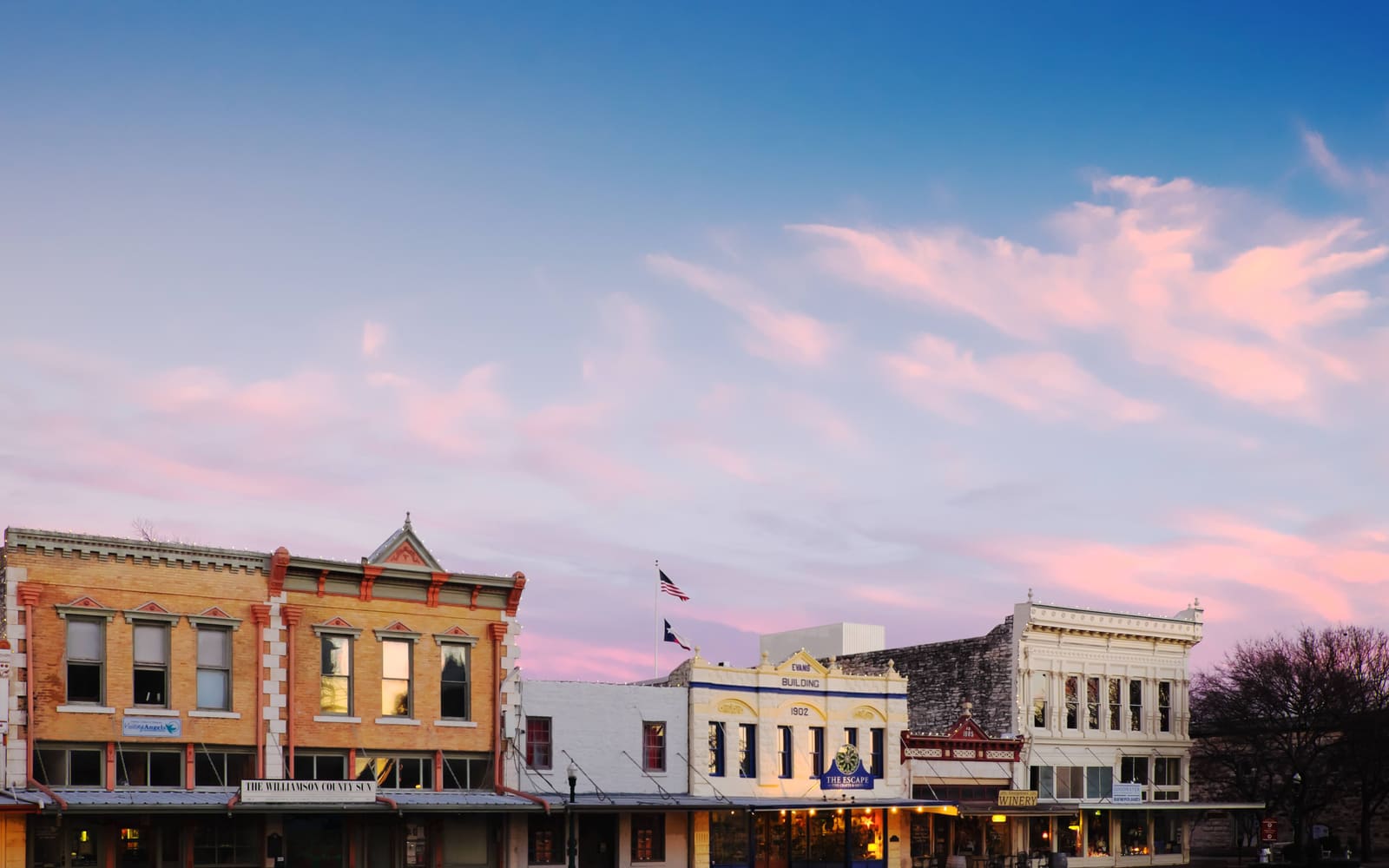
Georgetown
The most beautiful town square in Texas, and growing fast
Overview
Georgetown sits at the northern edge of the Austin metro, about 27 miles up I-35 from the capitol, and it has spent the last several years wearing two titles at once: the fastest-growing city in the United States (by percent change, multiple years running per Census Bureau estimates) and the holder of the “Most Beautiful Town Square in Texas.” Those two facts tell you most of what you need to know. This is a place that has roughly 100,000 residents now — up nearly 50% since 2020 — yet still anchors itself on an 1911 Beaux-Arts limestone courthouse ringed by turn-of-the-century storefronts, local coffee, and live music on the weekends.
What makes Georgetown different from the rafts of new-construction subdivisions further down the corridor is that it had a real downtown first. The growth is layered on top of a genuine historic core and a 180-plus-year-old liberal arts college, not bolted onto a former cow pasture. You get the master-planned amenities and the small-town bones in the same ZIP code. The trade-off — and it is a real one — is that infrastructure, schools, and traffic are all being asked to absorb that growth at speed.
Where to Live (notable neighborhoods incl. Sun City, historic district)
Georgetown’s housing splits into a few clear lanes:
- Sun City Texas — The big one. A Del Webb–built 55+ active-adult community on the northwest side, Sun City is effectively a town within the town: golf courses, amenity centers, fitness, clubs, and thousands of single-story homes. Resale prices here run notably more attainable than the family-home neighborhoods — Sun City listings have hovered around the mid-$400Ks (verify) — which makes it one of the best-known retirement destinations in Central Texas.
- Wolf Ranch — A newer master-planned community on the southwest side (FM 2243 / Wolf Ranch Parkway), energy-efficient builder homes, amenity center, and trail access to the South San Gabriel. It’s the higher end of the local market; median list prices have run into the $600Ks (verify), so budget accordingly.
- The Historic District / Old Town — Walkable to the Square, with bungalows, Victorians, and craftsman homes on tree-lined streets. Inventory is thin and character commands a premium, but for buyers who want to walk to dinner and the farmers market, nothing else in the metro’s north end competes.
- Established suburban Georgetown — Neighborhoods like Berry Creek, San Gabriel Heights, and the older subdivisions off Williams Drive (78628/78633) offer more mature lots, more square footage per dollar, and a settled feel.
A practical note on ZIPs: 78626 skews to the east and the historic core, 78628 to the west/southwest (Wolf Ranch side), and 78633 to the northwest, which includes much of Sun City.
Schools
Georgetown is served by Georgetown ISD, a district of roughly 20 campuses spanning elementary through high school plus an alternative program. Performance across the district is solid-to-mixed rather than uniformly elite, which is honest and worth saying plainly.
On the strong end, Jo Ann Ford Elementary, Raye McCoy Elementary, and Village Elementary are routinely the district’s top performers, with Ford carrying a 5-star SchoolDigger rating and ranking in the top ~10% of Texas elementary schools (verify). Douglas Benold Middle School also rates above district and state averages. The two comprehensive high schools — Georgetown High School and East View High School — land more in the middle of the Texas pack (Georgetown High around a 3-star rating, ranked roughly mid-table statewide by U.S. News and SchoolDigger (verify)).
The takeaway for families: schools vary meaningfully by attendance zone, so this is a district where you verify the specific campus your address feeds into before you fall in love with a house. Don’t assume the district average applies to your street.
Real Estate Market
Georgetown’s median sale price sits in the low-to-mid $400Ks — recent monthly readings have ranged from the high $390Ks to the low $470Ks depending on the source and month (verify), with the broader typical range running roughly $330K to $650K+ once you account for Sun City on one end and Wolf Ranch / new luxury construction on the other.
The 2025–2026 market here has been a buyer’s-leaning market, a notable shift from the frenzy of a few years ago. Active inventory surged — listings climbed dramatically off their early-2025 lows — days-on-market stretched well past 100 in some months, and a majority of listings carried price cuts (reportedly north of 60% at points in 2025 (verify)). Median price per square foot has run around $215–$220 (verify). Translation: buyers have leverage and selection they didn’t have in 2021–2022, while sellers need to price to the current market rather than to last year’s comps.
Amenities & Parks
The headliner is Blue Hole, a turquoise swimming lagoon on the South Fork of the San Gabriel River, framed by limestone bluffs and a low historic dam — a beloved local cooling-off spot a short walk from the Square. From there the San Gabriel River trail system runs roughly nine miles of paved hike-and-bike paths connecting parks across town.
Beyond Blue Hole, Georgetown’s park inventory is genuinely deep for a city its size:
- Garey Park — The city’s newest large park, ~525 acres on the southwest side along the South San Gabriel, with equestrian facilities, a splash pad, trails, and a stocked pond.
- Lake Georgetown — A USACE reservoir northwest of town with boating, swimming, the Goodwater Loop hiking trail (~26+ miles around the lake (verify)), and camping.
- San Gabriel Park — A historic riverside park near downtown, recently renovated, that hosts community events and festivals.
Add the Williamson County Courthouse square itself, downtown’s 40-plus shops, the Palace Theatre, and Southwestern University’s campus, and the day-to-day amenity picture is strong.
Dining & Entertainment
The Square is the engine. City Post Chophouse (a former 1930s post office, now a steakhouse) and Wildfire handle the special-occasion end. Monument Cafe is the local institution — a 1940s-style diner doing scratch home cooking and famous pie. Roots Bistro covers sandwiches, pizzas, wine, and local brews south of the Square.
On the drinks-and-hang side, 600 Degrees Pizzeria & Draft House (a reborn 120-year-old bakery building) pours 30 taps a block off the Square, Barking Armadillo Brewing is the family-run craft brewery with a food truck and live music, and Barrels & Amps rounds out the live-music-and-cocktails crowd. Between the breweries, the Palace Theatre, the Red Poppy Festival, and a calendar of square events, Georgetown punches above its weight for entertainment — though for big-ticket concerts, pro sports, and a deep late-night scene, you’re still pointing the car toward Austin.
Location & Commute (I-35, toll 130, drive times to downtown/airport)
Georgetown anchors the north end of the I-35 corridor. Off-peak, downtown Austin is about 30–35 minutes (~27 miles); during the morning and evening rush, that I-35 run realistically stretches to 45–65 minutes — I-35 through Round Rock and North Austin is one of the most congested stretches in the state, and there’s no sugar-coating it.
Your relief valve is SH 130 (the toll road), which begins near Georgetown and runs down the east side of the metro. For trips to southeast Austin, the airport, or San Antonio, 130 (often paired with SH 45) bypasses the worst of I-35 and can save 10–20 minutes — at the cost of tolls and some extra distance. Austin-Bergstrom International Airport (AUS) is roughly 35–45 minutes south, and toll 130 is usually the smarter way there.
If your job is in North Austin, Round Rock, or the tech corridor, Georgetown commutes are very workable. If you’re commuting to downtown or far South Austin daily, go in with clear eyes about I-35.
The Honest Take (balanced pros / cons)
The pros are easy. A real, beautiful, walkable historic downtown — not a manufactured “town center.” A nationally recognized 55+ community in Sun City. Blue Hole, the San Gabriel, and an unusually strong parks system. Southwestern University adding culture and stability. Home prices that, by 2025–2026, give buyers more room and leverage than most of the metro. A genuine sense of place.
The cons are the flip side of the growth. Being the fastest-growing city in America means construction, road work, school-zone churn, and amenities and infrastructure perpetually catching up to rooftops. I-35 to downtown is a slog at rush hour. School quality varies real-ly by campus, so the district average can mislead. And Sun City’s 55+ rules mean a large, attractive chunk of the housing stock is simply off the table for younger families. Georgetown is a great fit for retirees, remote and North-Austin workers, and people who value a downtown — it’s a tougher fit if you need a sub-30-minute downtown-Austin commute every day.
Daily Life
A typical Georgetown week orbits the Square more than you’d expect from a metro suburb. Saturday mornings mean the farmers market and coffee downtown; summer afternoons mean Blue Hole or the river trail; weekends pull in festivals on the courthouse lawn. Errands are easy — Wolf Ranch Town Center and the Williams Drive / I-35 retail corridors cover the big-box and grocery basics, and an H-E-B is never far.
It’s a car-dependent place, like most of the metro, but the historic district is a real exception where walking to dinner is normal. Healthcare is well-covered locally thanks to St. David’s Georgetown Hospital and the broader Williamson County medical cluster. The overall texture is small-town-friendly with metro convenience bolted on — neighbors who know each other, layered onto the amenities of a city racing past 100,000.
FAQ
Is Georgetown really the fastest-growing city in the U.S.? Yes — the U.S. Census Bureau named Georgetown the fastest-growing city in the country (by percent change, among cities above a population threshold) for multiple recent years. Its population has grown nearly 50% since 2020 and passed 100,000 around 2024.
What’s the commute to downtown Austin like? Plan on about 30–35 minutes off-peak and 45–65 minutes at rush hour via I-35. Toll road SH 130 is the better option for the airport, southeast Austin, and San Antonio.
Do I have to be 55+ to live in Georgetown? No. That restriction applies only to Sun City Texas, the Del Webb 55+ community. The rest of Georgetown — the historic district, Wolf Ranch, and the established neighborhoods — is open to all ages.
What’s the typical home price? The median sits in the low-to-mid $400Ks, with a typical range of roughly $330K to $650K+. Sun City resales run more affordable; Wolf Ranch and new luxury construction run higher.
How are the schools? Georgetown ISD is solid overall with some standout campuses (Ford, McCoy, and Village elementaries rate highly), but quality varies by attendance zone — verify the specific schools your address feeds into.
What is there to do? The historic Square (40+ shops, restaurants, the Palace Theatre), Blue Hole swimming lagoon, ~9 miles of San Gabriel River trails, Lake Georgetown, Garey Park, local breweries, and a busy festival calendar including the Red Poppy Festival.
Is Georgetown a good place to retire? It’s one of Central Texas’s premier retirement destinations, largely on the strength of Sun City Texas — but the walkable downtown, healthcare access, and parks make it appealing well beyond the 55+ crowd.
Santa Rita Ranch
Austin Metro's #1 master-planned community — Crystal Lagoon resort living from the $310s
Welcome to Sam’s guide to Santa Rita Ranch — Austin Metro’s #1 master-planned community. Located in Liberty Hill (78642), Williamson County, this is an actively building community with multiple builders, anchored by a 2+ acre Crystal Lagoon, two amenity centers, and new construction starting in the $310s.
At a glance: #1 Austin Metro master-planned community for six consecutive years, a $430K median price, 3,200+ homes, a 2-acre Crystal Lagoon, and a $310K starting price.
Overview
Santa Rita Ranch has earned the #1 spot in Austin Metro new home sales for six consecutive years, and the reason is simple: best amenities at the best price. The Crystal Lagoon is a genuine resort experience — not a standard HOA pool. Liberty Hill ISD is a fast-growing district investing heavily in new campuses. For buyers who want the new-construction lifestyle with resort-level amenities and attainable pricing, Santa Rita Ranch is in a class of its own.
— Sam Sheikh, SpecTower Realty · NW Williamson County
Key facts:
- #1 Austin Metro MPC — six years running
- 2+ acre Crystal Lagoon Resort
- 2 amenity centers
- 3,200+ homes · active build (2016–present)
- $310K new construction entry
- $430K median sale price
Schools
Santa Rita Ranch is served by Liberty Hill ISD — a fast-growing district investing in new campuses.
Elementary (Pre-K – Grade 5): Bill Burden Elementary — Liberty Hill ISD · New Campus · Growing District. Bill Burden Elementary is one of Liberty Hill ISD’s newer campuses serving the Santa Rita Ranch community. LHISD is actively investing in school construction and staffing as enrollment grows with the community. School quality ratings are improving as the district matures — research current campus status at lisd.net. Tags: Liberty Hill ISD, New Campus, Small Class Sizes, Growing District. Note: verify assignment at lisd.net — boundaries evolve rapidly in fast-growing communities.
Middle School (Grades 6–8): Liberty Hill Middle School — Liberty Hill ISD · Growing Campus · Community Investment. Liberty Hill Middle serves the community with a growing campus. As LHISD invests in new facilities, middle school programming and resources are expanding. Tags: LHISD Middle, Growing District, New Facilities.
High School (Grades 9–12): Liberty Hill High School — Liberty Hill ISD · Growing Campus · CTE Programs. Liberty Hill High School serves the community with a growing campus and improving facilities. As the district continues to grow, investments in CTE programs, AP offerings, and educational resources are following enrollment growth. Tags: LHISD, Growing Campus, New Facilities, CTE Programs.
Liberty Hill ISD is a fast-growing district building new schools. School quality ratings are improving as the district matures. Buyers with school-age children should research current campus assignments and ratings at lisd.net. School boundaries evolve rapidly in fast-growing communities.
Real Estate Market
Liberty Hill · new construction · multiple builders · 2024–2025.
Price tiers:
- Entry — $310K – $380K: Smaller SF · multiple builders competing · attainable new construction
- Mid-Range (Most Active) — $380K – $480K: 3–4 BR · new construction · builder incentives common
- Upper Range — $480K – $580K: Larger plans · premium lots · enhanced finishes
- Premium — $580K – $750K+: Largest plans · lagoon or trail adjacency · custom upgrades
Market stats:
- Median Price: $430K
- Days on Market: 25–45 days
- Sale-to-List: 97%
- HOA (Master): $50–65/mo
What commands a premium: Crystal Lagoon adjacency · trail-adjacent lots · new construction quality · builder warranty · resort lifestyle at attainable price · strong resale from continued community demand.
What to consider: 45–55 min to downtown Austin · LHISD still maturing · limited retail nearby · ongoing construction throughout community · water utility growth considerations.
Amenities & Parks
Crystal Lagoon + resort pools + trails — no other Austin Metro community has this combination at this price.
- Crystal Lagoon (2+ Acres): Austin Metro’s most distinctive community amenity — a 2+ acre resort lagoon with crystal-clear filtered water, sandy beach perimeter, kayaking, paddleboarding, and cabana rentals. Nothing else in the metro comes close at this price point.
- Paloma Blanca Amenity Center: Primary community hub · resort-style pool complex · lazy river · splash pad · pavilion · fitness center · events and programming. The community’s main social gathering space.
- Flor Silvestre Amenity Center: Second amenity center serving newer community phases · pool · event spaces · sport courts. Two full amenity centers is uncommon — this is a mark of a premium master-planned build.
- Multiple Dog Parks: Off-leash dog parks distributed throughout the community phases. A practical amenity that makes Santa Rita Ranch particularly popular with dog-owning families.
- Hike & Bike Trail Network: Miles of planned trails connecting community phases. Nature-adjacent sections border open limestone terrain — trails have a Hill Country feel rather than a standard suburban path.
- Event Lawn & Pavilion: Community-wide events, outdoor concerts, holiday celebrations, and food truck nights. Santa Rita Ranch is known for its active social calendar — a genuine community culture, not just a subdivision.
Parks & Outdoors — Lake Georgetown, San Gabriel River, and Hill Country terrain within reach:
- Crystal Lagoon (in community): 2+ acre resort lagoon · sandy beach · kayak/paddleboard · cabana rentals · Austin Metro’s most distinctive community water feature.
- San Gabriel River Trails (nearby): Georgetown area trail system along the San Gabriel River · natural riparian habitat · hike and bike.
- Lake Georgetown (20 min): 1,310-acre reservoir · boating · fishing · camping · swimming beaches · hiking trails around the lake.
- Williamson County Regional Park (25 min): Multi-sport fields · dog park · trails · playgrounds · major regional recreational hub.
Dining & Entertainment
Lagoon days, community events, and the Georgetown corridor.
- Crystal Lagoon Season (Community Signature): The community’s defining experience — residents swim, kayak, paddleboard, and lounge on the sandy beach perimeter. Weekend lagoon days are Santa Rita Ranch’s signature social event. The 2+ acre lagoon operates like a private resort beach from spring through fall.
- Community Events & Concerts (Monthly Events): Regular outdoor concerts on the event lawn, food truck nights, holiday celebrations, and HOA-organized community socials. Santa Rita Ranch is known across the metro for its active social calendar and genuine neighborhood culture.
- Dell Diamond Baseball (40 min): Round Rock Express AAA baseball · 3400 E Palm Valley Blvd, Round Rock · family staple for the area. Affordable minor league entertainment and a classic Texas summer evening.
- Georgetown Square & Dining (20–25 min): Georgetown’s historic downtown square offers an authentic Texas small-town experience — locally owned restaurants, antique shops, and community events on the courthouse square.
Dining & Daily Services — Liberty Hill core and Georgetown corridor, with Cedar Park for full retail:
Liberty Hill (15–20 min):
- HEB Liberty Hill — Primary grocery · full service. Primary grocery option for Santa Rita Ranch residents. Growing commercial district around Liberty Hill’s HEB anchor.
- Liberty Hill Square — Local restaurants · growing district. Growing commercial hub with local dining options and expanding retail. The nearest walkable town center.
Georgetown (20–25 min):
- Georgetown Square Restaurants — Historic downtown · local dining. Georgetown’s historic courthouse square with local restaurants, coffee shops, and a genuine small-town Texas atmosphere.
- Cedar Park Corridor (35 min) — Full retail. 1890 Ranch, Whitestone corridor — all major national retailers, restaurants, and services. The full retail hub for Santa Rita Ranch residents.
Location & Commute
Liberty Hill · NW Williamson County · best for remote workers and Cedar Park employers.
- Downtown Austin — 45–55 min: SH-183 → Mopac or 183A · the key trade-off for resort lifestyle at this price.
- Cedar Park / Leander — 35–40 min: SH-29 → 183 or 183A · tech corridor employers, retail, medical.
- Georgetown Square — 20–25 min: SH-29 east → I-35 · historic downtown dining and retail.
- Leander MetroRail — 20–25 min: Drive to Leander Station → 45 min MetroRail to downtown Austin.
- Crystal Lagoon — in community: 2+ acre resort lagoon · sandy beach · kayak · paddleboard.
- HEB Liberty Hill — 15–20 min: Primary grocery · growing Liberty Hill commercial district.
The Honest Take
What commands a premium here: Crystal Lagoon adjacency, trail-adjacent lots, new construction quality, builder warranty, resort lifestyle at an attainable price, and strong resale from continued community demand.
What to consider before buying: it’s 45–55 minutes to downtown Austin, Liberty Hill ISD is still maturing, retail nearby is limited, construction is ongoing throughout the community, and there are water utility growth considerations.
The primary trade-off is clear: Santa Rita Ranch offers resort lifestyle at Austin Metro’s most attainable price point, with a longer commute. It’s best for remote workers or Cedar Park/Georgetown corridor employees. The Crystal Lagoon and resort lifestyle are major draws for buyers who want more than a standard suburban pool.
Daily Life
Resort living in Liberty Hill — Georgetown and Cedar Park for full retail and services.
Grocery:
- HEB Liberty Hill — SH-29, Liberty Hill · 15–20 min · primary grocery for Santa Rita Ranch residents.
- HEB Georgetown — Georgetown · 20–25 min · full-service alternative with broader selection.
- Cedar Park Retail Corridor — 35 min · Target, Costco, HEB, Whole Foods, all major retailers.
Medical:
- Ascension Seton Georgetown — Georgetown · 20–25 min · full-service regional hospital.
- Cedar Park Regional Medical — Cedar Park · 35–40 min · major hospital, specialty care.
Signature lifestyle:
- Crystal Lagoon — in community · 2+ acre resort lagoon · sandy beach · kayaking · paddleboarding · cabanas.
- Paloma Blanca Amenity Center — in community · resort pool · lazy river · splash pad · fitness center · community events.
- Trail Network — in community · miles of hike & bike trails · nature-adjacent sections.
Regional destinations:
- Georgetown Square — 20–25 min · historic downtown square · local dining and shops.
- Lake Georgetown — 20 min · 1,310-acre reservoir · boating, fishing, camping.
- Round Rock Premium Outlets — 40 min · 100+ outlet stores · major shopping destination.
FAQ
Why is Santa Rita Ranch ranked #1 in Austin Metro?
John Burns Real Estate Consulting and other industry trackers have ranked Santa Rita Ranch as the Austin Metro’s #1 master-planned community by new home sales for six consecutive years. In 2024, the community recorded 483 new home sales — driven by the Crystal Lagoon, multiple amenity centers, and competitive pricing from multiple builders.
What is the Crystal Lagoon?
A 2+ acre artificial lagoon with crystal-clear, heavily filtered water — essentially a large beach-and-swimming experience inside the community. Sandy perimeter beaches, kayak/paddle rentals, cabana reservations, and resort atmosphere. It’s the most distinctive community amenity in the Austin Metro at any price point.
What school district serves Santa Rita Ranch?
Liberty Hill ISD. A fast-growing district building new campuses as enrollment grows. School quality ratings are improving as the district matures. Buyers with school-age children should research current campus assignments at lisd.net.
How far is Santa Rita Ranch from Austin?
45–55 minutes to downtown Austin via SH-183. Closer to Cedar Park (35–40 min) and Georgetown (20–25 min). This is the primary trade-off: resort lifestyle at Austin Metro’s most attainable price point, with a longer commute. Best for remote workers or Cedar Park/Georgetown corridor employees.
Are homes still being built?
Yes — Santa Rita Ranch is actively building across multiple phases with multiple builders. New inventory is consistently available, often with builder incentives and rate buydowns. This is an active community in mid-build, not a finished subdivision.
What are HOA fees?
Master HOA approximately $50–$65/month — one of the lowest rates for an amenity-rich master-planned community in the metro. Covers Crystal Lagoon access, amenity centers, and community maintenance.
What are property taxes?
Williamson County with Liberty Hill ISD overlay — approximately 2.0–2.3% effective. Verify specific lot at wilcotx.gov — some phases may include MUD district overlays.
Who buys in Santa Rita Ranch?
Remote workers prioritizing lifestyle and value, tech workers at the Cedar Park/Leander corridor, first-time buyers, and families seeking new construction at Austin Metro’s best price-to-amenity ratio. The Crystal Lagoon and resort lifestyle are major draws for buyers who want more than a standard suburban pool.
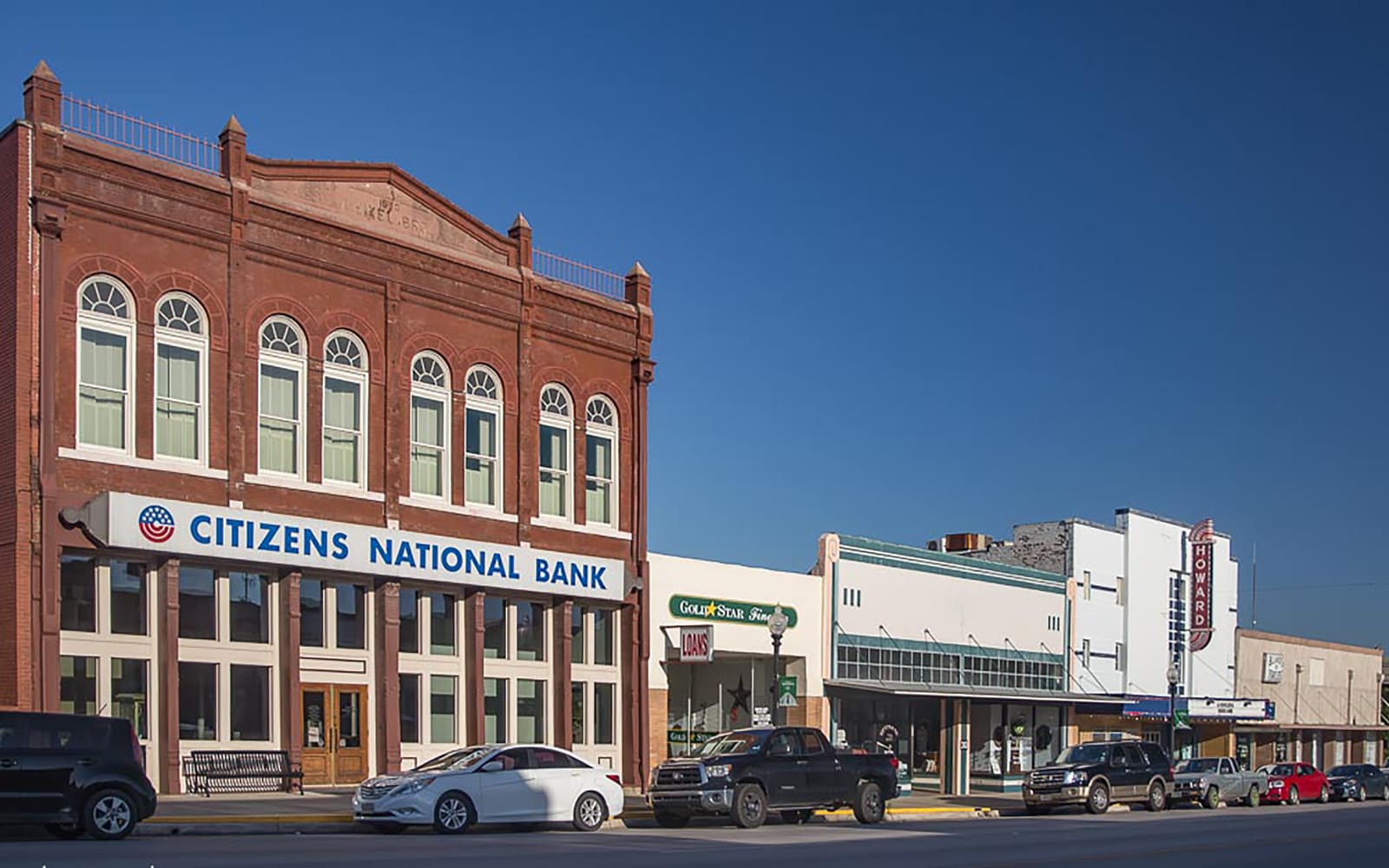
Taylor
The old cotton town that Samsung turned into a semiconductor boomtown
Overview
Taylor is a small city on the eastern edge of Williamson County, about 35 miles northeast of downtown Austin at the junction of US-79 and SH-95. For most of its history it was a classic Central Texas railroad and cotton town — a redbrick downtown, a couple of nationally famous barbecue joints, and roughly 15,000–18,000 residents who liked it quiet (verify current figure). Then, in late 2021, Samsung selected Taylor for a massive semiconductor manufacturing campus, and the town’s entire trajectory changed overnight.
The Samsung Taylor fab is the whole story here, and it’s an enormous one — a multi-billion-dollar advanced-chip facility that is among the largest single foreign investments in Texas history (widely reported at $17B for the first phase, with talk of far more over time — verify current figures). That plant, plus the supplier ecosystem and construction workforce that comes with it, has flipped Taylor from a sleepy agricultural town into one of the most-speculated-on real-estate markets in the metro. For a buyer, Taylor is a bet: you’re trading a longer commute and small-town amenities for entry prices that are still among the lowest in the Austin metro and an economic catalyst most suburbs would kill for.
Where to Live
Taylor is compact, and the housing splits between the older grid near downtown and a growing ring of new subdivisions on the edges:
- Historic Taylor / downtown core (around Main Street) — Early-20th-century bungalows, Victorians, and craftsman homes on tree-lined streets within walking distance of the redbrick downtown. This is where the character and the genuine value live; older homes here can still be found well under the city median, though condition varies widely.
- New-construction subdivisions (north and west edges) — Communities like Mustang Creek, Broadway Court, and other newer builder neighborhoods off US-79 and SH-95 are where most of the volume growth is happening, driven by Samsung-adjacent demand. Expect production builders, smaller lots, and HOA amenities.
- Rural/acreage tracts on the outskirts — Taylor is still surrounded by farmland, so acreage properties and small ranchettes are an option for buyers who want land, at a premium in scarcity as developers buy up the surrounding fields (verify).
A practical note: Taylor sits entirely within ZIP 76574, so you won’t be sorting neighborhoods by ZIP the way you would in a bigger city — it’s more about downtown-old versus edge-new, and how close a given subdivision sits to the Samsung campus on the town’s north side.
Schools
Taylor is served by Taylor ISD, a small district of roughly ten campuses covering the city and surrounding rural areas. Historically it has been a solid, middle-of-the-pack rural-suburban district rather than a nationally ranked one — Taylor High School and the district’s elementaries land around the middle of the Texas rankings on U.S. News and Niche (verify current ratings).
The bigger school story is what the Samsung-driven growth will do to the district. A rapid influx of families and tax base could substantially reshape TISD in the coming years — new campuses, bond programs, and rising enrollment are all plausible — but as of now, families should evaluate Taylor ISD on its current, modest standing rather than on the promise of what growth might bring. As with any district, verify the specific campus ratings for any address before you buy. Some buyers with school-age children specifically compare Taylor ISD against neighboring Hutto ISD and Georgetown ISD when weighing the trade-off between price and current school reputation.
Real Estate Market
Taylor’s median home price sits around $320K (verify), with most buyers working a range of roughly $250K to $500K depending on whether they’re buying older character stock near downtown or new construction on the edges. That median is one of the lowest in the Austin metro, which is precisely the draw — and precisely why Taylor has attracted so much investor and speculator attention since the Samsung announcement.
Here’s the honest read on the market: some of the Samsung-driven appreciation that was widely predicted in 2021–2022 got front-run by speculators, and the broader metro cooldown of 2024–2025 tempered the frenzy. Prices rose sharply on the announcement, then flattened as the wider Austin market softened and buyers grew cautious about paying up for a payoff that unfolds over a decade (verify current trend). For a patient buyer who believes in the long-run Samsung thesis, Taylor still offers a genuinely low entry point relative to the rest of the metro. For a short-horizon buyer expecting immediate flips, the easy money has likely already been made. Williamson County property taxes are high, as everywhere in Texas, so run that math carefully.
Amenities & Parks
Taylor’s amenities are small-town in scale but real. Murphy Park is the city’s central green space, with a large fishing pond, a public pool, playgrounds, and pavilions that host community events. Bull Branch and a handful of neighborhood parks fill out the city system, and the surrounding countryside offers the wide-open, low-density feel that a lot of Taylor residents specifically want.
For bigger-ticket recreation, Taylor residents point the car toward Williamson County’s larger amenities — Lake Granger to the northwest for boating and fishing, and the parks and trails of Round Rock and Georgetown to the west. The town’s amenity base is modest and will need to grow to keep pace with the population Samsung is drawing in; that infrastructure catch-up is one of the real growing pains here. What Taylor does have is authentic small-town texture — a genuine downtown, a Main Street festival calendar, and Friday-night high school football — that master-planned suburbs spend millions trying to fake.
Dining & Entertainment
Taylor punches wildly above its weight in one category: barbecue. This is genuine Central Texas smoke-pilgrimage territory — Louie Mueller Barbecue, a James Beard America’s Classics honoree operating out of a smoke-blackened 1949 building, is a nationally famous institution, and Taylor Cafe adds decades more of old-school pit history. People drive from Austin and beyond just to eat here, and for a barbecue lover, that alone is a lifestyle amenity.
Beyond the brisket, the historic downtown is Taylor’s social and entertainment core — restored redbrick storefronts, local restaurants and bars, coffee shops, antique stores, and a walkable district that hosts festivals and markets through the year. It’s a real, if small, downtown scene that’s been getting fresh energy (and new businesses) as the Samsung money and attention arrive. For a broad night out — a big concert, a wide restaurant selection, serious nightlife — Taylor residents drive to Round Rock, Georgetown, or Austin. The trade-off is classic small town: limited but authentic, with the metro’s full menu a car ride away.
Location & Commute
Taylor sits about 35 miles northeast of downtown Austin, and location is the single biggest thing a buyer has to weigh. The primary route out is US-79, which runs west through Hutto and Round Rock and connects to the toll network. For most Austin-bound trips, the smart move is US-79 to SH-130 (the toll road), which runs down the east side of the metro and bypasses the worst of I-35.
Rough drive times:
- Samsung Taylor campus: in-town, typically 5–15 min from most Taylor neighborhoods — the entire point for anyone working there.
- Round Rock / North Austin tech corridor: ~30–40 min via US-79.
- Downtown Austin: ~45–55 min off-peak via US-79 and SH-130; longer at rush hour.
- Austin-Bergstrom International Airport (AUS): ~40–50 min, usually fastest via SH-130.
The honest summary: if you work at Samsung or elsewhere in eastern Williamson County, Taylor’s location is excellent. If you commute daily to downtown or central/west Austin, this is a long haul and you should test-drive it at rush hour before you commit.
The Honest Take
The pros are real, and they’re mostly about the future. Taylor offers some of the lowest home prices in the entire Austin metro, an authentic small-town downtown with genuine character, world-class barbecue, and — the headliner — the Samsung semiconductor fab, one of the largest economic catalysts any Texas suburb has ever landed. For a buyer with a long horizon who believes in that catalyst, the value proposition is compelling.
The cons are equally real, and mostly about the present. Taylor is far from central Austin — a 45–55 minute off-peak commute that’s a genuine daily tax if your job is downtown. The schools are currently middle-of-the-pack, not elite. Amenities and infrastructure are small-town and racing to catch up with the growth. And the Samsung upside, while enormous, plays out over a decade and carries real execution risk — chip-fab timelines and economics shift, and some early speculative appreciation already happened. Property taxes are high. The right buyer here is patient, values space and low entry prices over polish and proximity, and is comfortable betting on Taylor’s trajectory rather than its current amenity set.
Daily Life
Day to day, Taylor still feels like a small Texas town that happens to be sitting on top of a boom. Residents do everyday shopping along US-79 and in downtown, grab barbecue that people fly in for, and reserve weekends for Murphy Park, Main Street festivals, high school football, or drives out to Lake Granger. The rhythm is slower and more neighborly than the master-planned suburbs down the corridor — people know each other, and the downtown is a genuine gathering place rather than a manufactured “town center.”
The trade-offs of that small-town life are the flip side: fewer big-box options, a modest restaurant bench outside the barbecue, and a real dependence on the car for anything metro-scale. Grocery and daily errands are covered locally, but a Costco run or a night at a major venue means a drive west. What you’re buying into is a town in transition — quieter and cheaper than its neighbors today, with a semiconductor-sized question mark over the next ten years. People who thrive here are the ones excited by that trajectory and content with authentic-but-limited amenities in the meantime.
FAQ
What’s the deal with Samsung in Taylor? Samsung is building a massive advanced-semiconductor manufacturing campus on Taylor’s north side — one of the largest foreign investments in Texas history (reported around $17B for the first phase, with potential for much more over time — verify current figures). It’s the central reason Taylor’s real estate and economic outlook changed dramatically, and it dominates the town’s growth story.
How much does a house cost in Taylor? The median sits around $320K (verify), with most buyers shopping roughly $250K–$500K — among the lowest entry points in the Austin metro. Older character homes near downtown can run below the median; new-construction subdivisions on the edges set the pace for volume.
How bad is the commute to Austin? Honest answer: it’s a haul. Downtown Austin runs about 45–55 minutes off-peak via US-79 and toll road SH-130, and longer at rush hour. Taylor works best for people employed at Samsung or elsewhere in eastern Williamson County; daily downtown commuters should test the drive first.
How are the schools? Taylor ISD is a small, currently middle-of-the-pack district. Growth from Samsung could reshape it substantially in coming years, but for now evaluate it on its current standing and verify specific campus ratings for any address.
Is now a good time to buy in Taylor? For a patient buyer who believes in the long-run Samsung thesis, Taylor still offers a genuinely low entry price. The easiest speculative gains likely happened right after the 2021 announcement, and the broader metro cooled in 2024–2025, so go in with a long horizon rather than a flip mentality (verify current trend).
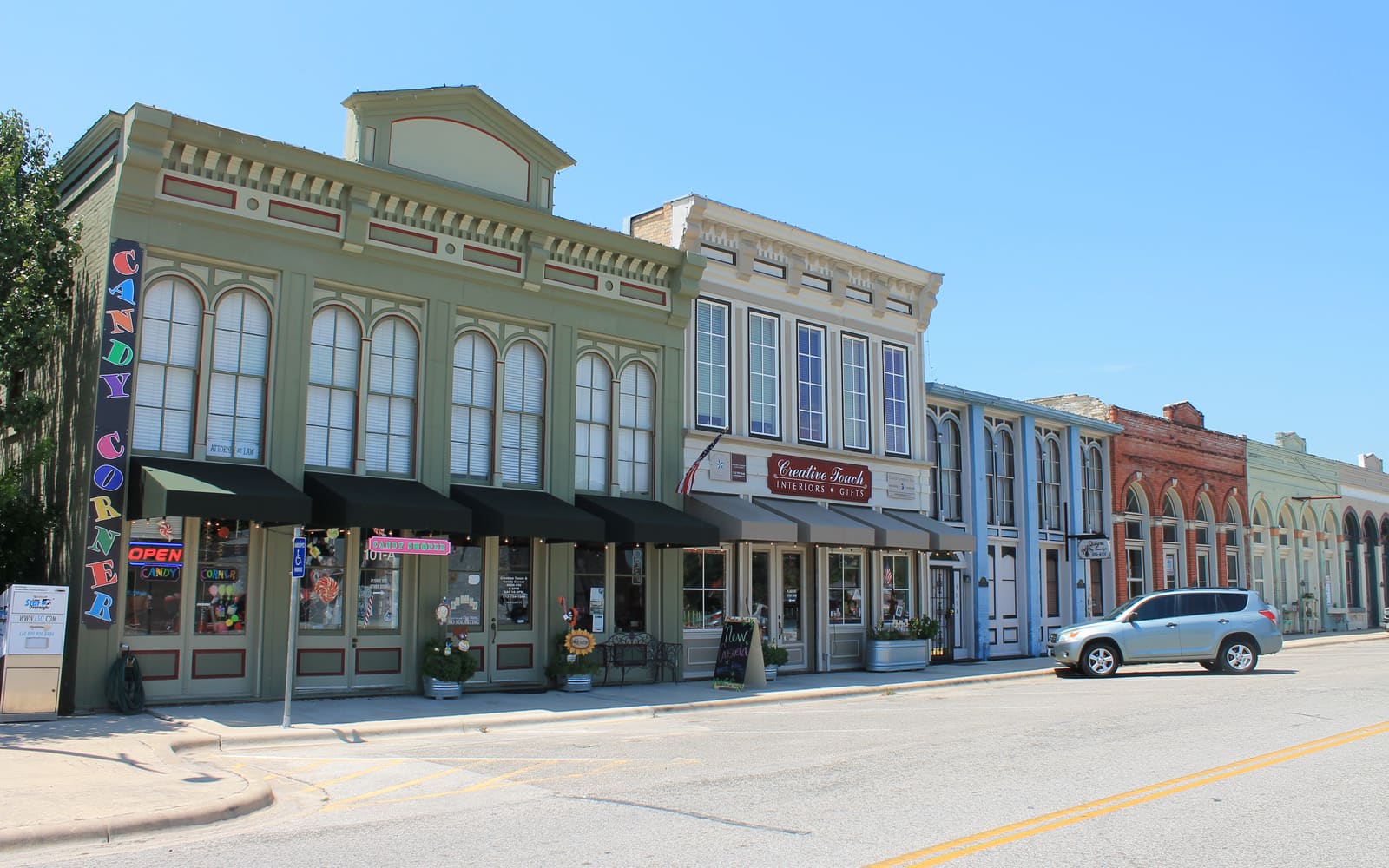
Hutto
Hippos, fast growth, and some of the metro's best new-construction value
Overview
Hutto is a fast-growing city in eastern Williamson County, sitting on US-79 between Round Rock and Taylor, about 30 miles northeast of downtown Austin. Its defining quirk is impossible to miss: Hutto is the “Hippo City,” a mascot legend that traces back to a circus hippo that reportedly escaped a rail car in town over a century ago. Today concrete hippo statues dot the streets and the high school teams are the Hippos — it’s genuine small-town identity, and locals lean into it hard.
Behind the whimsy is one of the metro’s clearest bedroom-community growth stories. Hutto’s population has roughly quadrupled since 2000 and now sits around 32,000 (verify), driven almost entirely by affordable new construction and its position on the eastern edge of the North Austin tech corridor. It’s close enough to Round Rock, the Dell ecosystem, and the SH-130 toll network to make commuting workable, and cheaper than most of its western neighbors — which is the whole pitch. The nearby Samsung fab in Taylor has only sharpened Hutto’s appeal as a place to buy in ahead of eastern Williamson County’s growth. For a buyer, Hutto is largely a new-construction value play with a commute trade-off and a lovable mascot.
Where to Live
Hutto is dominated by master-planned and production-builder subdivisions, so the neighborhood you pick shapes daily life more than the city line does:
- Star Ranch — One of Hutto’s larger and better-known communities, built around a golf course on the south/west side, with a mix of established and newer homes, amenity center, and pool. A settled feel relative to the newest builds.
- Emory Farms, Brushy Creek Crossing, Riverwalk, and Carmel — A cluster of newer master-planned and production communities off US-79 and CR-137 with builder homes, HOA amenities, pools, and trails. This is where most of the volume growth is happening, and where the affordable-new-construction value lives.
- Cottonwood Creek / Legends of Hutto — Established mid-2000s subdivisions offering more mature landscaping and often more square footage per dollar than the brand-new sections.
- Downtown / old Hutto (around the historic core) — Smaller, older homes near the town’s original grid and the emerging Co-Op District. Limited inventory but the closest thing Hutto has to character-and-walkability.
Practically all of Hutto sits within ZIP 78634, so buyers sort by subdivision and by proximity to US-79 rather than by ZIP. Homes closer to the highway trade a bit of quiet for a faster commute out.
Schools
Hutto is served by Hutto ISD, a rapidly growing district that has been building campuses to keep up with the rooftops. It’s a solid, improving suburban district that lands generally around the middle of the Texas rankings — Hutto High School and the district’s elementaries rate in the average-to-above-average range on U.S. News and Niche (verify current ratings). The district’s signature is arguably its athletics and its fast facility growth rather than elite academic rankings.
The honest framing for families: Hutto ISD is a decent, growing district rather than a nationally ranked one like Round Rock ISD next door, and that gap is part of why Hutto homes cost less. The rapid enrollment growth means new schools, bond programs, and shifting attendance boundaries — a plus for facilities, but something to verify for any specific address, since the campus your street feeds may change as the district expands. As always, evaluate the specific feeder pattern rather than the district name alone.
Real Estate Market
Hutto’s median home price sits around $355K (verify), with most buyers working a range of roughly $280K to $500K. The market is overwhelmingly new and near-new construction, which is exactly the appeal — for buyers who want a modern, move-in-ready home with a warranty and neighborhood amenities, Hutto delivers more house for the money than Round Rock or Georgetown to the west.
The market read for 2025–2026 tracks the broader metro cooldown: after the pandemic run-up, Hutto prices flattened and inventory rose, handing buyers more negotiating room and builder incentives than they’ve had in years (verify current trend). Because Hutto leans so heavily on production builders, buyers here have real leverage on new-construction concessions — rate buydowns, closing-cost help, and upgrades are common. The long-term demand thesis rests on the eastern Williamson County growth engine (the tech corridor plus the Samsung fab in nearby Taylor), which is durable. Williamson County property taxes are high, and new-construction MUD or PID districts can add to the tax bill in some subdivisions — check the total tax rate for any specific address, not just the list price.
Amenities & Parks
Hutto’s amenity base is growing but still catching up to its population — a common growing pain for a town that expanded this fast. The city runs a network of neighborhood parks and trails, with Fritz Park near downtown as a central green space, and most master-planned subdivisions include their own pools, playgrounds, and trail systems that function as residents’ everyday recreation.
The most interesting development is the Co-Op District, a large mixed-use redevelopment of the old farmers’ co-op site near downtown Hutto, envisioned to bring restaurants, retail, entertainment, a hotel, and gathering space to give the city a genuine urban center it has historically lacked (verify current build-out status). It’s a signal of where Hutto is headed. For bigger recreation today, residents lean on Round Rock’s excellent parks (Old Settlers Park, the Brushy Creek trail) a short drive west, and on Williamson County’s larger amenities. The honest read: Hutto’s own amenity set is modest and improving, and a lot of the “things to do” still involve a drive to Round Rock or Austin.
Dining & Entertainment
Hutto’s dining and entertainment scene is small but growing, anchored by its downtown and by the promise of the Co-Op District. The historic downtown carries local restaurants, coffee, and small businesses along the old rail-and-grain core, and it hosts community events and festivals through the year — the town’s hippo-themed civic identity makes for a genuinely fun small-town festival calendar.
Everyday dining runs along the US-79 corridor, where you’ll find the chains, fast-casual spots, and family restaurants typical of a growing suburb, with an H-E-B and big-box shopping nearby. For a broader night out — a wide restaurant selection, live music, nightlife — Hutto residents drive to Round Rock (with its revitalized downtown and Dell Diamond) or into Austin. The Co-Op District is the wildcard that could give Hutto a real local scene of its own over the next few years, but for now the honest picture is limited-but-friendly local options with the metro’s full menu a short drive west.
Location & Commute
Hutto sits about 30 miles northeast of downtown Austin, and its location is a genuine strength for corridor commuters. The main artery is US-79, which runs west through Round Rock (connecting to I-35 and the toll network) and east to Taylor. For Austin-bound trips, the smart route is US-79 to SH-130 (the toll road), which runs down the east side of the metro and bypasses the worst of I-35, or US-79 west to I-35 and the SH-45 toll for the tech corridor.
Rough drive times:
- Round Rock / Dell / North Austin tech corridor: ~20–30 min via US-79 — the sweet spot Hutto is built around.
- Samsung Taylor campus: ~15–20 min east on US-79.
- Downtown Austin: ~40–50 min off-peak via US-79 and SH-130; longer at rush hour.
- Austin-Bergstrom International Airport (AUS): ~35–45 min, usually fastest via SH-130.
The honest summary: for anyone working in Round Rock, the North Austin tech corridor, or the Taylor Samsung fab, Hutto’s location and price combination is excellent. For a daily downtown-Austin commuter, it’s a longer haul — workable via the tolls, but worth test-driving at rush hour.
The Honest Take
The pros are straightforward. Hutto offers some of the best new-construction value in the North Austin metro — modern, move-in-ready homes with warranties and amenities at prices below Round Rock and Georgetown. It’s well-positioned on the US-79 / SH-130 corridor for tech-corridor and Samsung-fab commuters, it has a genuinely charming small-town identity (yes, the hippos), and an emerging Co-Op District that could give it a real center. For a buyer chasing space and a new home at an attainable price, Hutto is a strong pick.
The cons are the flip side of fast, cheap growth. Schools are decent-but-not-elite — a real gap versus Round Rock ISD next door, and part of why homes cost less. Amenities and infrastructure are still catching up to the population, so “things to do” often means a drive to Round Rock or Austin. The downtown-Austin commute is a genuine haul at 40–50 minutes off-peak. And some subdivisions carry MUD/PID taxes on top of already-high Williamson County rates, so the total tax bill can surprise buyers who only look at list price. The right buyer here values new-home value and corridor access over top-tier schools and a deep local scene.
Daily Life
Day to day, Hutto runs on its subdivisions and the US-79 corridor. Most residents live in a master-planned community with a pool and trails, do everyday shopping along US-79 (H-E-B, big-box, fast-casual), and reserve weekends for neighborhood amenities, Round Rock’s parks and ballpark, downtown Hutto festivals, or a trip into Austin. It’s a family-forward, car-dependent suburban rhythm — youth sports are big, the Hippo civic pride is real, and the pace is a notch quieter than the busier suburbs to the west.
The trade-offs are the standard fast-growth ones: a modest local amenity and dining set that still sends residents west for a big night out, ongoing construction as the town keeps expanding, and total dependence on a car. Groceries and daily errands are easy and close; anything metro-scale is a drive. What you get in exchange is a newer home for less money and a genuine small-town identity that the master-planned suburbs down the corridor can’t manufacture. People who thrive in Hutto are the ones who wanted a new house they could afford, a workable corridor commute, and a friendly town to grow into.
FAQ
What’s with the hippos in Hutto? Hutto is the self-proclaimed “Hippo City,” an identity that legend traces to a circus hippo that escaped a rail car in town over a century ago. The high school teams are the Hippos, concrete hippo statues dot the streets, and the mascot is a genuine source of local civic pride and festival fun.
How much does a house cost in Hutto? The median sits around $355K (verify), with most buyers shopping roughly $280K–$500K. The market is overwhelmingly new and near-new construction, and builder incentives (rate buydowns, closing help) have been common in the 2025–2026 market (verify current trend).
How bad is the commute? For Round Rock, the North Austin tech corridor, or the Samsung Taylor fab, Hutto’s location is excellent — 15–30 minutes. Downtown Austin is a longer 40–50 minutes off-peak via US-79 and toll road SH-130; test it at rush hour if you’ll drive it daily.
How are the schools? Hutto ISD is a decent, fast-growing suburban district that lands around the middle of the Texas rankings — solid but not elite like neighboring Round Rock ISD, which is part of why homes cost less. Verify the specific campus for any address, since boundaries shift as the district expands.
Should I watch out for extra taxes? Yes — some Hutto subdivisions sit in MUD or PID districts that add to an already-high Williamson County property tax rate. Always check the total tax rate for a specific address, not just the list price, before you commit.
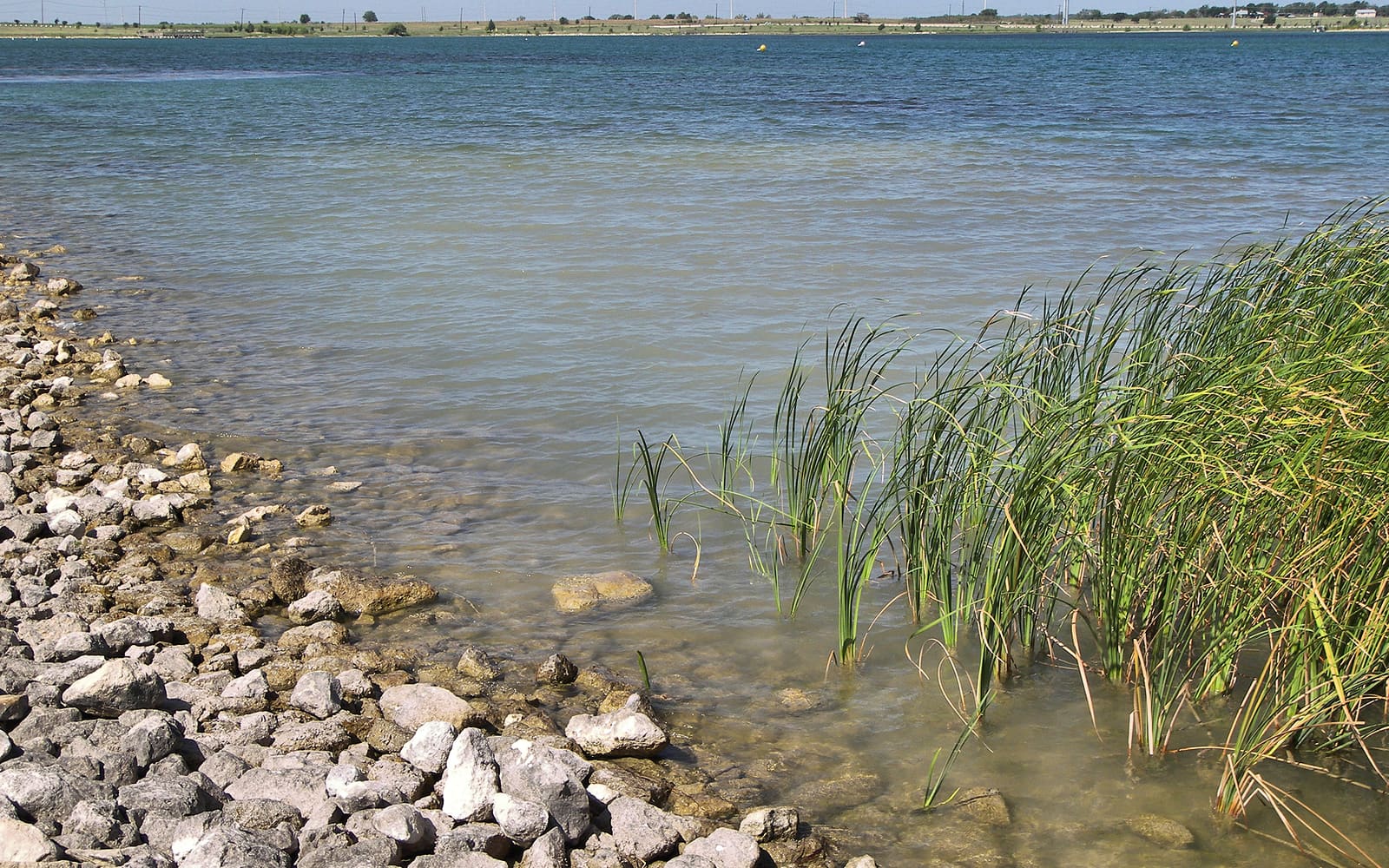
Pflugerville
The hard-to-spell suburb that quietly became one of Austin's best value plays
Overview
Pflugerville is a Travis County suburb on the northeast edge of Austin, roughly 16 miles from downtown, wedged between I-35 on the west and SH-130 (the toll road) on the east. Founded by German immigrants in the 1800s — hence the famously tricky spelling (it’s “FLEW-ger-ville,” and the P is silent) — it spent decades as a small farming town before Austin’s northward sprawl swallowed it. Today it’s a substantial suburb of around 72,000 residents (verify) and one of the more quietly successful value plays in the metro.
Pflugerville’s advantage is location. It sits closer to the Domain, the North Austin tech corridor, and the Dell/Amazon employment cluster than Round Rock or Georgetown, while still pricing below Austin proper. It’s also one of Central Texas’s more genuinely diverse suburbs — a family-forward, middle-class community that consistently shows up on “best places to live” and “most diverse” lists (verify). Add real amenities like Lake Pflugerville and the Typhoon Texas waterpark, and you get a suburb that competes hard on the value-plus-location axis. For a buyer working in North Austin who wants space, decent schools, and a shorter commute than the Williamson County suburbs offer, Pflugerville is often the answer.
Where to Live
Pflugerville is a city of subdivisions ranging from established 1990s–2000s neighborhoods to ongoing new construction, plus a compact historic core:
- Blackhawk — One of Pflugerville’s larger and better-known master-planned communities on the east side near SH-130, built around a golf course, with amenity centers, pools, and trails. A settled, family-heavy feel and a popular choice.
- Falcon Pointe — A well-regarded master-planned community on the east side with resort-style amenities (multiple pools, fitness, trails) and a strong family reputation.
- Avalon, Highland Park, Villages of Hidden Lake, Sorento, and Carmel — A range of established and newer subdivisions across the city offering production and semi-custom homes, HOA amenities, and varying proximity to the lake and the highways.
- Old Town / downtown Pflugerville — The historic core around Main Street and Pfluger Park, with older homes, more character, and the closest thing to walkability, near the city’s revitalizing downtown.
- The Lake Pflugerville area — Neighborhoods ringing the reservoir on the northeast side, prized for trail and water access.
Most of Pflugerville falls within ZIP 78660. A practical split: the west side sits closer to I-35 and the older commercial core, while the east side (Blackhawk, Falcon Pointe, the lake) trends newer and closer to the SH-130 toll route.
Schools
Pflugerville is served by Pflugerville ISD, a large and diverse district of roughly 30 campuses serving the city plus parts of northeast Austin and surrounding areas. It’s a solid, mixed district — many campuses rate average-to-above-average, with some strong performers, while others land lower, and the district’s diversity is one of its defining and often-praised features (verify current ratings). The district runs multiple comprehensive high schools including Hendrickson, Pflugerville, Weiss, and Connally, each with its own feeder pattern and reputation.
The honest framing for families: PfISD is a good, large, uneven district rather than a uniformly elite one, and quality varies meaningfully by campus and attendance zone. Hendrickson High School generally carries one of the stronger reputations, but you should verify the specific feeder pattern and current campus ratings for any address rather than relying on the district name. This is a district where buying by zone — not by reputation — is the smart move.
Real Estate Market
Pflugerville’s median home price sits around $390K (verify), with most buyers working a range of roughly $300K to $600K depending on age, size, and neighborhood. That price point undercuts Austin proper while offering a shorter commute to the North Austin job cluster than the Williamson County suburbs — the core of Pflugerville’s value argument.
The 2025–2026 market has tracked the broader metro cooldown: after the pandemic surge, prices flattened and inventory rose, giving buyers meaningfully more negotiating room and selection than they had a few years ago (verify current trend). The housing stock is a healthy mix — 1990s–2000s resale in established neighborhoods, plus ongoing new construction on the edges — so buyers can choose between mature, tree-lined subdivisions and brand-new builds with incentives. Travis County property taxes are high, and some newer subdivisions carry MUD taxes that push the total rate higher, so check the full tax rate for any address. The demand fundamentals — proximity to Dell, Amazon, the Domain, and the broader tech corridor — are durable, which is the real underpinning of the market here.
Amenities & Parks
Pflugerville’s amenity game is genuinely strong for a suburb its size. The crown jewel is Lake Pflugerville, a ~180-acre reservoir on the northeast side circled by a roughly 3-mile paved trail, with a swimming beach, fishing, kayak and paddleboard rentals, and open water for non-motorized boating (verify exact figures). It’s a real recreational anchor that a lot of suburbs its size simply don’t have.
The other headliner is Typhoon Texas, a large waterpark on the city’s edge that serves as the metro’s northeast summer destination and rainy-day birthday-party fallback. Beyond those, the city parks system is deep: Pfluger Park along Gilleland Creek near downtown hosts festivals and is connected by the Gilleland Creek Trail, and neighborhood parks, pools, and greenbelts fill out the map. The city’s parks-and-rec calendar is active, with the Pfall Pfest and other cleverly P-branded community events. Between the lake, the waterpark, and the trail network, Pflugerville has an unusually complete outdoor-and-recreation picture for a value-priced suburb.
Dining & Entertainment
Pflugerville’s dining and entertainment scene is practical and diverse rather than a destination in itself. The city’s genuine diversity shows up on the plate — you’ll find a solid range of international restaurants (Mexican, Asian, Indian, and more) alongside the chains and fast-casual spots typical of a growing suburb, mostly along the I-35, FM 1825 (Pecan Street), and SH-130 corridors. Local favorites and a growing craft scene have given the city more of its own food identity in recent years (verify).
The revitalizing downtown / Old Town Pflugerville around Main Street and Pfluger Park is the emerging social core, hosting the farmers market, festivals like the Deutschen Pfest (a nod to the German heritage), and a growing cluster of local businesses. For a broad night out — big concerts, deep nightlife, a wide fine-dining selection — Pflugerville residents point the car toward the Domain (very close) or into Austin. The honest read: everyday dining is diverse and convenient, downtown is coming along, and the metro’s full entertainment menu is a short drive south.
Location & Commute
Pflugerville’s location is its headline strength. It sits about 16 miles northeast of downtown Austin, framed by I-35 to the west and SH-130 to the east, with US-183 and the Domain-area tech corridor just to the south. That geometry makes it notably closer to the North Austin job cluster than Round Rock or Georgetown.
Rough drive times:
- The Domain / North Austin tech corridor (Dell area, Amazon, Apple): ~15–25 min — the sweet spot Pflugerville is built around.
- Downtown Austin: ~25–35 min off-peak via I-35 or SH-130; 40–55 min at rush hour on I-35.
- Austin-Bergstrom International Airport (AUS): ~25–35 min, usually fastest via SH-130.
- Round Rock: ~15–20 min west.
The relief valve is SH-130, which lets east-side residents bypass I-35 entirely for the airport, southeast Austin, and San Antonio. The honest summary: for a North Austin tech worker, Pflugerville offers one of the shortest realistic commutes of any affordable suburb. For a daily downtown commuter, I-35 at rush hour is the usual metro tax — workable, but plan around it or use SH-130.
The Honest Take
The pros are strong and often underrated. Pflugerville sits closer to the Domain and the North Austin tech corridor than the higher-profile Williamson County suburbs, at a price that undercuts Austin proper. It has genuine amenities most value suburbs lack — Lake Pflugerville, Typhoon Texas, a deep parks system — and it’s one of the metro’s more authentically diverse, family-forward communities. For a North Austin worker who wants space, a shorter commute, and real recreation without Austin pricing, the value case is excellent.
The cons are honest and manageable. Schools are good-but-uneven — a solid, diverse district rather than a top-ranked one, so you must buy by the specific feeder zone. I-35 to downtown is the standard rush-hour slog (SH-130 helps). Travis County property taxes are high, and some subdivisions add MUD taxes on top, so the total tax bill can surprise you. It’s a car-dependent suburb, and the local dining/entertainment scene, while diverse and improving, still sends residents to the Domain or Austin for a big night out. The right buyer here prioritizes location, value, and amenities over elite school rankings and walkable urban energy.
Daily Life
Day to day, Pflugerville blends suburban convenience with an unusually strong outdoor life. Most residents live in a subdivision with a pool and trails, do everyday shopping along I-35 and Pecan Street, and reserve weekends for the Lake Pflugerville trail, Typhoon Texas in summer, a downtown festival, or the short hop to the Domain for shopping and dining. It’s a diverse, family-forward rhythm — youth sports, the lake, and the parks-and-rec calendar structure a lot of the week.
The trade-offs are the standard suburban ones: near-total car dependence and an I-35 commute that shapes how you plan your day. But Pflugerville’s geometry softens both — the Domain and the tech corridor are genuinely close, and SH-130 gives an easy toll bypass east. Errands are big-box convenient, with H-E-B and full retail nearby. People who thrive here tend to be North Austin workers who wanted the shortest realistic commute at an affordable price, plus families drawn to the diversity, the lake, and the amenity set. Get the school zone right and the commute optimized, and Pflugerville is one of the metro’s most livable value plays.
FAQ
How do you even spell (and say) Pflugerville? It’s P-F-L-U-G-E-R-V-I-L-L-E, pronounced “FLEW-ger-ville” — the P is silent. The name comes from the German immigrant Pfluger family who settled the area in the 1800s, and the town leans into the quirk with events like the Deutschen Pfest and Pfall Pfest.
How much does a house cost in Pflugerville? The median sits around $390K (verify), with most buyers shopping roughly $300K–$600K. Prices undercut Austin proper, and the 2025–2026 market has given buyers more inventory and negotiating room than a few years ago (verify current trend).
How’s the commute compared to Round Rock or Georgetown? Better for North Austin jobs — Pflugerville sits closer to the Domain and the tech corridor (~15–25 min), and downtown Austin runs about 25–35 minutes off-peak via I-35 or SH-130. That location edge is one of its main selling points.
How are the schools? Pflugerville ISD is a large, diverse, solid-but-uneven district with several high schools (Hendrickson often carries a strong reputation). Quality varies by campus, so verify the specific feeder pattern and current ratings for any address rather than buying on the district name.
What is there to do in Pflugerville? Lake Pflugerville (swimming, fishing, a ~3-mile trail, kayak rentals), the Typhoon Texas waterpark, a deep neighborhood parks system, the Gilleland Creek trail, and a growing downtown with festivals and a farmers market — plus the Domain’s shopping and dining just to the south.
Are property taxes high? Yes — Travis County rates are high (Texas’s trade for no income tax), and some newer subdivisions add MUD taxes on top. Always check the total tax rate for a specific address before you buy, since it can move your monthly payment significantly.
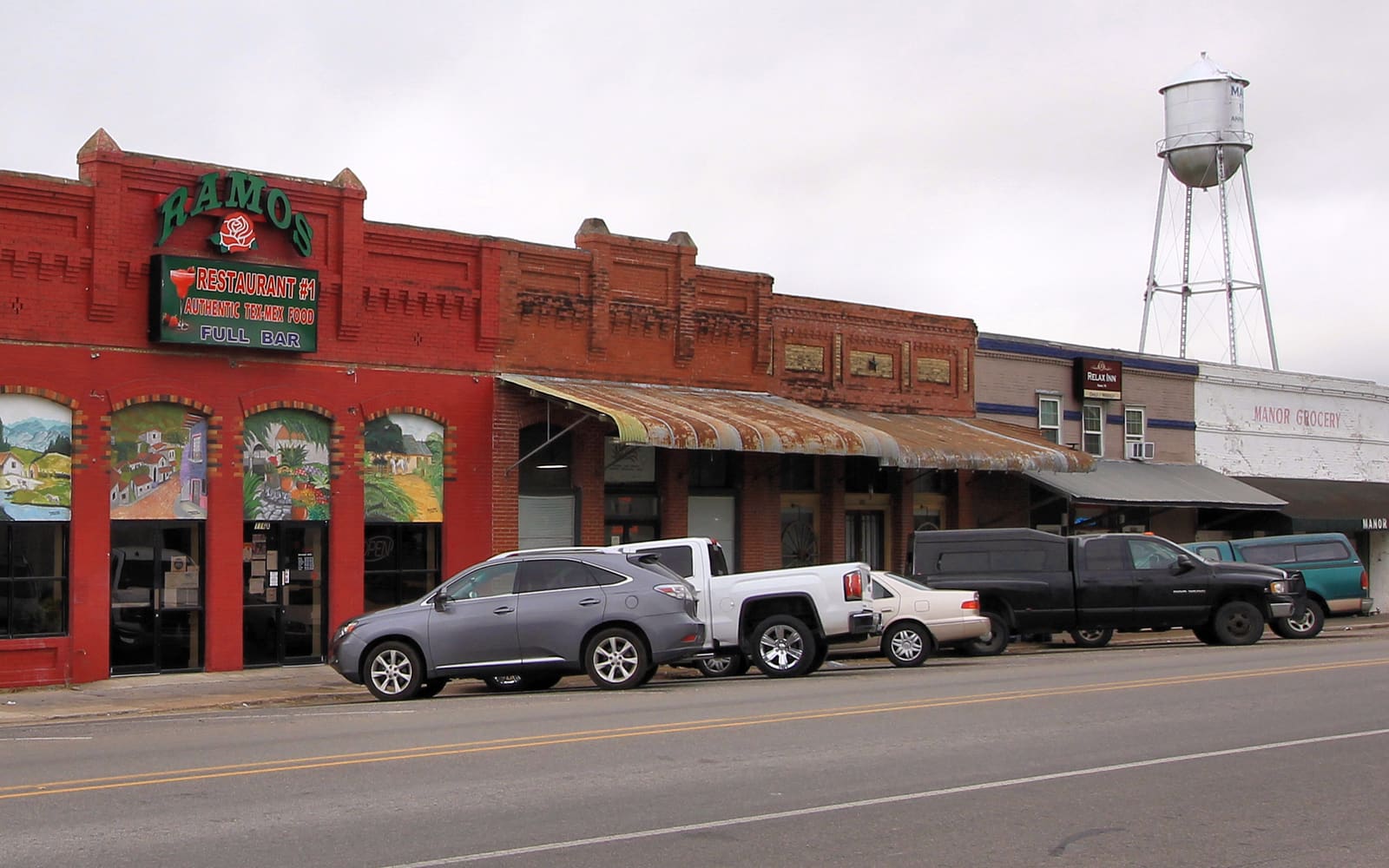
Manor
Austin's affordable eastern edge, riding the Tesla and SH-130 wave
Overview
Manor (pronounced “MAY-ner” by locals) is a small city on the eastern edge of Travis County, about 13 miles east of downtown Austin along US-290, right where the SH-130 toll road cuts north–south. For most of its history it was a tiny farming town of a few thousand people. Austin’s eastward growth — and the arrival of major employers on the metro’s east side — has changed that fast, pushing the population toward 14,000 (verify) on a wave of affordable new construction.
Manor’s pitch is simple and increasingly compelling: it is one of the most affordable places you can buy this close to Austin. It sits minutes from the SH-130 corridor, which connects it quickly to Tesla’s Gigafactory (in nearby Del Valle/southeast Travis County), Austin-Bergstrom airport, and the eastern logistics and manufacturing cluster that’s reshaping the region. For a buyer priced out of Austin proper who wants a short-ish commute and a new home at an attainable price, Manor is a genuine value play — with the honest caveats that come with a small town growing very fast on the metro’s less-polished eastern flank.
Where to Live
Manor’s housing is dominated by newer master-planned and production-builder subdivisions, with a small older core:
- ShadowGlen — The big one. A large master-planned, golf-course community on the west side toward Austin, with amenity centers, a resort-style pool complex with a lazy river, trails, and thousands of homes. It’s Manor’s most established and amenity-rich community and a popular family choice.
- Presidential Meadows — An established, more affordable subdivision offering some of the lowest entry prices in the area, popular with first-time buyers.
- Bell Farms, Wildhorse (Wildhorse Ranch), EastVillage, and Whisper Valley (nearby) — A range of newer master-planned and production communities off US-290 and SH-130 with builder homes, HOA amenities, and modern designs. Whisper Valley (just outside Manor proper) is notable as a sustainability-focused, geothermal-and-solar community.
- Old downtown Manor — The small historic core with older homes, more character, and modest prices, near the town’s original grid.
Nearly all of Manor sits within ZIP 78653. Buyers sort by subdivision and by proximity to US-290 and SH-130 rather than by ZIP — communities on the west side sit closer to Austin, while the newest builds push east and north.
Schools
Manor is served by Manor ISD, a fast-growing district serving the city and a large slice of eastern Travis County. It’s a diverse, rapidly expanding district that has historically ranked toward the lower-to-middle end of the Texas rankings, and it’s building campuses quickly to keep up with enrollment growth (verify current ratings). The district runs multiple high schools including Manor High School and Manor New Technology High School, the latter a project-based-learning early college model that has drawn positive attention.
The honest framing for families: Manor ISD is a growing, improving, but currently modest-performing district, and that is a real part of why Manor homes cost less than comparably-located areas with stronger districts. Rapid growth means new schools and shifting boundaries — a plus for facilities, but verify the specific campus and current rating for any address. Families weighing Manor should evaluate the district on its current standing, and some buyers with school-age children specifically compare it against neighboring Pflugerville ISD or Del Valle ISD when weighing the price-versus-schools trade-off.
Real Estate Market
Manor’s median home price sits around $330K (verify), with most buyers working a range of roughly $270K to $450K. That makes Manor one of the most affordable near-in markets in the entire Austin metro — the core of its appeal. The market is overwhelmingly new and near-new construction, so buyers get modern, move-in-ready homes with warranties and neighborhood amenities at prices well below Austin proper.
The 2025–2026 market has tracked the broader metro cooldown: after the pandemic surge, prices flattened and inventory rose, and because Manor leans heavily on production builders, buyer incentives (rate buydowns, closing help, upgrades) have been common (verify current trend). The long-term demand thesis rests on Austin’s eastward growth and the SH-130 employment corridor — Tesla, Amazon, and the logistics-and-manufacturing cluster — which is a genuine, durable catalyst. The trade-off buyers should weigh honestly: Manor’s affordability partly reflects its schools, its less-established feel, and some flood-plain considerations near creeks and low-lying areas (verify for any specific address). Travis County property taxes are high, and many Manor subdivisions carry MUD taxes that push the total rate notably higher — check the full tax rate for any address, not just the list price, because in Manor it can be a big line item.
Amenities & Parks
Manor’s amenity base is small and growing, in the way you’d expect from a town expanding this fast. The city runs a set of neighborhood parks, and ShadowGlen and the other master-planned communities carry the recreational load with their own pools (ShadowGlen’s lazy-river complex is a standout), trails, and playgrounds that function as residents’ everyday amenities. The city’s downtown parks and the Manor Community Park area host local events.
For bigger recreation, Manor residents lean on Austin’s east-side and metro amenities a short drive west — and the region’s parks, lakes, and trails are all reachable via US-290 and SH-130. The honest read: Manor’s own public amenity set is modest and racing to catch up with its growth, which is one of the real growing pains of buying into a town at this stage. What you’re buying is affordability and location; the polished parks-and-rec experience of a mature suburb like Round Rock or Pflugerville isn’t fully here yet, though the master-planned communities soften that within their own gates.
Dining & Entertainment
Manor’s dining and entertainment scene is limited — this is a small town, and honesty demands saying so plainly. Everyday dining runs to the chains, fast-casual, and taquerias along US-290, with an H-E-B and big-box shopping nearby or a short drive toward Austin. The small historic downtown carries a handful of local spots and hosts community events, but it’s modest.
The upside is proximity: Manor sits close to East Austin, one of the city’s most dynamic and fast-changing dining, bar, and music quarters, plus the full menu of Austin’s food and entertainment a 20–30 minute drive west. For a broad night out, Manor residents simply drive into Austin — and being on the east side, they’re closer to East Austin’s scene than most Williamson County suburbs are. The honest picture: local options are sparse but the metro’s best is genuinely close, which is a fair trade for the price.
Location & Commute
Manor’s location is a real asset for east-side and corridor workers. It sits about 13 miles east of downtown Austin on US-290, right at the SH-130 interchange. That geometry puts it minutes from the SH-130 employment corridor and gives it an easy toll bypass around I-35.
Rough drive times:
- Tesla Gigafactory (Del Valle / southeast Travis County): ~20–30 min south via SH-130 — a key part of Manor’s employment pitch.
- Downtown Austin: ~25–35 min off-peak via US-290; longer at rush hour.
- Austin-Bergstrom International Airport (AUS): ~20–30 min via SH-130 — genuinely convenient.
- The Domain / North Austin tech corridor: ~30–40 min.
The honest summary: for anyone working along the SH-130 corridor — Tesla, Amazon, the east-side logistics cluster — or at the airport, Manor’s location is excellent and the commute short. For a daily downtown or west-Austin commuter, it’s workable via US-290 but a real drive at rush hour; test it before committing. SH-130 is the corridor that makes Manor’s location argument work.
The Honest Take
The pros are about value and position. Manor is one of the most affordable places to buy this close to Austin, with modern new-construction homes at entry prices well below the city. It sits right on the SH-130 corridor, minutes from Tesla’s Gigafactory, the airport, and the fast-growing eastern employment cluster, and it’s closer to East Austin’s dynamic scene than most suburbs. For a buyer priced out of Austin who works on the east side or along SH-130, the value case is strong.
The cons are real and worth naming plainly. Manor ISD is a growing but currently modest-performing district — a genuine part of why homes cost less. Local amenities and dining are sparse and racing to catch up with growth, so a lot of life still means a drive into Austin. Many subdivisions carry MUD taxes on top of already-high Travis County rates, so the total tax bill can be a significant surprise — always check it. Some areas near creeks have flood-plain considerations to verify. And the town still feels less-established than the polished suburbs to the north and west. The right buyer here prioritizes affordability and SH-130/east-side location over top schools, mature amenities, and a settled feel.
Daily Life
Day to day, Manor is a small, fast-growing town where most residents live in a newer subdivision, do everyday shopping along US-290, and lean on their community’s own pool and trails for recreation. The rhythm is affordable-suburban and family-forward, with the twist that Austin’s east-side energy is genuinely close — a quick drive west opens up East Austin’s food, bars, and culture in a way most Williamson County suburbs can’t match.
The trade-offs are the standard fast-growth, small-town ones: a thin local amenity and dining set that sends residents into Austin for anything beyond the basics, ongoing construction as the town expands, near-total car dependence, and a tax structure (Travis County plus MUD in many subdivisions) that buyers must budget carefully. What you get in exchange is a modern home at one of the metro’s lowest near-in prices, an easy SH-130 shot to the eastern job corridor, and a bet on Austin’s continued eastward push. People who thrive in Manor are value-focused buyers — often working at or near the SH-130 employers — who are comfortable trading polish and top schools for price and position.
FAQ
Why is Manor so much cheaper than other Austin suburbs? A few reasons, honestly: Manor ISD is a growing but currently modest-performing district, the town feels less-established than polished suburbs to the north, amenities are still catching up, and many subdivisions carry MUD taxes. In exchange you get one of the lowest near-in entry prices in the whole metro, which is the core of Manor’s appeal.
How much does a house cost in Manor? The median sits around $330K (verify), with most buyers shopping roughly $270K–$450K — among the most affordable near-in markets in the Austin metro. The stock is overwhelmingly new construction, and builder incentives have been common in the 2025–2026 market (verify current trend).
How’s the commute, and how close is Tesla? Manor sits on US-290 at the SH-130 interchange, about 25–35 minutes to downtown Austin off-peak. Tesla’s Gigafactory in Del Valle is roughly 20–30 minutes south via SH-130, and the airport is ~20–30 minutes — the SH-130 corridor is what makes Manor’s location work.
How are the schools? Manor ISD is a fast-growing, diverse district that currently ranks toward the lower-to-middle end of the Texas rankings, though it’s building campuses and improving. Manor New Tech High School’s project-based model has drawn positive attention. Evaluate the district on its current standing and verify the specific campus for any address.
Should I worry about property taxes or flooding? Watch both. Many Manor subdivisions sit in MUD districts that push the total tax rate well above the base Travis County rate, so check the full rate for any address. And some areas near creeks and low-lying land have flood-plain considerations — verify the flood status of any specific property before you buy.
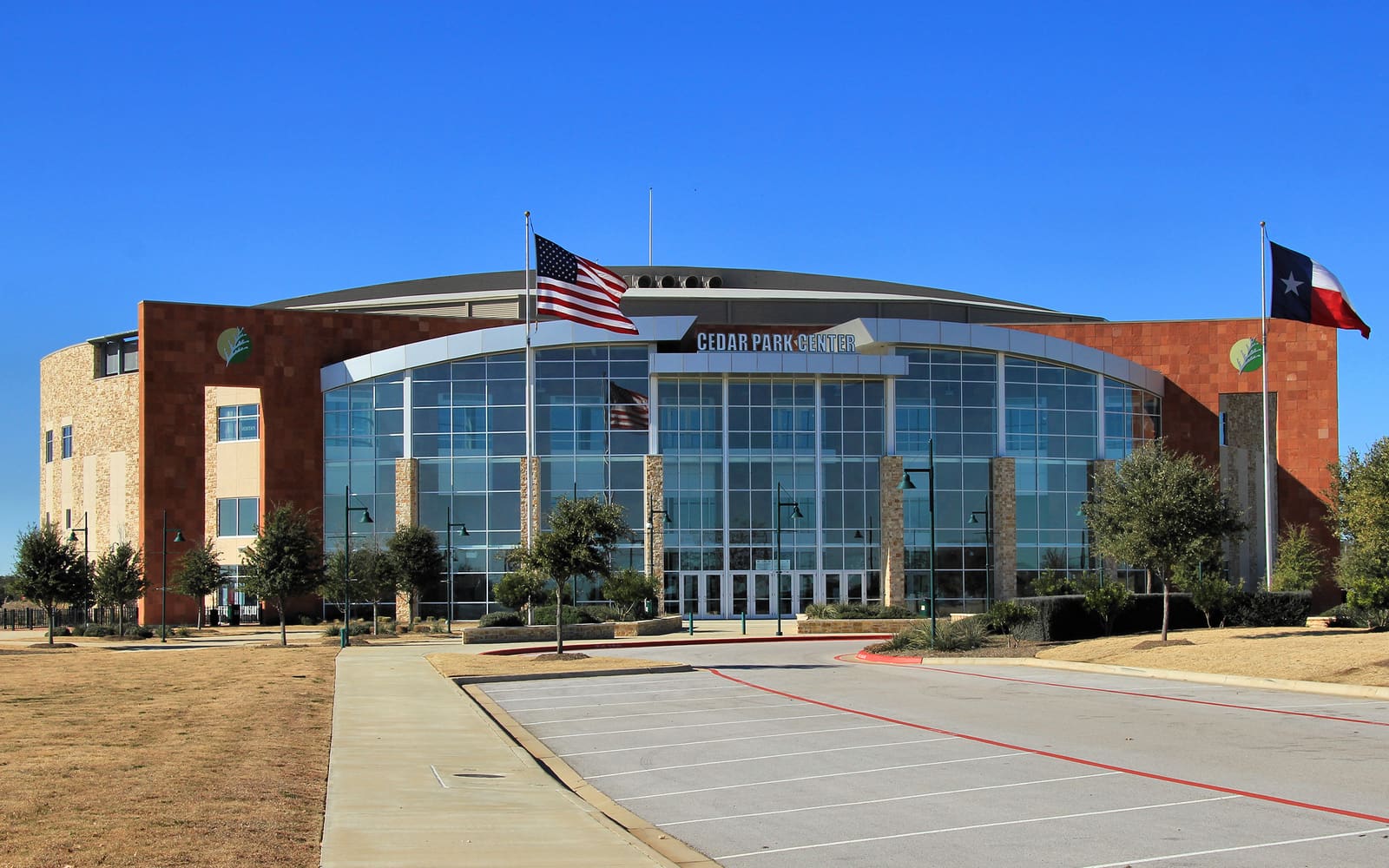
Cedar Park
Family-first suburb with toll-road speed to tech jobs
Overview
Cedar Park sits in southern Williamson County, wedged between Austin’s northern edge and the start of the Hill Country, and it has spent the last two decades growing from a quiet ranching crossroads into one of Central Texas’s most-requested suburbs. The population now runs around 82,000 and keeps climbing — some 2024 estimates already put it closer to 84,000 (verify) — which tells you most of what you need to know: people keep choosing it, and they keep staying.
The pitch is consistent and honest. You get strong schools, low crime, master-planned neighborhoods with pools and trails, and a tax-advantaged Texas address — all about 30 minutes from downtown Austin and even closer to the northwest tech corridor. What you give up is the grit and walkable density of central Austin. Cedar Park is suburban by design. The good news for anyone who’s watched it grow is that the city is actively building a center of gravity — the Bell District redevelopment is turning 54 acres of old Bell Boulevard frontage into a real downtown with a new library, public lawn, retail, and housing. For years the knock on Cedar Park was “great schools, no there there.” That’s changing.
Where to Live (notable neighborhoods within Cedar Park)
Cedar Park is essentially a quilt of master-planned and established subdivisions, most of them carved out along the two big roadways — 183A/Bell Boulevard running north-south and Whitestone Boulevard (FM 1431) running east-west. A few names come up again and again:
- Avery Ranch — One of the largest and most recognizable communities in the 78613 area, organized around the Avery Ranch Golf Club. Resort-style pools, trails, and a mix of move-up and luxury homes. Technically straddles the Cedar Park/Austin line, but it sets the tone for the whole eastern side.
- Ranch at Brushy Creek — A newer master-planned community on the east side with luxury inventory, quick access to the Brushy Creek Regional Trail, and minutes from Avery Ranch golf.
- Buttercup Creek — One of the more established neighborhoods, ringed by nature preserves and dotted with parks and pools (Lakeline Park, the McCann parks, Rosemary Denny Park). Mature trees, slightly softer pricing, and a loyal long-term-resident base.
- Cypress Mill — An established, family-friendly subdivision that shows up consistently on local neighborhood maps; a solid middle-of-the-market option.
- Carriage Hills, Deer Creek, and the Cedar Park Town Center area — Older, central neighborhoods closer to the original town core, generally a touch more affordable with mature landscaping.
A useful rule of thumb: the older, established west-and-central neighborhoods (Buttercup Creek, Carriage Hills) tend to price below the newer master-planned east side (Avery Ranch, Ranch at Brushy Creek), and they trade newer finishes for bigger trees and shorter lines to schools.
Schools
Schools are the headline reason most families land in Cedar Park, and the credentials hold up. The bulk of the city is served by Leander ISD, which has consistently earned top-tier marks — an A+ overall on Niche’s 2025 rankings and repeated recognition as one of the best districts in the Austin metro and the state (verify the exact year-over-year ranking, as these shift annually). Cedar Park High School earned an overall “A” rating from the Texas Education Agency for the 2024–2025 school year.
A few things worth knowing for buyers:
- District is not one-to-one with the city. Most of Cedar Park is Leander ISD, but the southeastern fringes near the Austin line can fall into other attendance zones. Always confirm the specific school assignment for an individual address rather than assuming “Cedar Park = Leander ISD.”
- High-performing charters exist too. BASIS Cedar Park (primary and middle/upper) consistently ranks among the top-rated public charter campuses in Texas, giving families a strong tuition-free alternative to the zoned schools.
- Higher ed is close. Austin Community College has a Cedar Park campus, and the larger Austin universities are a manageable drive.
Real Estate Market
Cedar Park is one of the pricier suburbs in the Austin metro, and the market reflects steady demand against a backdrop of the broader regional cooldown. As of recent data the median sale price sits roughly in the $500,000–$525,000 range (verify — figures move month to month and by source; some 2025 readings landed nearer $500K after the 2022 peak). Prices softened year over year coming off the pandemic-era surge, which has been a genuine opening for buyers who were priced out two or three years ago.
The housing stock is overwhelmingly single-family detached (roughly three-quarters of units), which is exactly what you’d expect from a family-oriented suburb. Inventory and days-on-market have loosened compared with the frenzy of 2021–2022 — recent reads showed median days on market in the high teens and a modest year-over-year bump in active listings — so buyers have a little more room to negotiate than they did at the peak. For sellers, well-priced, well-maintained homes in good attendance zones still move; the days of listing anything and getting twelve offers are over. Newer construction concentrates on the east and north (Avery Ranch, Ranch at Brushy Creek, communities pushing toward Leander); the value plays are the established central neighborhoods.
Amenities & Parks
For a suburb its size, Cedar Park is genuinely well-equipped for the outdoors. The crown jewel is the Brushy Creek Regional Trail, a paved multi-use path that links a string of parks and lets you walk, run, or bike for miles without fighting traffic. Brushy Creek Sports Park anchors organized recreation with athletic fields, a skate park, and a disc golf course, and the 183A Trail runs alongside the toll road as a dedicated shared-use path for commuting cyclists and walkers.
Beyond the marquee spots, parks are baked into the neighborhood DNA — Buttercup Creek alone touches Lakeline Park, McCann Park, McCann Dog Park, and Rosemary Denny Park, and most master-planned communities come with their own pools, splash pads, and pocket trails. The result is a place where “let’s go to the park” rarely involves more than a five-minute drive. Lake Travis and the Hill Country lakes are an easy weekend reach to the west, and the Cedar Park Recreation Center rounds out the city-run amenities.
Dining & Entertainment
The center of Cedar Park’s commercial life is 1890 Ranch, a large shopping center with 80-plus stores, services, and restaurants anchored by Super Target, Academy, Hobby Lobby, and a 12-screen Cinemark theater — so dinner-and-a-movie is genuinely a one-stop trip. Most of the city’s restaurants cluster along the Whitestone Boulevard (FM 1431) and Bell Boulevard (Hwy 183) corridors.
Local favorites and standouts include:
- Jack Allen’s Kitchen — Polished, locally rooted Texas comfort food; a reliable Cedar Park staple.
- The Peached Tortilla — Asian-Southern fusion that earned its Austin reputation before expanding north.
- Takara Sushi & Asian Bistro — A long-running 1890 Ranch sushi and Asian bistro.
- Alzer’s BBQ — Frequently named among the best barbecue in the greater Austin area, not just Cedar Park.
- Dog Haus Biergarten, Fogonero, Super Saps Thai, Amy’s China Cuisine — A solid bench across casual to fine-dining-adjacent.
The biggest entertainment draw is the H-E-B Center at Cedar Park, the city’s premier venue, which hosts 130-plus events a year and is home to the AHL’s Texas Stars (the Dallas Stars’ affiliate) and the NBA G League’s Austin Spurs. Concerts, family shows, and graduations fill the rest of the calendar. It sits right at New Hope Drive and 183A, so getting in and out is painless by suburban-arena standards.
Location & Commute (183A toll, 183, drive times to downtown/Apple/airport)
The defining infrastructure of Cedar Park is the 183A toll road, which runs about 16 miles from RM 620 in northwest Austin up through Cedar Park and into Leander. It’s fully electronic — no booths, no slowing down — and it’s the reason the commute math works for so many residents. Parallel to it, the older US-183 (Bell Boulevard) carries the free, stoplight-heavy local traffic.
Rough drive times (off-peak; add meaningfully in rush hour, and verify against your exact address):
- The Domain / Apple’s North Austin campus: ~20–25 minutes via 183A — this is the commute Cedar Park is built for, and it’s the single biggest reason tech workers land here.
- Downtown Austin: ~30 minutes off-peak; realistically 35–50+ during peak, even with tolls.
- Austin-Bergstrom International Airport (AUS): ~30–45 minutes depending on route and traffic; it’s on the far southeast side, so it’s the longest regular trip.
CapMetro also runs commuter service in the corridor (the Leander Park & Ride feeds the rail line just north), which gives downtown commuters a non-driving option. But make no mistake — Cedar Park is a car-and-toll-tag town, and budgeting for the toll lanes is part of living here.
The Honest Take
The case for Cedar Park:
- Genuinely strong, A-rated Leander ISD schools — the real reason the demand is sticky.
- Fast, predictable toll access to the northwest tech corridor (Apple, the Domain) in ~20–25 minutes.
- Low crime, master-planned neighborhoods, abundant parks and trails, and the H-E-B Center on your doorstep.
- A real downtown finally arriving via the Bell District — addressing the longtime “no center” complaint.
- Williamson County’s tax and services profile, with strong long-term appreciation history.
The honest trade-offs:
- It’s a suburb, full stop — if you want walkable, urban, or eclectic, this isn’t it (yet).
- Pricing runs above many Austin-metro peers; you pay for the schools and the location.
- Downtown Austin is a real commute at rush hour, and tolls are a recurring cost, not optional for most.
- Property taxes are meaningful (Texas funds schools through them) — factor the rate, not just the price.
- Growth has brought traffic on Whitestone and Bell; the city is dense enough now to feel it.
Daily Life
Day-to-day, Cedar Park runs on a comfortable suburban rhythm. Mornings mean the 183A merge toward the Domain or downtown; evenings mean youth sports at Brushy Creek Sports Park, a Texas Stars game at the H-E-B Center, or a trail walk before dinner. Errands are easy and consolidated — 1890 Ranch and the H-E-B-anchored centers cover most of what a household needs without a trip into Austin. It’s the kind of place where you know your neighbors, the pool is a community event in summer, and the school calendar quietly organizes the year.
It’s a family town first, but not exclusively. Young professionals priced toward the tech corridor, retirees who want low-maintenance and good healthcare (Cedar Park Regional Medical Center is right in town), and remote workers who want space and good internet all fit. The trade for that ease is sameness — this is curated suburbia, not bohemian Austin — but for a lot of households, that predictability is exactly the product they came for.
FAQ
Is Cedar Park a good place for families? Yes — it’s arguably the city’s core identity. A-rated Leander ISD schools, low crime, parks in nearly every neighborhood, youth sports infrastructure, and master-planned communities with pools make it a textbook family suburb.
What school district is Cedar Park in? Most of the city is Leander ISD, which is consistently top-rated in the Austin metro. A few southeastern edges near the Austin line can fall into other zones, and strong tuition-free charters (BASIS Cedar Park) are also available — always confirm the specific assignment for an individual address.
How long is the commute to downtown Austin? About 30 minutes off-peak via the 183A toll road, but realistically 35–50 minutes or more during rush hour. The toll lanes are electronic and fast; the free US-183 route is slower with more stoplights.
How close is Cedar Park to Apple and the tech jobs? Very close — Apple’s North Austin campus and the Domain are roughly 20–25 minutes via 183A (verify against your address). That proximity to the northwest tech corridor is a primary reason professionals choose Cedar Park.
What’s the housing market like right now? The median sale price sits around $500K–$525K (verify — it varies by month and source). Prices cooled off the 2022 peak, days on market have loosened into the high teens, and buyers have more negotiating room than they did during the frenzy — while well-priced homes in good school zones still sell.
What is there to do in Cedar Park? The H-E-B Center hosts 130-plus events a year, including Texas Stars hockey and Austin Spurs basketball. Add 1890 Ranch (shopping, dining, Cinemark), the Brushy Creek Regional Trail, Brushy Creek Sports Park, and a growing restaurant scene along Whitestone and Bell.
What is the Bell District? A 54-acre public-private redevelopment of the old Bell Boulevard frontage into a walkable downtown — new city library, a central lawn and event space, 1,200–1,500 apartments at buildout, retail, dining, and office. Vertical construction has been phasing in, with a 2027 opening anticipated (verify timeline).
Avery Ranch
Austin's most amenity-rich master-planned community
Overview
Avery Ranch is a master-planned community of 4,000+ homes across 26 sub-neighborhoods in Austin’s 78717 ZIP, Williamson County. It carries Austin city addresses and sits within Austin city limits, but borders Cedar Park — residents access Cedar Park retail, medical, and services daily, so for practical purposes it functions as both. The suburban Cedar Park vibe (family-oriented, active, green) dominates day-to-day life more than Austin proper.
The community spans homes built roughly 2001–2020, with a full range from condos and townhomes to luxury single-family. At a glance:
- Median sale price: $645K (full range $338K–$1.35M)
- Homes: 4,000+ across 26 sections at build-out
- Top school rating: 10/10 (Elsa England Elementary)
- Connected trails: 8.5 miles
- Amenity centers: 5
- Golf course: 226 acres, 18 holes
- Apple Campus: 8–12 minutes, no toll required
It is an established community with 25+ years of identity and a packed social calendar.
Schools
Most of Avery Ranch (north of Parmer Lane / FM 1431) is zoned to Round Rock ISD. Homes south of Parmer Lane are Leander ISD (also excellent — Vista Ridge High is 8/10, a different district).
The school zone you buy into doesn’t just shape your child’s future — it shapes the entire trajectory of your investment. In my 15 years working Central Texas, the England Elementary boundary is the single most searched data point buyers ask me about in Avery Ranch. Families drive these streets before they ever call an agent. Get the school zone right, and you’ve made one of the best decisions of your life — both personally and financially.
— Sam Sheikh, SpecTower Realty · Cedar Park & NW Austin
Elementary (Pre-K – Grade 5)
Elsa England Elementary — 10/10 · 987 students · 8801 Dink Pearson Ln, Austin 78717
Top 3% Texas · G&T Program · PLTW STEM · 89% Reading · 80% Math. One of the most sought-after elementary schools in all of Central Texas. The Gifted & Talented program draws families from across the metro. Being in this boundary adds measurable premium to home values — verified across every market cycle Sam has tracked.
Private alternative: Challenger School – Avery Ranch · Pre-K – 8th · 15101 Avery Ranch Blvd · 2021 National Blue Ribbon School.
Middle School (Grades 6–8)
Pearson Ranch Middle School — 8/10 · 919 students · pearsonranch.roundrockisd.org
Top 4.3% Texas · PLTW · 77%+ STAAR Reading · 4th in RRISD. One of the strongest middle schools in Round Rock ISD and consistently ranked among the top 5% in the state. Project Lead The Way STEM curriculum keeps students on a college-readiness track heading into McNeil High.
High School (Grades 9–12)
McNeil High — IB World School — 7/10 · 2,648 students · mcneil.roundrockisd.org
IB Diploma Programme · 51% AP Rate · 97% Grad Rate · SAT 1,270 Avg · ACT 29 Avg. An IB World School with one of the strongest college-prep records in Central Texas. Four College Success Awards, a full International Baccalaureate Diploma Programme, and a 97% graduation rate. Families choosing between Avery Ranch and nearby communities frequently cite McNeil High as the deciding factor.
Charter alternative: BASIS Cedar Park · K–11 · Rigorous STEM curriculum · 1,300 students · Application required.
School zones split at Parmer Lane (FM 1431). Homes south of Parmer Lane are Leander ISD — Vista Ridge High 8/10, also excellent, but a different district. Verify your specific address at roundrockisd.org before submitting any offer. Individual street assignments vary — do not rely on ZIP code alone.
Real Estate Market
Sources: Orchard · Rocket Homes · Kopare Real Estate · 2024–2025.
Price tiers
- Condos & Townhomes — $338K–$410K: HOA-covered amenities · lowest entry point into the community
- Entry-Level Single Family — $458K–$550K: Pre-2010 builds · 1,500–2,200 sq ft · great first-home value
- Mid-Range Single Family — $550K–$750K (Most Active): Sweet spot · 2,200–3,500 sq ft · updated kitchens & open layouts
- Upper Range — $750K–$1.0M: Larger lots · premium finishes · golf or trail adjacency
- Luxury & Large SF — $1.0M–$1.35M: Custom builds · 4,000+ sq ft · rare on market
Market snapshot
- Median price: $645K
- Days on market: 24–57 days
- Sale-to-list: 98%
- Price reduced: ~50% of listings
- Property tax rate (2025): 2.17%
What commands a premium: England Elementary zone · trail or golf adjacency · updated kitchen + open layout · 3-car garage · 2015+ build · corner lot.
What may discount value: Power line easements · backing Parmer Ln or Avery Ranch Blvd · pre-2008 original kitchen/baths · south of Parmer (Leander ISD).
Amenities & Parks
17 acres of dedicated amenity land — resort infrastructure built into HOA dues.
- Championship Golf: 18-hole, 226 acres · Golf Digest 4.5★ “Top Luxury Course” Central TX · Public daily fee ~$75 · averyranch.com
- 4 Community Pools: Junior Olympic 8-lane lap pool · Kiddie pools · Redfish competitive summer swim team (North Austin Aquatics League)
- Tennis & Pickleball: 4 tennis courts (Playtomic reservations) · 4 pickleball courts first-come · Sand volleyball · Basketball
- 8.5 mi Trails: Internal hike/bike network connects to Brushy Creek Regional Trail (7.75 mi paved, Twin Lakes to Forest Creek)
- 5 Amenity Centers: Main Amenity Center (MAC) + Pearson Place + 3 village centers · Outdoor amphitheater · Event pavilions · Playgrounds
- Lake Avery: On-site lake within the golf course · Scenic backdrop for the Sunset Grill patio · Evening walks, fishing access
Parks & Outdoors
Trail access, lake parks, and recreation within 15 minutes.
- Brushy Creek Regional Trail (borders community): 7.75 miles paved · Running, cycling, dog walking · Connects Twin Lakes Park to Forest Creek (Round Rock)
- Brushy Creek Lake Park (3–5 min): Kayaking · Sand volleyball · Bocce · Dog park · Picnic areas · Williamson County maintained
- Champion Park (5–8 min): Unique dinosaur-fossil play structures · Open space · One of Cedar Park’s most popular family destinations
- Avery Ranch Golf Club (in community): 226 acres · Lake Avery · Public tee times · Golf Digest 4.5★ · Sunset Grill restaurant on-site
- Brushy Creek Sports Park (~5 min): Youth soccer fields · Disc golf · Skate park · Multi-sport complex
- Cedar Park 140-Acre Complex (8–10 min): Regional multi-sport fields · Dog park · Trails · Indoor recreation center
Dining & Entertainment
Community events
A neighborhood with 25+ years of identity and a packed social calendar.
- July 3rd Fireworks (Annual Tradition): Annual community fireworks show over the golf course — the neighborhood’s signature event. Hundreds of families gather at Lake Avery for the display.
- Redfish Swim Season (Summer): Avery Ranch’s competitive summer swim team competes in the North Austin Aquatics League. Home meets at the Junior Olympic pool are a neighborhood highlight.
- Spring Egg Hunt (Spring): Community-wide Easter egg hunt on the amenity grounds — a long-running family event organized by the HOA social committee.
- ARSC Year-Round Calendar: The Avery Ranch Social Committee (ARSC) runs year-round events: food truck nights, wine walks, holiday gatherings, and sports leagues for all ages.
- Golf Club Tournaments: Public tournaments, charity scrambles, and seasonal events at the 18-hole course. Sunset Grill patio hosts post-round gatherings overlooking Lake Avery.
- Leagues & Fitness: Tennis league play via Playtomic · Pickleball open courts · Adult swim programs · Basketball pickup games · Orangetheory group fitness in community.
Dining & social scene
In the neighborhood:
- Sunset Grill (Golf Club · Lakeside Patio): 10500 Avery Club Dr · Bar + restaurant overlooking Lake Avery · Popular for post-round drinks and date nights
- Summer Moon Coffee (Coffee · Walkable): 14900 Avery Ranch Blvd · Austin’s beloved wood-roasted coffee brand · walkable from much of the community
- Brooklyn Heights Pizzeria (NY Pizza · Plaza at Avery Ranch): Authentic New York-style slices · neighborhood staple · sports bar atmosphere
- Smokey Mo’s Bar-B-Q (Texas BBQ · 3 min): 10621 W. Parmer Ln · No-frills Central Texas brisket and ribs · consistently packed on weekends
5–10 minutes away:
- Moonshine Patio Bar & Grill (Comfort Food · Date Nights): 10525 W. Parmer Ln · Elevated Southern comfort food · large covered patio · popular for after-work gatherings
- Foxhole Culinary Tavern (Gastropub): N. US-183 · upscale-casual bar food and craft beers · local neighborhood bar feel
- 1890 Ranch (Entertainment District · 5–7 min): 80+ stores + Cinemark 12 theaters · Chick-fil-A, Buffalo Wild Wings, BJ’s Brewhouse, Academy, Burlington · the main social hub for the area
- The Domain (Upscale Shopping & Dining · 15–20 min): Austin’s “second downtown” — Alamo Drafthouse, Torchy’s, North Italia, Kendra Scott flagship, Whole Foods Market 365
Location & Commute
Northwest Austin · Parmer Lane corridor · 183A Toll Road access.
- Apple Campus — 8–12 min: Avery Ranch Blvd → W. Parmer Ln · No toll required
- The Domain — 15–20 min: 183A → Research Blvd · Oracle, Indeed, Meta, Amazon
- Downtown Austin — 25–35 min: 183A → SH 45 → I-35 · Peak AM adds 10–15 min
- Samsung · Dell — 12–15 min: E. Parmer Ln east · No toll
- Lakeline MetroRail — 3–5 min drive: Cap Metro Red Line → Downtown · 45 min · Free parking
- Austin Airport (AUS) — 45–55 min: 183A → SH 45 → I-35 → TX-71 · 35 miles
The 183A toll road is the primary north–south connector. Daily commuters to downtown or The Domain budget ~$150–$250/month in tolls. Lakeline MetroRail (1–2 miles west) is the free-parking alternative for downtown trips.
The Honest Take
What to love — and what to know before you buy.
What buyers love:
- England Elementary — 10/10 GreatSchools, top 3% of all Texas elementary schools
- IB World School at McNeil High — 97% grad rate, avg SAT 1,270, 51% AP rate
- Championship golf in the neighborhood — 18 holes, public, no membership
- 5 amenity centers · junior Olympic pool · Redfish competitive swim team
- 8–12 min to Apple Campus with no toll road required
- Established community identity — July 3 fireworks, 25+ year neighborhood history
- Lakeline MetroRail: 45-min downtown ride, free parking, traffic-free
- 26 sub-neighborhoods · condos to luxury SF · something for every stage
What to know before buying:
- School district splits at Parmer Lane — verify your address before any offer
- 2.1721% property tax (2025) = ~$14,118/yr on $650K · MUD districts may add more
- Multiple HOA layers — master + sub-HOA; request full disclosure in escrow
- 183A toll road adds $150–$250/month for daily downtown commuters
- Pre-2008 homes often need kitchen/bath updates on top of purchase price
- Airport (AUS) is 45–55 min — not ideal for frequent flyers
- Golf course is public — some non-resident weekend traffic near course entrance
- Tesla Gigafactory and SE Austin employers are 45–60 min
Daily Life
Restaurants, coffee, grocery, and services — most within 5–10 minutes.
In the neighborhood:
- Summer Moon Coffee — Wood-roasted · 14900 Avery Ranch Blvd · Walkable
- Brooklyn Heights Pizzeria — NY-style pizza · Plaza at Avery Ranch
- Smokey Mo’s Bar-B-Q — Texas BBQ · 10621 W. Parmer Ln · 3 min
- Sunset Grill — Golf club bar · Lakeside patio · 10500 Avery Club Dr
- Orangetheory Fitness — HIIT group classes · 14900 Avery Ranch Blvd
5 min away:
- Moonshine Patio Bar & Grill — Comfort food · Date nights · 10525 W. Parmer Ln
- Foxhole Culinary Tavern — Gastropub · N. US-183
- Tarka Indian Kitchen — Fast-casual Indian · Pecan Park Blvd
- Biryani-N-Grill North — Authentic Indian · 13945 N. US-183
Grocery:
- H-E-B — Whitestone Blvd · 5 min · Full service + pharmacy
- Natural Grocers + Super Target — 1890 Ranch · 5–7 min
- H-Mart + Dana Bazaar — Asian & South Asian grocery · 8–10 min
- Costco — Lakeline area · ~10 min
Medical & childcare:
- CareNow Urgent Care — 10625 W. Parmer Ln · 3–5 min · Walk-in
- St. David’s ER Cedar Park — 14016 N. Hwy 183 · 3–5 min · 24/7
- Cedar Park Regional Medical — 1401 Medical Pkwy · 8 min · 108 beds, Level IV trauma
- Kids ‘R’ Kids · Goddard School · Abacus — All within the Avery Ranch Blvd corridor
1890 Ranch (Hwy 183A & Whitestone) is 5–7 min away with 80+ stores: Academy, Cinemark 12, Burlington, PetSmart, Hobby Lobby, Chick-fil-A, and Buffalo Wild Wings.
FAQ
Is Avery Ranch in Austin or Cedar Park?
Avery Ranch carries Austin city addresses (78717) and sits within Austin city limits, but borders Cedar Park in Williamson County. Residents access Cedar Park retail, medical, and services daily — for practical purposes it functions as both. The suburban Cedar Park vibe (family-oriented, active, green) dominates day-to-day life more than Austin proper.
What school district is Avery Ranch in?
Most of Avery Ranch (north of Parmer Lane / FM 1431) is zoned to Round Rock ISD — home to England Elementary (10/10), Pearson Ranch Middle (8/10), and McNeil High (7/10, IB World School). Homes south of Parmer Lane are Leander ISD (also excellent — Vista Ridge High is 8/10). The boundary is not perfectly clean: individual street assignments can vary, so verify your specific address at roundrockisd.org before making an offer.
Is the Avery Ranch Golf Club private or public?
Avery Ranch Golf Club is a public daily-fee course — no membership required. Anyone can book tee times 7 days in advance at averyranch.com. The reference green fee is approximately $75 (dynamic pricing). HOA members and Player’s Club members can book 10 days out. Contact: 512-248-2442.
What are the HOA fees?
The master HOA is managed by Cira Management (855-947-2636, AveryR@CiraMail.com). The exact monthly assessment is not publicly published online — community estimates range $50–$150/month. Some sections carry an additional sub-HOA (example: Turnberry condos at $195/month). Always request the full HOA disclosure certificate during your transaction to confirm all fees before closing.
What is the property tax rate in Avery Ranch?
The 2025 property tax rate in Avery Ranch (78717, Williamson County) is 2.1721%. On a $650,000 home, that equals approximately $14,118 per year. Some sections may also fall within Municipal Utility Districts (MUDs) which can add $0.25–$1.00 per $100 valuation on top of the base rate — always verify the specific MUD situation for any property with the Williamson County Appraisal District (wilcotx.gov).
How competitive is the market right now?
The market has normalized from the 2021–2022 peak. Homes are averaging 24–57 days on market (up from under 10 days at the frenzy peak), the sale-to-list ratio is approximately 98%, and roughly 50% of listings have seen a price reduction. Buyers have more negotiation room than during the pandemic era — but well-priced homes in the England Elementary zone with updated interiors still attract strong, fast offers.
Can I rent out my home in Avery Ranch?
Long-term rentals are common in Avery Ranch with strong demand — typical SF rental rates run $2,800–$4,500/month depending on size and section. Short-term rentals (Airbnb/VRBO) require the City of Austin’s annual STR operating license plus 15% hotel occupancy tax. The HOA CC&Rs may also restrict or prohibit STRs — review the full governing documents at averyranchhoa.com/governing-documents before purchasing for STR purposes.
Does Avery Ranch flood?
Most interior Avery Ranch homes are not in a flood zone. However, Brushy Creek — which runs along the community’s northern edge — does have some flood-prone areas. Verify any specific property using FEMA’s Flood Map Service Center (msc.fema.gov) or the City of Austin’s FloodPro tool with the exact address. Sam recommends a flood zone check before every offer in this area.
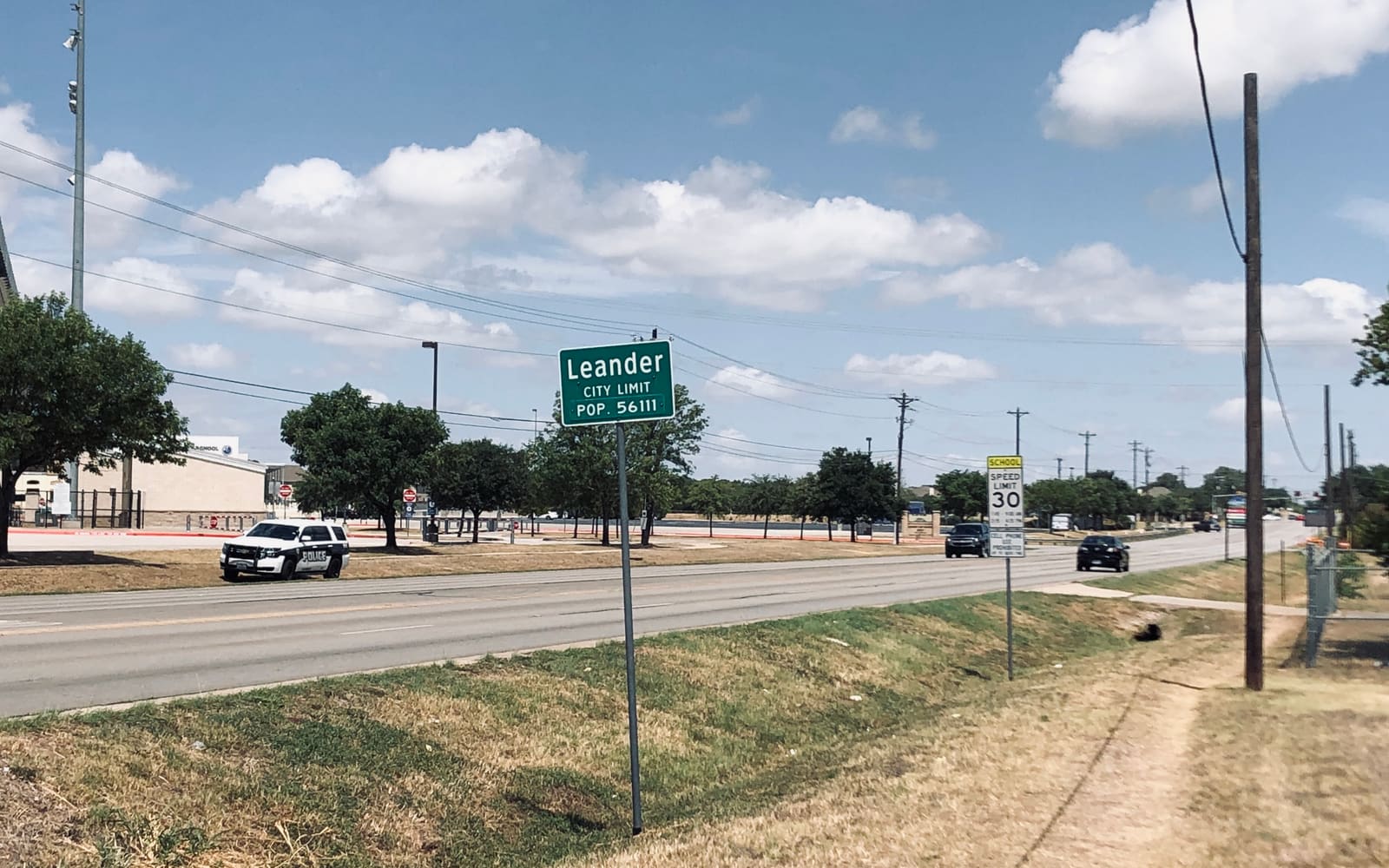
Leander
Hill Country room to grow, with a train into town
Overview
Leander sits in the far northwest corner of the Austin metro, mostly in Williamson County with a sliver dipping into Travis County near Lake Travis. For years it was the place you drove through on the way to somewhere else — a US-183 crossroads with a grain-elevator skyline. That Leander is gone. The city was the fastest-growing in the entire United States from 2018–2019, and as recently as the 2023–2024 estimates it was again the fastest-growing city in the Austin region, edging past Georgetown. Population ran roughly 59,000 at the 2020 census and is estimated near 88,000 today (verify) — a near-doubling inside a single decade.
What’s driving it is no mystery: land, schools, and access. Leander still had open ranchland to plat when Cedar Park and Round Rock filled up, so the master-planned communities that define modern Leander — Crystal Falls, Travisso, Bryson — could be built at scale with amenities baked in. Layer on Leander ISD’s reputation, the 183A toll bypass, and the only MetroRail terminus in the northern suburbs, and you have a formula that pulls in families priced out of closer-in Austin. The trade-off is that you’re buying into a city still building its bones — roads, retail, and a real downtown are all catching up to the rooftops.
Where to Live (notable master-planned communities)
Leander’s housing story is overwhelmingly a master-planned-community story. The big three each have a distinct personality:
- Crystal Falls — The volume leader and the one that put Leander on the map. Spanning roughly 5,000 acres of rolling Hill Country, it’s anchored by the Crystal Falls Golf Club (championship 18) and laced with parks, pools, and trails. Multiple sub-neighborhoods mean a genuinely wide price band, from approachable family homes to estate lots. If you want established trees and amenities that are already built, start here.
- Travisso — Built by the team behind Steiner Ranch and pitched as the luxury option. Dramatic Hill Country views, a 9-acre amenity center with resort pool, tennis, and fitness, and ~350 acres of preserved open space and trails. Homes commonly run from the $500s into the $900s and above (verify). Broke ground in 2014 and is still actively building out.
- Bryson — The newer, more social community, known for award-winning amenities and an unusually active events calendar (yes, there’s a community “Director of Fun”). It skews to families wanting brand-new construction with a strong neighborhood-programming culture.
Beyond the headliners, Benbrook Ranch, Larkspur, Palmera Ridge, Mason Hills, and the cluster of communities around Old Town offer more entry-friendly price points. The honest rule of thumb: the farther west and north you go, the bigger the lots and views — and the longer the commute.
Schools
Leander is served by Leander ISD, a large, fast-growing district that consistently earns strong marks and is the single biggest reason many families pick the city. In the 2024–25 TEA accountability ratings, the district earned an overall B (88/100) (verify); of its 47 rated campuses, 22 earned an A and 12 a B. The district has also held top marks under the state’s financial-integrity rating system, which matters when a district is building schools as fast as this one is.
The two comprehensive high schools most associated with Leander proper are Rouse High School (A, ~90/100) and Tom Glenn High School (B, ~83 in student achievement) (verify ratings year). Note that LISD is geographically huge — its boundaries also cover parts of Cedar Park and beyond — so the campus your address feeds into matters more than the city line. Always confirm the specific elementary/middle/high feeder pattern for a given home before you fall in love with it; in a district adding schools this quickly, attendance zones do get redrawn.
Real Estate Market (new-construction value angle)
The core Leander value proposition is new construction at a metro-Austin discount. Recent data puts the median sale price in the low-to-mid $400s — roughly $435K–$451K depending on month and source, with a 2025 full-year median around $470K (verify) — which buys materially more house here than the same dollar does in Round Rock, Cedar Park, or central Austin. Because communities like Bryson, Travisso, and Crystal Falls are still in active development, builder inventory and incentives are a real lever; in a softer market, rate buydowns and closing-cost help from builders can outweigh resale pricing.
That growth cuts both ways for resale. A flood of new supply caps appreciation in the short run and means resale sellers compete directly with shiny builder spec homes down the street. The buyers who do best here treat Leander as a medium-to-long hold, lean on the new-construction incentives, and price against the builder next door rather than against last year’s comps. As of early 2026 the local market had cooled from its frenzy into more balanced, buyer-friendlier territory (verify) — which is exactly when builder negotiating room is widest.
Amenities & Parks
For a city this young, the parks system is a genuine strength — much of it built into the master-planned communities, but plenty of it public:
- Devine Lake Park — ~46 acres around a 25-acre lake, with hike-and-bike trails, fishing, non-motorized boating, an off-leash dog area, and a playscape.
- Benbrook Ranch Park — ~47 acres of athletic fields plus a BMX track, skate park, disc golf course, and trails.
- Robin Bledsoe Park — a 16-acre community hub with lighted ball fields, a swimming pool and splash playscape, basketball, and an amphitheater near Old Town.
- Brushy Creek Regional Trail — the crown jewel, a 13-mile paved trail stringing together parks, creeks, and lakes and connecting east toward Cedar Park and Round Rock.
Day-to-day retail centers on H-E-B Plus, 1890 Ranch (over in adjacent Cedar Park), and the growing crop of centers along 183A. The biggest amenity story, though, is still under construction: Northline, a ~115-acre downtown-style mixed-use district between US-183 and the 183A toll, planned for hundreds of thousands of square feet of office and retail, a hotel, thousands of homes, and civic space. When it matures it’s meant to give Leander the walkable urban core it currently lacks.
Dining & Entertainment
Be honest about the trajectory here: Leander’s dining scene is improving fast but is not yet a destination. Today the reliable options cluster around Old Town Leander, the H-E-B Plus center, and the retail strips along the toll road — solid local eateries, breweries, taco joints, and the usual suburban roster, with the deeper, more varied scene a short hop south in Cedar Park. For a marquee night out, central Austin and the Domain are still where most residents head.
The medium-term bet is Northline, where Endeavor Real Estate Group is leading a retail district expressly to bring new dining and shopping. If it delivers, Leander gets the kind of sit-down-restaurant-and-patio core that has historically required a drive. For now, set expectations accordingly: great for everyday family meals, a work in progress for date-night density.
Location & Commute
Access is Leander’s quiet superpower. 183A is a tolled bypass running ~16 miles from RM 620 in NW Austin up through Cedar Park and Leander (a 2025 extension pushes it toward Liberty Hill), skipping the stoplights that choke old US-183. Typical drive times:
- Downtown Austin — ~30–45 minutes by car depending on traffic and where you start in the city.
- Apple’s North Austin campus / the Domain (Parmer & MoPac) — ~40–55 minutes in rush hour (verify).
- Austin-Bergstrom International (AUS) — ~32 miles, roughly 35–40 minutes off-peak (verify).
The differentiator is rail. Leander is the northern terminus of CapMetro’s MetroRail Red Line, a 32-mile, 8-station route running into downtown near the convention center, six days a week (no Sunday service). The Leander Station Park & Ride sits near US-183 and Metro Drive with roughly 600 spaces. End-to-end the train runs around an hour and isn’t faster than driving, but it’s a one-seat, Wi-Fi-equipped ride that lets a downtown commuter skip parking and traffic entirely. For UT and downtown trips, MetroExpress 985 buses also run from the same Park & Ride and use the MoPac Express Lanes.
The Honest Take
The case for Leander: You get more house for the money than almost anywhere comparable in the metro, a genuinely strong and well-run school district, abundant new construction with builder incentives, real parks and trails, and — uniquely among the northern suburbs — a commuter rail terminus and a toll bypass into Austin. For a family on a budget that still wants quality schools and outdoor space, it’s hard to beat on paper.
The honest caveats: This is a city in the middle of building itself. Roads, retail, and a walkable core are all chasing the rooftops, which means construction, traffic friction at peak hours, and a dining/nightlife scene that’s still thin. You’re farther out — the downtown and airport drives are real, and rail, while charming, isn’t a time-saver. Rapid new supply also tempers near-term appreciation and means resale sellers compete with builders. Buy here because you love the value, the schools, and the Hill Country room to grow — not because you expect a quick flip.
Daily Life
Daily life in Leander is suburban-meets-Hill-Country and unapologetically family-centered. Mornings tilt toward school drop-off and the 183A or rail commute; weekends fill with youth sports at Benbrook Ranch, laps of the Brushy Creek trail, fishing at Devine Lake, and the steady rhythm of community events in the planned neighborhoods (Bryson’s calendar is a genuine draw). The grocery anchor is H-E-B; bigger errands and box stores pull you a few minutes south into Cedar Park.
It’s a place where neighbors actually meet at the community pool and the elementary school, where new families are the norm rather than the exception, and where you’re never far from a trailhead or a Hill Country overlook. The flip side of all that newness is that you’ll learn to route around active construction and to budget extra minutes for anything in central Austin. For people in a build-your-roots season of life, that’s a fair trade.
FAQ
Is Leander a good place to raise a family? Yes — it’s arguably Leander’s strongest suit. Strong Leander ISD schools, abundant parks and trails, new homes with yards, and amenity-rich master-planned communities make it a magnet for young families. The main trade-off is distance from central-Austin jobs and entertainment.
How is Leander ISD? Well-regarded. The district earned an overall B in the 2024–25 state accountability ratings, with most campuses rated A or B and a strong financial-integrity track record (verify). Because the district is large and zones shift with growth, always confirm the exact feeder schools for a specific address.
Can I commute to downtown Austin without driving? Yes. Leander is the northern terminus of the MetroRail Red Line into downtown (six days a week, no Sunday), and MetroExpress 985 buses run from the same Park & Ride using the MoPac Express Lanes. Neither is faster than driving 183A, but both let you skip downtown parking.
What’s the typical home price in Leander? Recent medians sit in the low-to-mid $400s — roughly $435K–$451K depending on the month, with new construction widening the range from the $330s up past $900K in the luxury communities (verify). You generally get more house here per dollar than in closer-in suburbs.
Which master-planned community is right for me? Crystal Falls for established amenities and a wide price range (with golf); Travisso for luxury and Hill Country views; Bryson for brand-new homes and an active social calendar. For more entry-friendly pricing, look at Benbrook Ranch, Larkspur, Palmera Ridge, or the Old Town area.
What are the downsides of living in Leander? Growing pains: active construction, peak-hour traffic, a still-thin dining and nightlife scene, longer drives to downtown and the airport, and near-term price appreciation tempered by heavy new supply. Most are functions of how fast the city is growing.
Is now a good time to buy in Leander? As of early 2026 the market had cooled into more balanced, buyer-friendly conditions (verify), which is when builder incentives — rate buydowns, closing-cost help — tend to be most generous. If you’re buying new construction for a medium-to-long hold, that’s a favorable setup. Talk to us about specific communities and current builder offers.
Kyle
The I-35 south boomtown that gave Kyle Field its name
Overview
Kyle is a fast-growing city in Hays County, sitting on I-35 about 20 miles south of downtown Austin, between Buda to the north and San Marcos to the south. It has been one of the fastest-growing cities in the United States for years running (by percent change, per Census estimates), rocketing from a small town of a few thousand at the turn of the century to around 72,000 residents today (verify). That growth is the defining fact of the place — Kyle is a boomtown built on affordable new construction and I-35 access to Austin’s job market.
A fun bit of trivia locals love: the city’s namesake, early settler Fergus Kyle, is the same Kyle that Texas A&M’s Kyle Field is named for (via a relative in the family — verify the exact connection). Beyond the trivia, Kyle’s pitch is straightforward: it’s one of the more affordable places to buy a new home within reasonable commuting distance of Austin, served by Hays CISD, with a growing local employment base anchored by a regional hospital. For a buyer priced out of Austin proper who works in South Austin or along I-35, Kyle is a leading value option — with the honest trade-offs of I-35 traffic and fast-growth infrastructure strain.
Where to Live
Kyle is overwhelmingly a city of master-planned and production-builder subdivisions, with a small historic core:
- Plum Creek — Kyle’s flagship master-planned community, a New Urbanist-style development on the east side with tree-lined streets, front porches, parks, trails, a golf course, and amenity centers. It’s the most established and design-forward neighborhood and a popular family choice.
- Waterleaf, Blanco Vista, and Six Creeks — Established and newer master-planned communities with pools, trails, and amenity centers spread across the city, offering a range of production and semi-custom homes.
- Anthem, Crosswinds, Prairie on the Creek, and Trace — Newer master-planned and production communities (some just outside the city core) where much of the volume growth is happening, with modern builder homes and HOA amenities.
- Old town / historic Kyle — The small original core near the downtown depot and Center Street, with older homes, more character, and the closest thing to walkability.
Nearly all of Kyle falls within ZIP 78640. Buyers sort by subdivision and by which side of I-35 they land on — the highway splits the city, and proximity to an I-35 access point meaningfully affects the commute.
Schools
Kyle is served by Hays Consolidated ISD (Hays CISD), a large, fast-growing district covering Kyle, Buda, and much of northern Hays County. It’s a solid, growing suburban district that lands generally around the middle of the Texas rankings, with campuses ranging from above-average to average as it races to build schools and keep up with enrollment (verify current ratings). The district runs multiple high schools including Lehman, Jack C. Hays, Johnson, and Live Oak Academy, each with its own feeder pattern.
The honest framing for families: Hays CISD is a decent, rapidly expanding district rather than a nationally elite one, and its fast growth means new campuses, bond programs, and shifting attendance boundaries. That’s a plus for facilities but something to verify for any specific address, since the school your street feeds may change as the district opens new schools. As always, evaluate the specific feeder pattern and current campus ratings rather than the district name alone. The same district serves Buda, so families often compare specific Kyle and Buda feeder patterns when shopping.
Real Estate Market
Kyle’s median home price sits around $350K (verify), with most buyers working a range of roughly $280K to $500K. That’s one of the more affordable entry points in the Austin metro for new construction within commuting distance of the city — the heart of Kyle’s appeal. The market is dominated by new and near-new builds, so buyers get modern, move-in-ready homes with warranties and neighborhood amenities at prices below Austin and below the Williamson County suburbs to the north.
The 2025–2026 market has tracked the broader metro cooldown: after the pandemic surge, prices flattened and inventory rose, and because Kyle leans heavily on production builders, buyer incentives (rate buydowns, closing help, upgrades) have been common (verify current trend). The demand thesis rests on Kyle’s affordability plus I-35 access to South Austin’s job market and the growing local employment base — durable fundamentals. The honest caveats: Hays County property taxes are high, and many Kyle subdivisions carry MUD taxes that push the total rate notably higher, so check the full tax rate for any address. Kyle also sits in a region that has seen serious flooding along the Blanco River and area creeks (the 2015 Memorial Day flood was catastrophic in Hays County), so verify the flood-plain status of any specific property.
Amenities & Parks
Kyle’s amenity base is growing to match its population. The city runs a network of parks and pools, with Lake Kyle Park (a small lake with trails and a fishing pier), Gregg-Clarke Park (with a pool, sports fields, and a skate park), and Steeplechase Park among the notable public spaces. The master-planned communities — Plum Creek especially — carry a lot of the recreational load with their own pools, trails, and greens.
For bigger recreation, Kyle residents are well-positioned in the Hill Country: the Blanco River and area rivers for swimming and tubing (with respect for flood history), the outlet-and-outdoors draw of nearby San Marcos and the San Marcos River, and Austin’s metro amenities up I-35. Kyle also hosts a genuinely fun civic quirk — the annual “Kyle Fair” / Pie in the Sky and the town’s claim as home to a “Pie Capital” celebration (verify current event branding). The honest read: Kyle’s own amenity set is decent-and-improving rather than deep, and residents lean on the surrounding Hill Country and Austin for bigger recreation.
Dining & Entertainment
Kyle’s dining and entertainment scene is practical and growing rather than a destination. Everyday dining runs to the chains, fast-casual, taquerias, and family restaurants along the I-35 frontage and the FM 1626 / Kyle Parkway corridors, with an H-E-B and the retail cluster around the Kyle Crossing / Seton Hays area covering big-box needs. Local restaurants have been multiplying as the population grows (verify), and the small historic downtown around Center Street carries a handful of local spots and hosts community events.
For a broad night out — big concerts, deep nightlife, a wide fine-dining selection — Kyle residents drive to Austin (up I-35) or to college-town San Marcos just south (home to Texas State University, with its river, bars, and outlet malls). The honest picture: local options are convenient and improving but modest, with the metro’s full menu and San Marcos’s college energy both a short drive away.
Location & Commute
Kyle’s location is defined by I-35, which is both its lifeline and its daily frustration. The city sits about 20 miles south of downtown Austin on the corridor, with FM 1626 and FM 150 as key local arteries. There’s no toll-road bypass on this side of the metro the way SH-130 serves the east, so I-35 is the main event — though SH-130’s southern end near Mustang Ridge offers a partial alternative for some trips (verify).
Rough drive times:
- South Austin: ~20–30 min up I-35 off-peak.
- Downtown Austin: ~30–45 min off-peak via I-35; 50–70 min at rush hour — I-35 south of Austin is genuinely congested at peak.
- Austin-Bergstrom International Airport (AUS): ~30–40 min.
- San Marcos: ~10–15 min south.
The honest summary: for South Austin and I-35-corridor workers, Kyle is workable, and the price-for-commute math is attractive. For a daily downtown or north-side commuter, I-35 at rush hour is a real, grinding tax on your time with limited bypass options — test-drive it at peak before you commit, because on this corridor the commute is the single biggest downside.
The Honest Take
The pros are about affordable, new-home value. Kyle offers modern new construction at one of the more attainable price points in the Austin metro within commuting distance, served by Hays CISD, with a growing local job base (the Seton Hays hospital, retail, logistics) and easy I-35 access to South Austin. It’s a leading choice for buyers priced out of Austin who want a new home and don’t need to be downtown daily. The Hill Country and San Marcos add lifestyle appeal.
The cons are real and worth naming. I-35 traffic is the big one — a daily grind at rush hour with limited bypass options on this side of the metro. Hays CISD is decent-but-not-elite, and fast growth means shifting boundaries. Many subdivisions carry MUD taxes on top of high Hays County rates, so the total tax bill can surprise you. The region has serious flood history (the 2015 Blanco River flood), so flood-plain due diligence is essential. And Kyle is a fast-growth boomtown with the infrastructure-and-amenity strain that comes with it. The right buyer here prioritizes affordable new construction and South-Austin access over a short downtown commute, elite schools, and mature amenities.
Daily Life
Day to day, Kyle is a fast-growing suburb where most residents live in a master-planned community, do everyday shopping along I-35 and Kyle Parkway, and lean on their neighborhood pools and trails plus the city parks for recreation. The rhythm is affordable-suburban and family-forward — youth sports, community events like the pie festival, and Friday-night Hays CISD football structure a lot of the week. The Hill Country setting and nearby San Marcos river culture add a distinctly Central Texas outdoor flavor.
The trade-offs are the standard boomtown ones: near-total car dependence, an I-35 commute that shapes the day, a local dining-and-entertainment set that still sends residents to Austin or San Marcos for a big night out, and ongoing construction as the town keeps expanding. Buyers also have to budget carefully for MUD taxes and verify flood status. What you get in exchange is a modern home at an attainable price, a workable South-Austin commute, and a Hill Country location with real recreational upside nearby. People who thrive in Kyle are value-focused South-Austin and corridor workers who wanted a new home they could afford and made peace with I-35.
FAQ
Is Kyle really named after the Kyle Field at Texas A&M? They share a namesake — early Texas settler and legislator Fergus Kyle, for whom the city is named, is connected to the same Kyle family the A&M stadium honors (verify the exact family link). It’s a bit of trivia locals enjoy, though the city and the stadium are otherwise unrelated.
How much does a house cost in Kyle? The median sits around $350K (verify), with most buyers shopping roughly $280K–$500K — one of the more affordable new-construction markets within commuting distance of Austin. Builder incentives have been common in the 2025–2026 market (verify current trend).
How bad is the I-35 commute? Honest answer: it’s the main downside. Downtown Austin runs about 30–45 minutes off-peak but 50–70 minutes at rush hour, and there’s no full toll-road bypass on this side of the metro. Kyle works best for South Austin and I-35-corridor workers; test the drive at peak if you’ll do it daily.
How are the schools? Hays CISD is a large, fast-growing suburban district that lands around the middle of the Texas rankings — decent but not elite. Rapid growth means new campuses and shifting boundaries, so verify the specific feeder pattern and current ratings for any address.
Should I worry about taxes or flooding? Both deserve attention. Many Kyle subdivisions sit in MUD districts that push the total tax rate well above the base Hays County rate — check the full rate for any address. And the region has serious flood history (the catastrophic 2015 Blanco River flood), so verify the flood-plain status of any specific property before you buy.
Buda
The small-town Main Street just south of Austin, with a Cabela's out front
Overview
Buda (locals say “BYOO-duh”) is a small city in Hays County sitting just off I-35 about 15 miles south of downtown Austin, immediately north of Kyle. For most of its history it was a tiny railroad town with a compact, walkable historic Main Street — and remarkably, it has kept that character even as South Austin’s growth pushed the population to around 28,000 (verify). That combination of genuine small-town downtown and metro proximity is Buda’s whole identity, and it’s a real differentiator from the master-planned sprawl elsewhere on the I-35 south corridor.
Buda’s other claim to fame is retail: the Cabela’s flagship off I-35, with its aquarium and mounts, is a regional draw and one of the town’s signature landmarks and employers. Beyond that, Buda’s pitch is a small-town lifestyle — a walkable downtown with local restaurants and festivals, Hays CISD schools, and family-friendly neighborhoods — at prices below Austin proper, close enough for a South Austin commute. For a buyer who wants small-town charm and character rather than just the cheapest new build, Buda often edges out its faster-growing, more subdivision-heavy neighbor Kyle to the south.
Where to Live
Buda mixes a walkable historic core with a ring of newer master-planned and production subdivisions:
- Old Town Buda / historic Main Street area — The walkable core with older bungalows and cottages, more character, and genuine walkability to downtown restaurants, shops, and the park. Inventory is limited and character commands a premium, but for buyers who want to walk to dinner, nothing else on the corridor competes.
- Whispering Hollow, Garlic Creek, and Shadow Creek — Established and popular master-planned communities on the west side with pools, trails, and amenity centers, offering mature landscaping and a settled family feel.
- Sunfield — A large, amenity-rich master-planned community (on the Kyle/Buda edge) with a lazy river, multiple pools, trails, and ongoing new construction — a big draw for families wanting resort-style amenities.
- Bradfield, Stonefield, and newer edge subdivisions — Production-builder communities where much of the newest volume growth is happening.
Nearly all of Buda falls within ZIP 78610. Buyers sort by subdivision and by which side of I-35 they land on. The west side (Garlic Creek, Whispering Hollow) is popular and established; Old Town offers the character-and-walkability premium.
Schools
Buda is served by Hays Consolidated ISD (Hays CISD), the same large, fast-growing district that serves Kyle and much of northern Hays County. It’s a solid, growing suburban district that lands generally around the middle of the Texas rankings, with campuses ranging from above-average to average as it builds schools to keep up with enrollment (verify current ratings). Buda-area families typically feed into Jack C. Hays High School or Johnson High School, among others, depending on the specific neighborhood.
The honest framing for families: Hays CISD is a decent, rapidly expanding district rather than a nationally elite one, and its fast growth means new campuses and shifting attendance boundaries — a plus for facilities but something to verify for any specific address. Because the same district serves both Buda and Kyle, families often compare the specific feeder patterns between the two towns when shopping. As always, evaluate the exact campus assignment and current ratings rather than relying on the district name alone.
Real Estate Market
Buda’s median home price sits around $370K (verify), with most buyers working a range of roughly $300K to $550K. Buda tends to run a touch higher than neighboring Kyle, reflecting its more established feel, its walkable downtown, and the amenity-rich communities on its west side — buyers here are often paying a modest premium for charm and character rather than just square footage. The stock is a healthy mix of established master-planned resale and ongoing new construction.
The 2025–2026 market has tracked the broader metro cooldown: after the pandemic surge, prices flattened and inventory rose, giving buyers more negotiating room and, in new-construction sections, builder incentives (verify current trend). The demand thesis rests on Buda’s small-town appeal plus I-35 access to South Austin’s job market — durable fundamentals with the added draw of the downtown that growth can’t easily replicate. The honest caveats mirror the corridor: Hays County property taxes are high, many subdivisions carry MUD taxes that push the total rate higher (check the full rate for any address), and the broader Hays County region has serious flood history (the catastrophic 2015 Blanco River flood), so verify the flood-plain status of any specific property near creeks and low-lying areas.
Amenities & Parks
Buda’s amenity base blends genuine small-town charm with growing recreation. Buda City Park and the downtown green space anchor community life and host festivals and the farmers market. Bradfield Park and a network of neighborhood parks fill out the city system, and the master-planned communities — Sunfield’s lazy river, Garlic Creek and Whispering Hollow’s amenity centers — carry a lot of the recreational load with their own pools and trails.
The signature landmark is Cabela’s, whose flagship store functions as a genuine regional attraction (aquarium, wildlife mounts, and all the outdoor retail), and Buda leans into its identity with the annual Buda Wiener Dog Races at the Buda Lions Country Fair — a famously fun small-town event. For bigger recreation, residents are well-placed for the Hill Country: the rivers and outdoors of nearby San Marcos, the Hill Country to the west, and Austin’s metro amenities up I-35. The honest read: Buda’s own amenity set is charming-and-decent rather than deep, with the surrounding region and Austin filling in for bigger recreation.
Dining & Entertainment
Buda’s dining and entertainment scene punches above its size precisely because of its walkable historic Main Street — a genuine downtown with local restaurants, coffee shops, breweries, boutiques, and a calendar of festivals and markets that give the town a real gathering place. This is Buda’s biggest differentiator on the I-35 south corridor: while Kyle and the newer suburbs offer subdivisions and highway-frontage chains, Buda offers an actual downtown you can stroll. Local spots and a growing craft scene have made downtown Buda a legitimate small-scene destination (verify current lineup).
Beyond Main Street, everyday dining runs along the I-35 frontage and FM 967 / Main Street corridors with the usual chains and fast-casual, plus the Cabela’s-area retail cluster and an H-E-B nearby. For a broad night out — big concerts, deep nightlife, wide fine dining — Buda residents drive to Austin up I-35 or to college-town San Marcos just south. The honest picture: Buda’s walkable downtown gives it more local character and charm than most corridor towns, with the metro’s full menu a short drive north.
Location & Commute
Buda’s location is defined by I-35, the corridor’s lifeline and its chief frustration. The city sits about 15 miles south of downtown Austin, closer in than Kyle, with FM 967 and FM 1626 as key local arteries connecting to the western Hays County and Manchaca/southwest Austin areas. As on the whole south side of the metro, there’s no toll-road bypass equivalent to SH-130, so I-35 is the main event.
Rough drive times:
- South Austin: ~15–25 min up I-35 off-peak.
- Downtown Austin: ~25–40 min off-peak via I-35; 45–60 min at rush hour — I-35 south of Austin is congested at peak.
- Austin-Bergstrom International Airport (AUS): ~25–35 min.
- San Marcos: ~15–20 min south.
Being closer to Austin than Kyle, Buda’s commute is a bit shorter, which is part of what justifies its modest price premium. The honest summary: for South Austin and I-35-corridor workers, Buda is quite workable. For daily downtown or north-side commuters, I-35 at rush hour is a real tax with limited bypass options — test-drive it at peak before committing.
The Honest Take
The pros are about charm plus value. Buda pairs a genuinely walkable historic Main Street — a real downtown, not a manufactured town center — with metro proximity, Hays CISD schools, amenity-rich communities, and prices below Austin proper. It’s closer to Austin than Kyle to the south, giving it a shorter commute, and landmarks like Cabela’s and quirky events like the Wiener Dog Races give it real small-town personality. For a buyer who wants character and walkability rather than just the cheapest new build, Buda is a standout on the corridor.
The cons track the corridor. I-35 traffic is the big one — a rush-hour grind with no full toll bypass on this side of the metro. Hays CISD is decent-but-not-elite, with growth-driven boundary shifts. Many subdivisions carry MUD taxes on top of high Hays County rates, so budget the total tax bill carefully. The region has serious flood history (2015 Blanco River), so flood-plain due diligence is essential near creeks. And Buda runs a bit pricier than Kyle for the added charm — worth it for some buyers, not for others. The right buyer here values a walkable small-town downtown and a slightly shorter commute over rock-bottom pricing.
Daily Life
Day to day, Buda blends small-town texture with suburban convenience. Many residents live in a master-planned community with a pool and trails, do everyday shopping along I-35 and near Cabela’s, and — the differentiator — actually use their downtown, strolling Main Street for coffee, dinner, the farmers market, and festivals. It’s a family-forward, friendly rhythm where the walkable core gives the town a genuine center that most corridor suburbs lack. Hill Country recreation and San Marcos’s rivers are close for weekends.
The trade-offs are the corridor’s standard ones: an I-35 commute that shapes the day, near-total car dependence outside Old Town, MUD-tax and flood-plain due diligence, and a local scene that still sends residents to Austin or San Marcos for a big night out. But Buda softens the car-dependence more than its neighbors thanks to that walkable downtown, and its slightly-closer-in location trims the commute. People who thrive in Buda are families and buyers who wanted small-town charm and a real Main Street close to Austin, and were willing to pay a small premium over Kyle to get it.
FAQ
How is Buda different from Kyle? Both are I-35 south Hays County towns in Hays CISD, but Buda is closer to Austin (shorter commute), more established, and centered on a genuinely walkable historic Main Street, while Kyle is larger, faster-growing, and more subdivision-heavy. Buda runs a modest price premium for that charm and location; Kyle offers a bit more affordability.
How much does a house cost in Buda? The median sits around $370K (verify), with most buyers shopping roughly $300K–$550K — a touch above Kyle, reflecting Buda’s more established feel and walkable downtown. The 2025–2026 market has given buyers more inventory and, in new sections, builder incentives (verify current trend).
How bad is the commute to Austin? Buda is closer in than most corridor towns — about 25–40 minutes to downtown off-peak via I-35, but 45–60 at rush hour, with no full toll bypass on this side of the metro. It’s quite workable for South Austin and I-35-corridor workers; test the drive at peak if you commute downtown daily.
How are the schools? Buda is served by Hays CISD, a large, fast-growing district that lands around the middle of the Texas rankings — decent but not elite, with growth-driven boundary shifts. Verify the specific feeder pattern (often Jack C. Hays or Johnson High) and current ratings for any address.
What is there to do in Buda? The walkable historic Main Street (local restaurants, coffee, breweries, boutiques, festivals and a farmers market), the Cabela’s flagship store, City Park, the quirky annual Buda Wiener Dog Races, plus nearby Hill Country recreation and San Marcos’s rivers — with Austin’s full menu a short drive north.
Should I worry about taxes or flooding? Yes to both due diligence. Many Buda subdivisions carry MUD taxes that push the total rate above the base Hays County rate — check the full rate for any address. And the region has serious flood history (the 2015 Blanco River flood), so verify the flood-plain status of any specific property before you buy.
Bastrop
Lost Pines, a film-town Main Street, and Austin's fast-arriving eastern frontier
Overview
Bastrop is the historic seat of Bastrop County, sitting on the Colorado River about 30 miles southeast of downtown Austin via SH-71. It’s one of the oldest towns in Texas, with a genuine, well-preserved historic downtown and a distinctive natural setting: the “Lost Pines,” an isolated stand of loblolly pines that exists nowhere else this far west, giving Bastrop a piney-woods feel unlike the rest of the Hill Country metro. The city proper is small — around 10,000 residents (verify) — but it anchors a fast-growing county on the metro’s eastern frontier.
Bastrop’s identity has long been part film-set, part tourist town: its photogenic Main Street and surrounding scenery have hosted numerous movie and TV productions, and it draws visitors for its river, state park, and historic charm. Now it’s catching Austin’s eastward growth wave — proximity to Tesla’s Gigafactory and the SH-130 corridor to the west, and Elon Musk’s Boring Company operations that have set up in the Bastrop area, have put the county on the map as a growth-and-jobs story (verify current scale). For a buyer, Bastrop offers among the most affordable prices anywhere on the metro’s edge, a real downtown and natural setting most suburbs can’t match, and a genuine bet on the eastern frontier — tempered by a longer commute and a sobering wildfire-and-flood history.
Where to Live
Bastrop mixes a historic core, riverfront and piney-woods settings, and newer master-planned growth:
- Historic downtown / Old Bastrop — Walkable to Main Street and the river, with historic homes, bungalows, and genuine character on tree-lined streets. Limited inventory and charm at a premium, but the closest thing to walkable living in the county.
- Tahitian Village — A large, wooded, riverside/hillside community in the Lost Pines along the Colorado River, known for affordable lots and a piney, secluded setting (and, honestly, an area heavily affected by the 2011 wildfire — verify recovery status).
- The Colony (Colony MUD) and Pine Forest — Established and growing master-planned and riverfront communities offering a range of homes; The Colony is one of the larger developments drawing new families.
- Downtown-adjacent and rural acreage — Bastrop County is still largely rural, so acreage tracts, ranchettes, and wooded lots are a real option for buyers wanting land and privacy.
Bastrop proper falls within ZIP 78602. Buyers sort by setting more than by ZIP — historic downtown, riverfront/piney-woods (Tahitian Village), master-planned (The Colony), or rural acreage — and, critically, by wildfire and flood exposure, which varies meaningfully across the area (see below).
Schools
Bastrop is served by Bastrop ISD, a growing district covering the city and a large slice of the county. It’s a modest-to-middling district by the Texas rankings, with campuses landing generally average as it works to keep up with the county’s growth (verify current ratings). The district runs Bastrop High School and Cedar Creek High School, among other campuses, serving a geographically large and rural-plus-suburban attendance area.
The honest framing for families: Bastrop ISD is a decent, growing, but currently modest-performing district rather than a highly-ranked one, and that’s part of why Bastrop homes cost less than comparably-distant areas with stronger districts. The district’s growth may reshape it as the county’s population and tax base expand, but evaluate it on its current standing. As always, verify the specific campus assignment and current ratings for any address — attendance zones cover a lot of rural ground here, so the assigned school can vary widely by location.
Real Estate Market
Bastrop’s median home price sits around $285K (verify), with most buyers working a range of roughly $230K to $450K. That makes Bastrop among the most affordable markets anywhere on the Austin metro’s edge — the core of its appeal for value-focused buyers. The stock is varied: historic homes downtown, wooded riverside lots in Tahitian Village, master-planned new construction in The Colony and similar developments, and rural acreage across the county.
The 2025–2026 market has tracked the broader metro cooldown, with prices flattening and inventory rising after the pandemic surge (verify current trend). The long-term demand thesis is genuinely interesting: Bastrop County is positioned to catch Austin’s eastward growth — the Tesla Gigafactory and SH-130 corridor to the west, the Boring Company’s Bastrop-area operations, and the general eastward push of jobs and rooftops (verify current scale). For a patient buyer, that’s a real catalyst at a low entry price. But the honest caveats are significant and specific to Bastrop: wildfire history (the 2011 Bastrop County Complex Fire was one of the most destructive in Texas history, devastating the Lost Pines and thousands of homes) and flood history (the Colorado River and area creeks have flooded, including damaging events in the 2010s) mean insurance costs and property due diligence matter more here than almost anywhere else in the metro. Bastrop County property taxes are high, and some developments carry MUD taxes. Verify wildfire risk, flood-plain status, and insurability for any specific property before you buy.
Amenities & Parks
Bastrop’s natural amenities are its standout feature, anchored by the Lost Pines and the Colorado River. Bastrop State Park — famous for its pines, historic CCC-era cabins, and hiking, and now a decade-plus into recovery from the 2011 fire — is a signature draw, connected to nearby Buescher State Park by the scenic Park Road 1C. The Colorado River through town offers paddling, fishing, and riverside parks, and the El Camino Real / Fisherman’s Park area along the river anchors community life and events.
Beyond the parks, the region draws visitors to The Crossing / Hyatt Regency Lost Pines Resort and Spa (a major resort with the McKinney Roughs nature area nearby) and the wider Lost Pines recreation area. Bastrop’s own city amenities are small-town in scale, but the natural setting — pines, river, state parks — gives it an outdoor richness that master-planned suburbs can’t fake. The honest read: for nature and history, Bastrop is genuinely strong; for big-box shopping and manufactured amenities, it’s modest, and residents drive toward Austin for those.
Dining & Entertainment
Bastrop’s dining and entertainment scene centers on its genuinely historic, walkable downtown — one of the most authentic Main Streets in the metro area, lined with local restaurants, cafes, bars, antique and boutique shops, and a calendar of festivals and events. The town’s film-and-tourism heritage keeps the downtown lively, and it hosts events like the annual film festival and seasonal celebrations (verify current lineup). For its size, Bastrop’s downtown punches well above its weight as a gathering place and destination.
Everyday dining also runs along the SH-71 / SH-95 corridors with the usual chains and fast-casual, and an H-E-B and retail cluster cover the basics. For a broad night out — big concerts, deep nightlife, wide fine dining — Bastrop residents drive to Austin via SH-71 (about 35–50 minutes). The honest picture: Bastrop’s historic downtown gives it real character and a legitimate local scene for a town its size, with Austin’s full menu a moderate drive west. Tourism keeps the local options livelier than a town of 10,000 would otherwise support.
Location & Commute
Bastrop’s location is defined by SH-71, the main artery connecting it west to Austin and the airport, and east toward Houston. The city sits about 30 miles southeast of downtown Austin. Critically, SH-71 ties into SH-130 (the toll road) on the metro’s east side, which connects Bastrop-area residents to the Tesla Gigafactory, the airport, and southeast Austin without fighting I-35.
Rough drive times:
- Austin-Bergstrom International Airport (AUS): ~25–35 min via SH-71 — genuinely convenient, one of Bastrop’s underrated perks.
- Tesla Gigafactory (Del Valle): ~25–35 min via SH-71/SH-130.
- Downtown Austin: ~35–50 min off-peak via SH-71; longer at rush hour.
- The Boring Company (Bastrop area): in-county, typically short.
The honest summary: for airport, southeast-Austin, SH-130-corridor, and local county workers, Bastrop’s commute is workable and the SH-71/SH-130 combination avoids I-35’s worst. For a daily downtown or north-Austin commuter, it’s a genuine haul at 35–50 minutes off-peak — test it at rush hour before committing, because distance is Bastrop’s clearest trade-off.
The Honest Take
The pros are distinctive and real. Bastrop offers among the lowest prices anywhere on the Austin metro’s edge, paired with a genuinely historic, walkable downtown and a one-of-a-kind natural setting in the Lost Pines and along the Colorado River — character and nature that no master-planned suburb can replicate. It’s convenient to the airport and the SH-130 corridor, and it’s positioned to catch Austin’s eastward growth wave (Tesla, the Boring Company, general eastward push). For a patient, value-focused buyer who prizes character and setting, Bastrop is a compelling frontier bet.
The cons are serious and specific — name them plainly. Bastrop has a sobering natural-disaster history: the catastrophic 2011 wildfire that destroyed thousands of Lost Pines homes and the region’s flood history along the Colorado River both mean insurance costs, insurability, and property due diligence matter more here than nearly anywhere in the metro. The downtown-Austin commute is a real 35–50 minute haul. Bastrop ISD is a modest, growing district. It’s a small town with limited big-box amenities. And the eastward-growth thesis, while genuine, is still early and carries execution risk. The right buyer here does careful wildfire/flood/insurance homework, values character and setting over polish and short commutes, and is comfortable betting on the eastern frontier.
Daily Life
Day to day, Bastrop feels like a small historic river town that’s beginning to catch a growth wave. Residents do everyday shopping along SH-71, but the town’s real center of gravity is its walkable downtown — coffee, dinner, festivals, the farmers market, and the river at Fisherman’s Park. Weekends pull toward Bastrop State Park’s pine trails, paddling the Colorado, or the resort-and-nature draw of the Lost Pines, with Austin’s full menu a moderate drive west when residents want it. It’s a friendly, nature-forward, distinctly un-suburban rhythm.
The trade-offs are the frontier’s: a genuine commute to central Austin, near-total car dependence outside downtown, a modest school district, limited big-box amenities, and — most importantly — the ever-present need for wildfire and flood due diligence that shapes where and how people buy and insure. But Bastrop softens the car-dependence with a real downtown, and its airport-and-SH-130 access is genuinely handy. People who thrive in Bastrop are buyers who fell for the pines, the river, and the historic Main Street, who don’t need a short downtown commute, and who did their homework on natural-hazard risk. For them, Bastrop offers something the rest of the metro simply doesn’t — at a price that’s hard to beat.
FAQ
Why is Bastrop so much cheaper than the rest of the metro? A few honest reasons: it’s farther out (a 35–50 minute commute to downtown Austin), Bastrop ISD is a modest district, and the area carries real wildfire and flood history that affects insurance and demand. In exchange you get among the lowest entry prices on the metro’s edge, a genuine historic downtown, and a one-of-a-kind Lost Pines setting.
How much does a house cost in Bastrop? The median sits around $285K (verify), with most buyers shopping roughly $230K–$450K — among the most affordable markets anywhere on the Austin metro’s edge. The 2025–2026 market has given buyers more inventory after the pandemic surge (verify current trend).
Do I need to worry about wildfires and flooding? Yes — this is the single most important due-diligence item in Bastrop. The 2011 Bastrop County Complex Fire was one of the most destructive wildfires in Texas history, devastating the Lost Pines and thousands of homes, and the Colorado River and area creeks have a flood history. Verify wildfire risk, flood-plain status, and insurability (and insurance cost) for any specific property before you buy.
How’s the commute, and what’s the growth story? Bastrop sits on SH-71, about 35–50 minutes to downtown Austin off-peak — a real haul for daily downtown commuters, though the airport (~25–35 min) and the SH-130/Tesla corridor are convenient. The growth story is Austin’s eastward push: proximity to Tesla, the SH-130 corridor, and the Boring Company’s Bastrop-area operations (verify current scale) have put the county on the map.
What is there to do in Bastrop? A genuinely historic, walkable downtown (local restaurants, bars, boutiques, festivals, film heritage), Bastrop and Buescher State Parks in the Lost Pines, the Colorado River for paddling and fishing, the Hyatt Regency Lost Pines resort, and a nature-and-history richness most metro suburbs can’t match — with Austin’s full menu a moderate drive west.
See what's available right now.
Search the map for homes, neighborhoods, and insights across Central Texas.